Setting up your website to respect user privacy might feel like a lot to take on at first. Between changing laws and complex terminology, it’s easy to feel a bit overwhelmed. But keeping your site compliant doesn’t have to be a chore. In fact, choosing the right tool makes the whole process genuinely straightforward. Let’s walk through the top tools and setup guides that’ll keep your site safe, legal, and user-friendly this year. You’ve got this.
Key Takeaways
- Compliance is essential – Global privacy laws require clear consent mechanisms for modern web traffic.
- WordPress-native is simpler – Tools built directly into your dashboard reduce external dependencies and speed up setup.
- Google Consent Mode v2 is standard – Most modern setups require this to keep ad campaigns running properly in Europe.
- Automation saves time – Automatic script scanning keeps your cookie policy accurate without manual updates.
- Design still matters – A user-friendly, on-brand banner keeps bounce rates low while respecting privacy.
Why Privacy Setup Guides Matter in 2026
The rules of the web have changed. Gone are the days when you could simply drop a tiny notice at the bottom of your site saying “We use cookies” and call it done. Today, major privacy regulations like GDPR in Europe and CCPA in California demand that you give visitors real control over what data they share. If you serve visitors in these areas, you must let them opt in or out before any tracking scripts load.
And this isn’t just about avoiding regulatory headaches. It’s about building genuine trust with your audience. When visitors see a clean, professional banner that clearly explains how their data is handled, they feel respected. On top of that, major advertising platforms now require systems like Google Consent Mode v2 to track conversions accurately. Without a proper setup, your marketing analytics could stop working. Fortunately, getting it right is much simpler when you have the right guide and the right tools in your corner.
Comparison of the Best WordPress Cookie Consent Solutions
To help you decide which setup path fits your workflow, here’s a quick summary of the top options. The table below highlights how each integrates with your platform, supports modern consent rules, and handles geographic targeting.
| Solution Name | WordPress-Native Dashboard | Google Consent Mode v2 | Geo-Targeting Support | Setup Difficulty |
|---|---|---|---|---|
| Cookie Consent | Yes | Yes | Yes | Very Easy (Under 5 minutes) |
| Cookiebot | No (External Cloud) | Yes | Yes | Moderate |
| CookieYes | No (External Cloud) | Yes | Yes | Easy |
| Complianz | Yes | Yes | Yes | Moderate |
| iubenda | No (External Cloud) | Yes | Yes | Advanced |
| Termly | No (External Cloud) | Yes | Yes | Easy |
| OneTrust | No (External Cloud) | Yes | Yes | Enterprise-level Complex |
| Osano | No (External Cloud) | Yes | Yes | Moderate |
| GDPR Cookie Consent | Yes | Yes | No (In entry-level plan) | Easy |
| Real Cookie Banner | Yes | Yes | Yes | Moderate |
1. Cookie Consent (By Elementor)
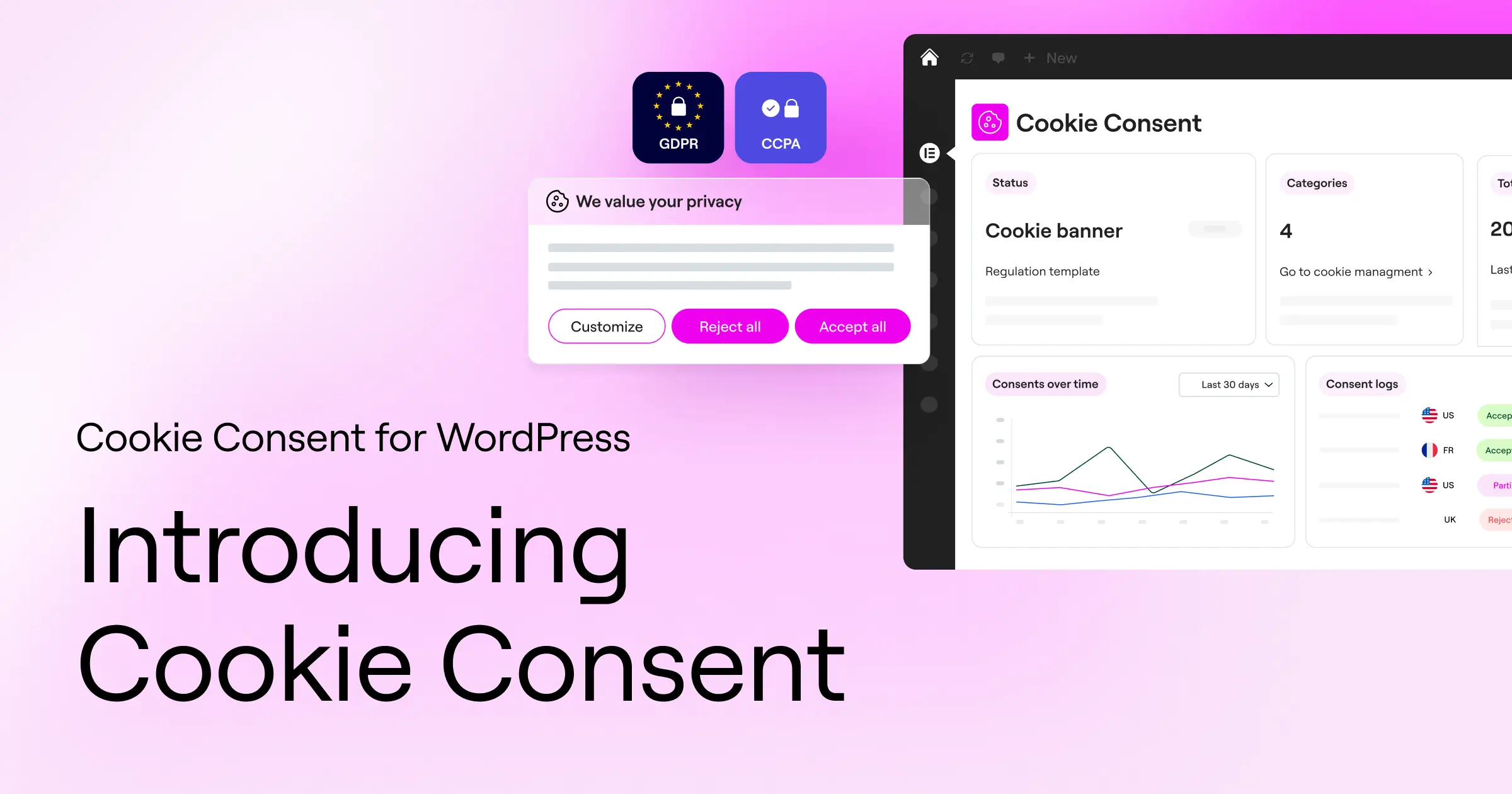
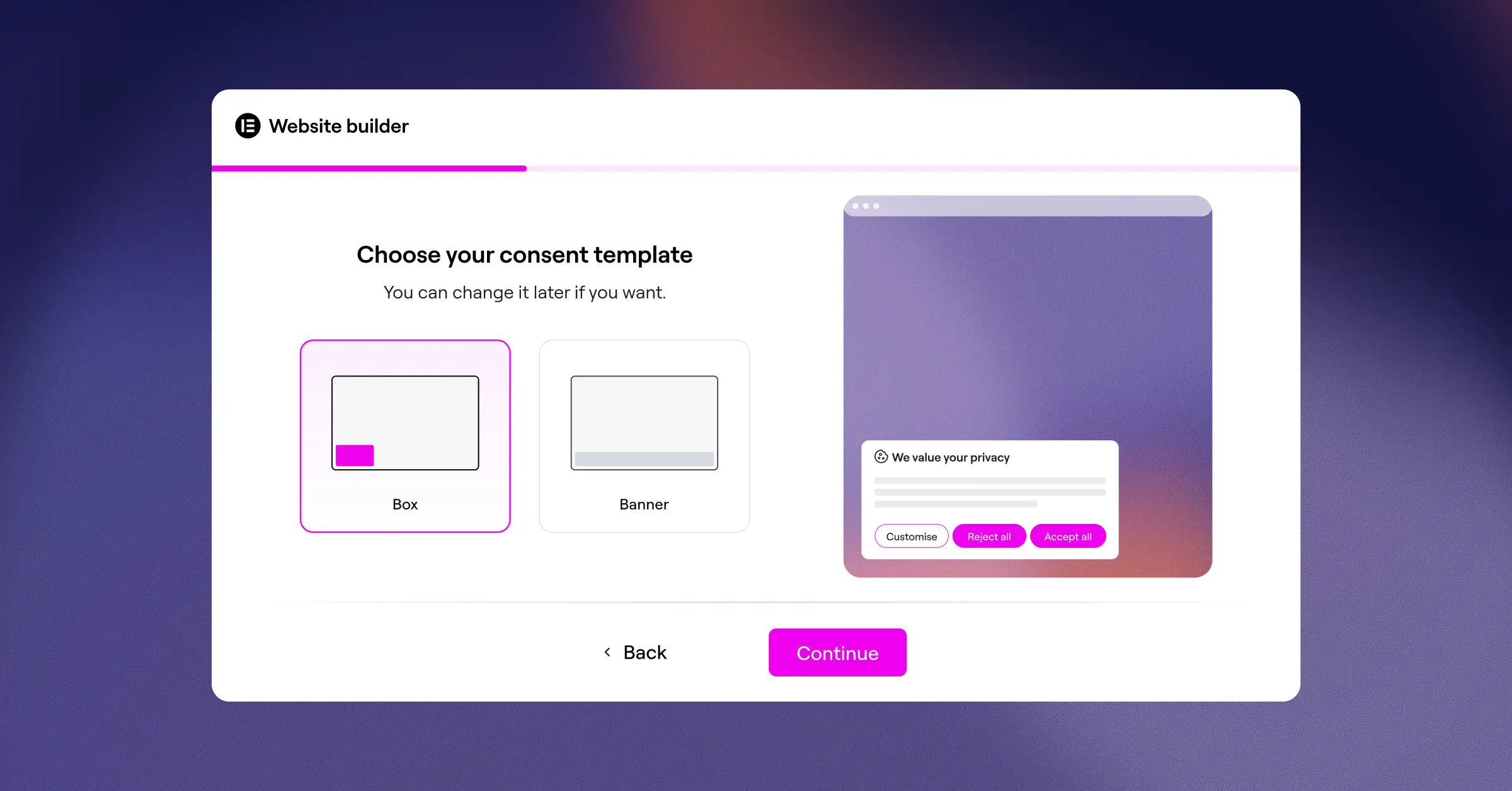
If you run a WordPress site and want to keep your configuration as simple as possible, Cookie Consent is a great place to start. This capability is built natively for WordPress, meaning you manage your entire privacy setup right from your existing dashboard. There are no external websites to log into, no separate subscription databases to juggle. It’s designed to work smoothly with Elementor, giving you complete visual control over how your banners look and feel.
The setup takes most users under five minutes (it’s genuinely that quick). Because it lives directly in your WordPress environment, it fits seamlessly into your site’s design and runs efficiently without extra overhead. It’s included in the Elementor One bundle, and there’s also a functional entry-level plan for those just getting started.
Core Features
- Scans your site automatically to categorize cookies and script files.
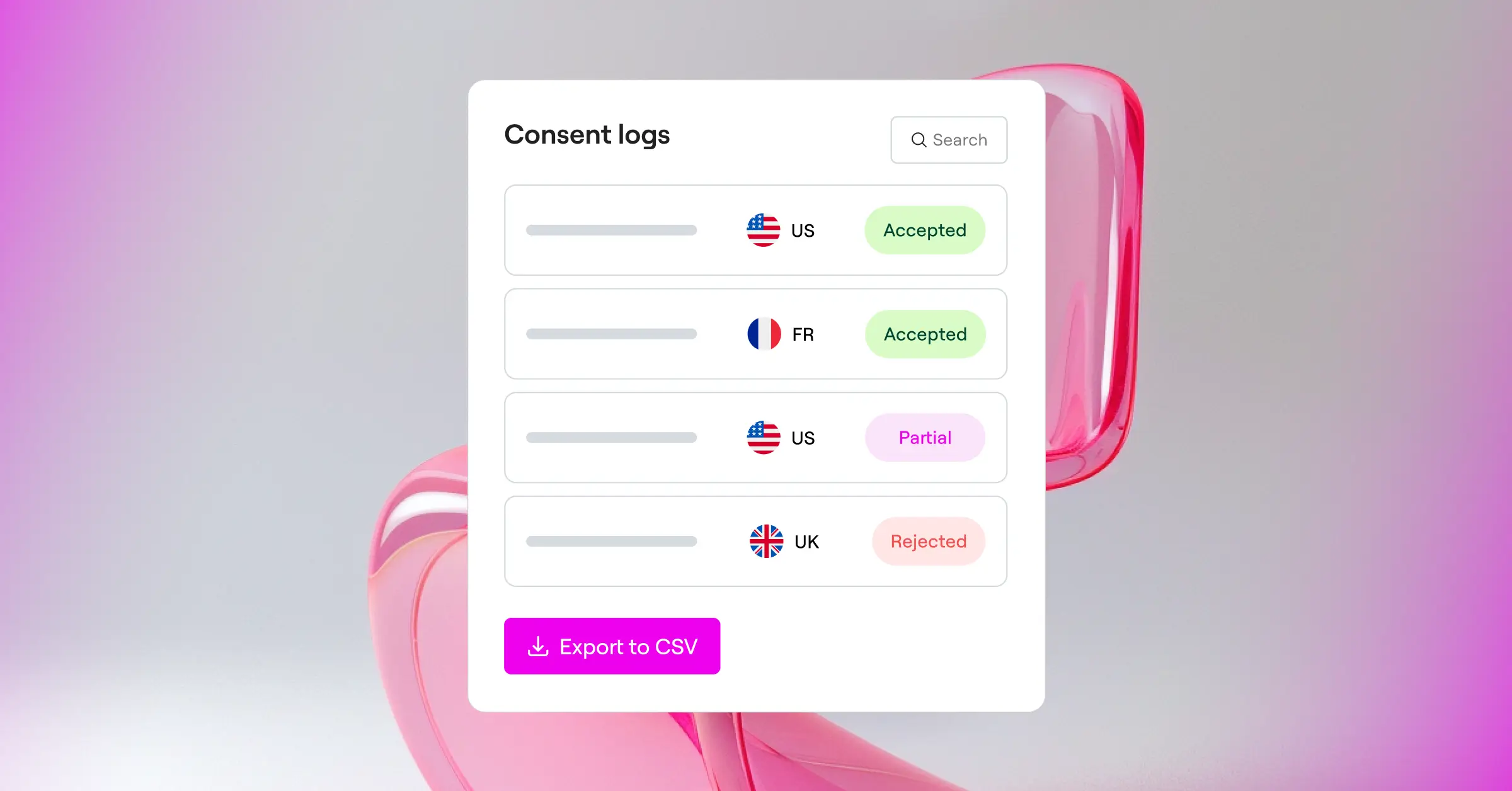
- Logs visitor consent actions securely to maintain clear audit trails.
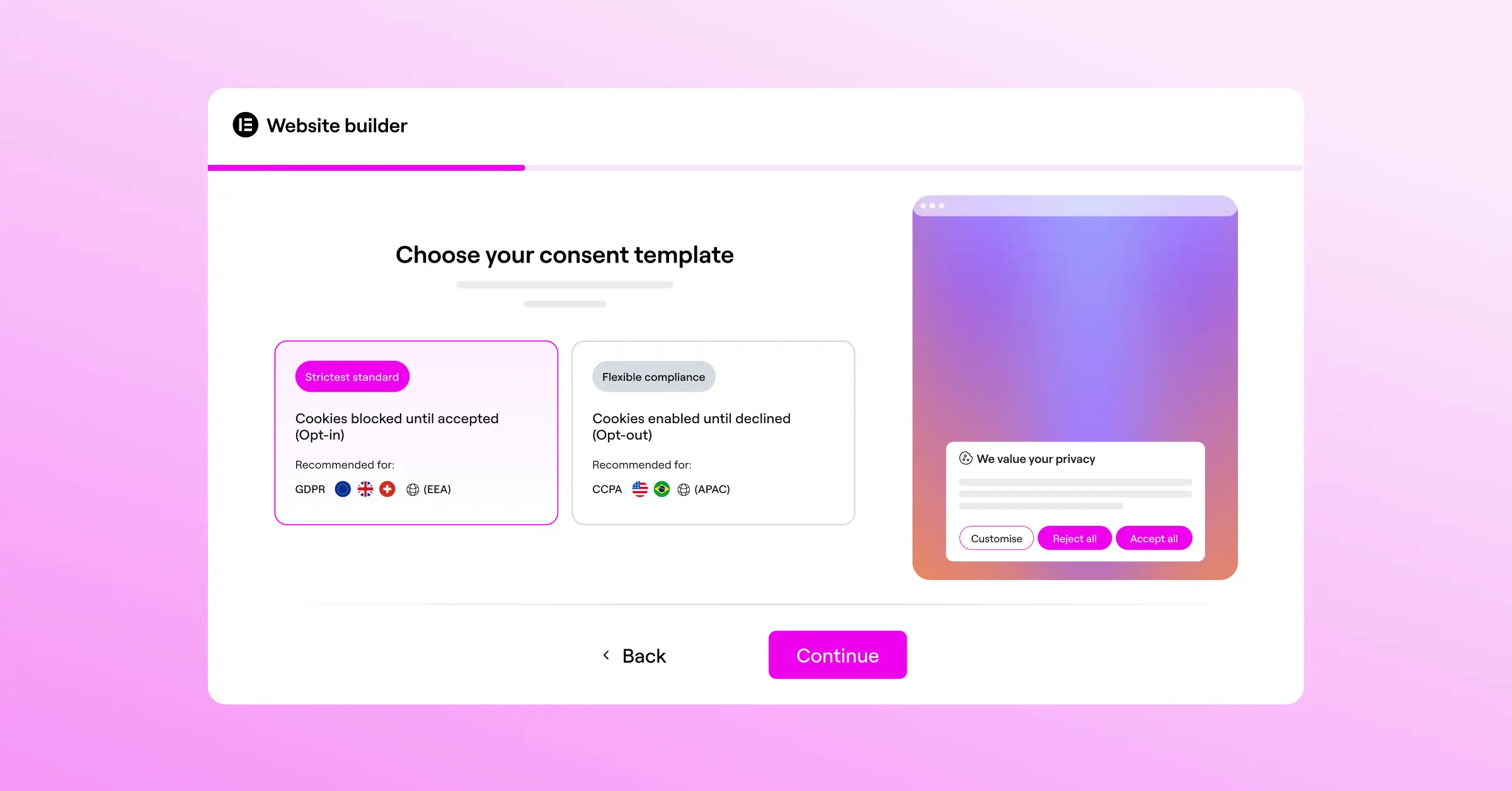
- Saves you styling time with design controls built right inside your layout editor.
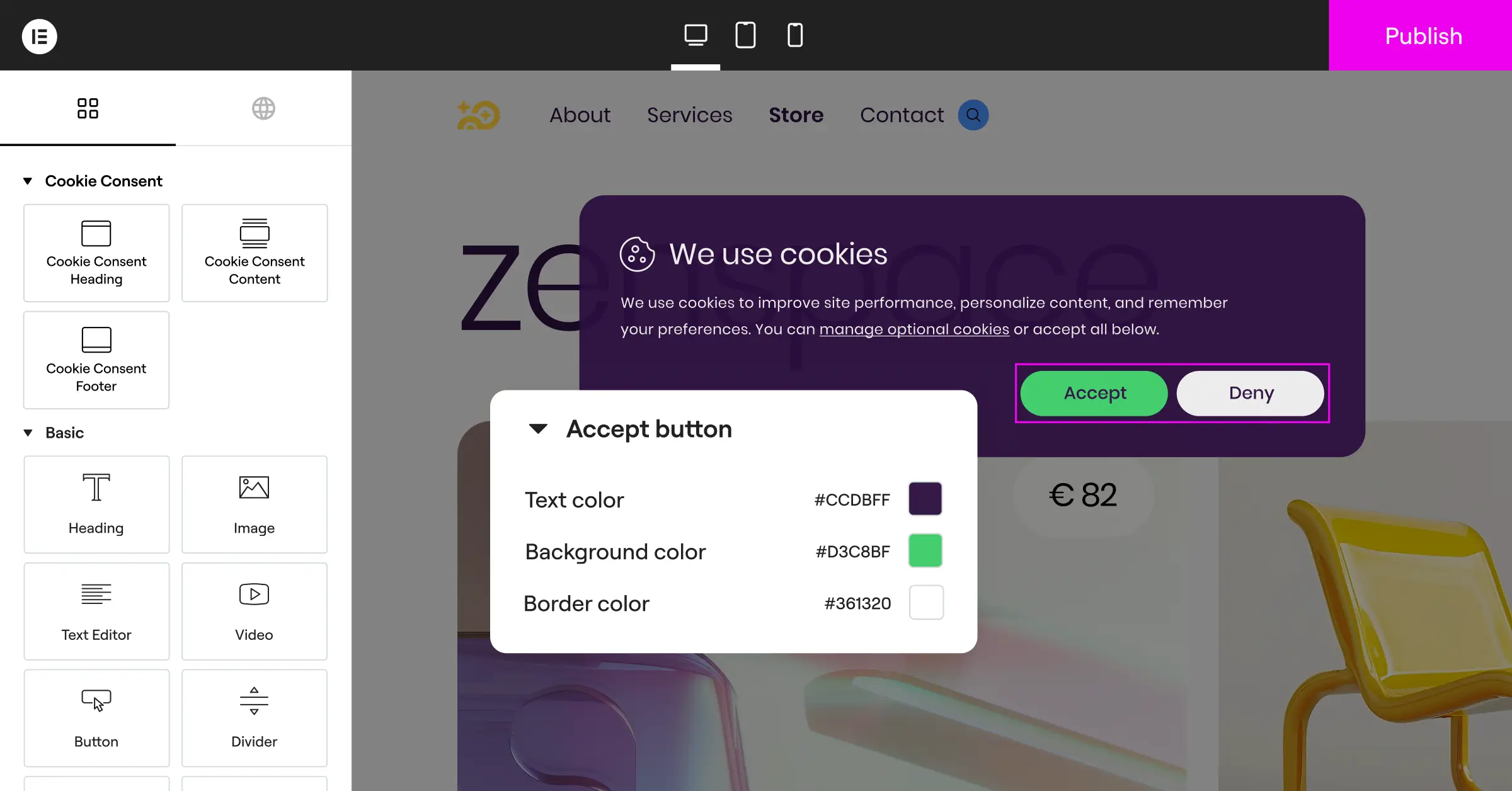
- Targets banners by visitor location so you only show notices where they’re legally required.
- Supports Google Consent Mode v2 and Global Privacy Control out of the box.
Expanded features are bundled directly within the official Elementor One package.
Pros & Cons
- Pro – No external dashboards to deal with.
- Pro – Full styling customization to match your brand perfectly.
- Pro – Built-in privacy policy document generator.
- Con – Best suited for sites already in the WordPress ecosystem.
Verdict: For sheer simplicity and native design control, this is the most logical choice for WordPress site owners who don’t want to manage separate SaaS platforms.
2. Cookiebot
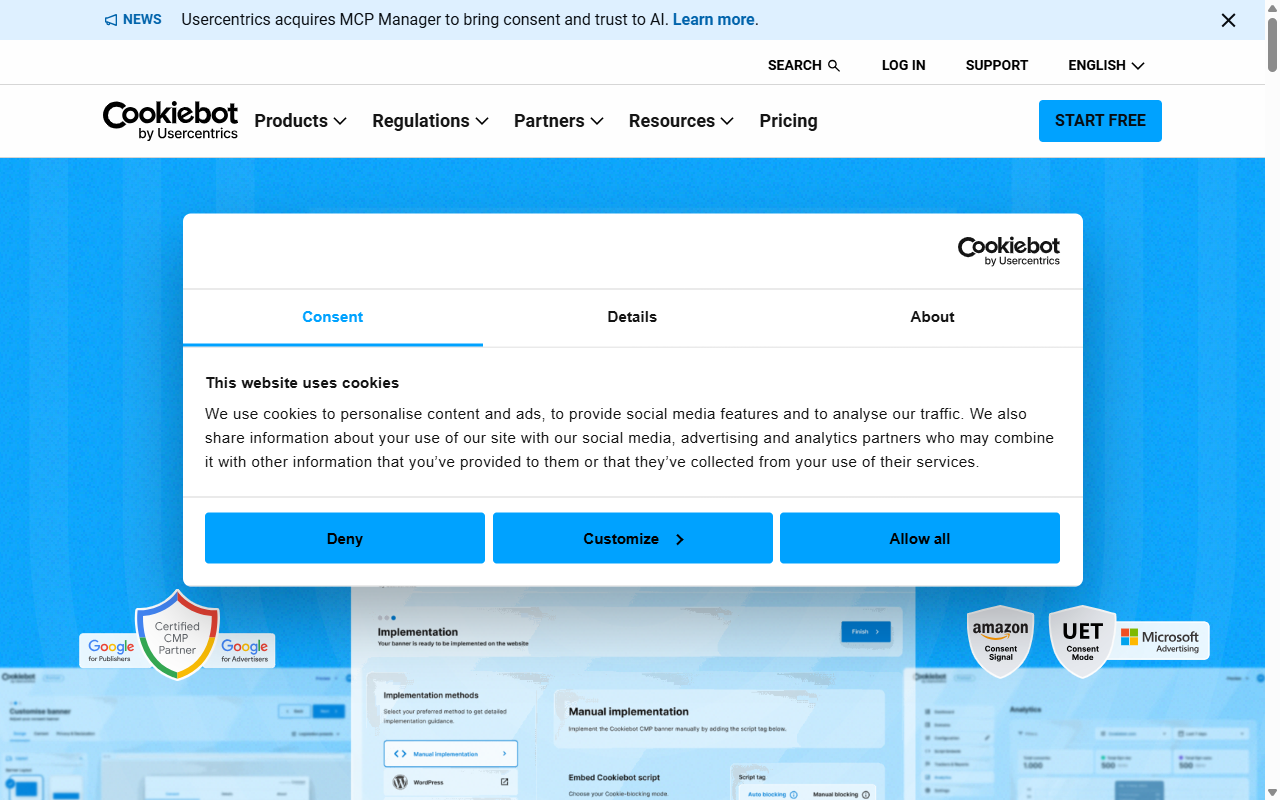
Cookiebot is a widely recognized cloud-based compliance tool that handles privacy consent for websites across the globe. Rather than running entirely inside your WordPress setup, it relies on an external cloud platform to manage your cookie scans and consent histories. It works well for businesses that need to manage compliance across multiple distinct web platforms from one central location.
Setting up Cookiebot involves linking your WordPress site to their cloud controller via an API key. Once connected, the cloud scanner sweeps your site regularly to identify tracking scripts and sort them into standard compliance categories.
Core Features
- Scans your website pages automatically every month to detect new tracking scripts.
- Categorizes all cookies into necessary, preference, statistical, or marketing buckets.
- Displays a clean multi-language banner to match your visitor preferences.
- Controls cookie blocking automatically before users give their consent.
Paid tiers scale based on the total page count of your website.
Pros & Cons
- Pro – Highly accurate cloud scanner keeps your cookie list current.
- Pro – Automatic translation support for dozens of languages.
- Con – Custom styling usually requires CSS work in their external dashboard.
- Con – All settings and data live outside your WordPress environment.
Verdict: Cookiebot is a reliable cloud service that works well if you don’t mind leaving your WordPress dashboard to configure settings.
3. CookieYes
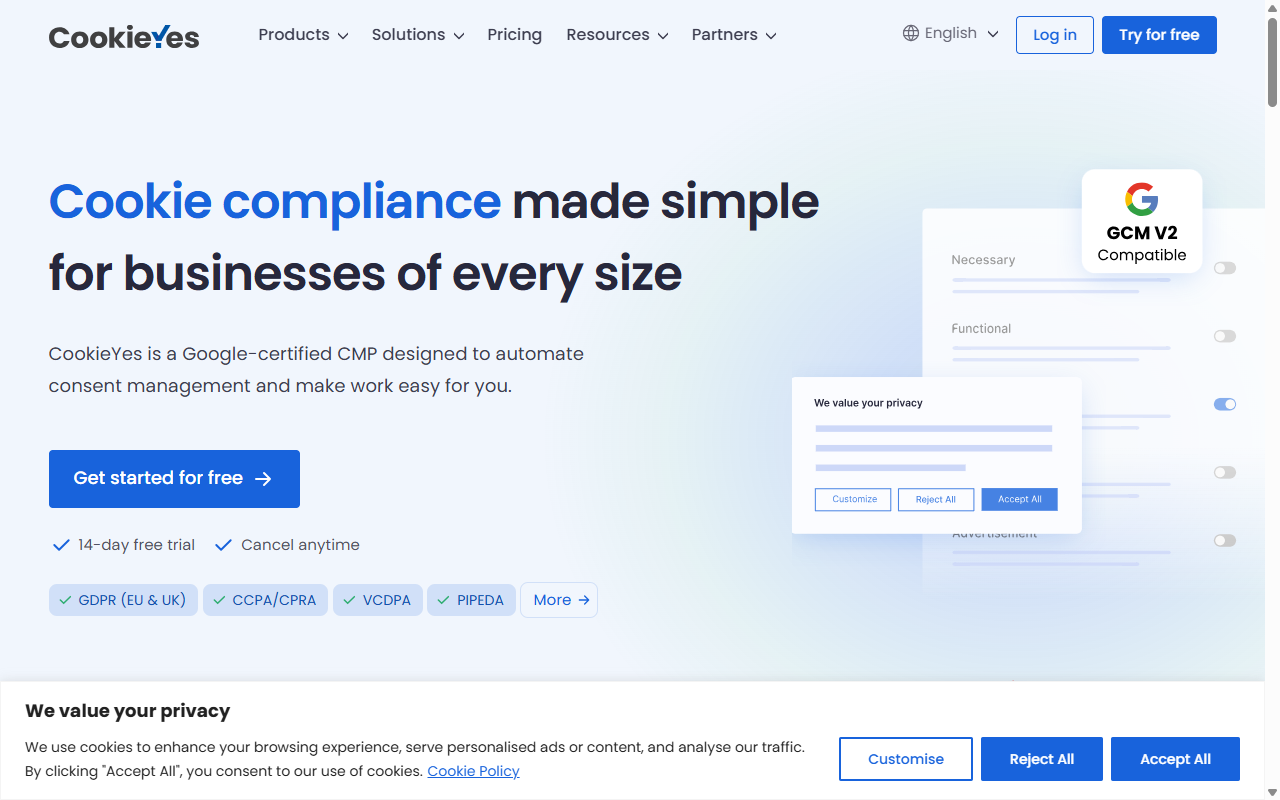
CookieYes is another major player in the cloud-based cookie consent market. It features a modern interface that guides you step-by-step through the banner creation process. It’s built to work across various content management systems, with a dedicated integration that makes it friendly for WordPress users.
With CookieYes, you design your banner in their cloud editor and push changes directly to your site. It’s well-regarded for its visual simplicity and friendly onboarding flow (this part trips a lot of people up with other tools, but CookieYes keeps it refreshingly clear).
Core Features
- Builds banner layouts using an intuitive visual preview tool.
- Generates a custom privacy policy based on your active site scripts.
- Tracks all visitor consent choices in an easy-to-read cloud dashboard.
- Blocks third-party script execution automatically before consent is given.
Professional plans are available with monthly subscriptions for advanced geolocation targeting.
Pros & Cons
- Pro – Excellent visual builder that makes custom colors easy to apply.
- Pro – Supports CCPA and GDPR in one banner setup.
- Con – You must log into an external platform to check analytics or update settings.
- Con – Entry-level plan features a prominent brand watermark.
Verdict: A solid, user-friendly cloud-based option that balances easy visual design with strong regulatory support.
4. Complianz
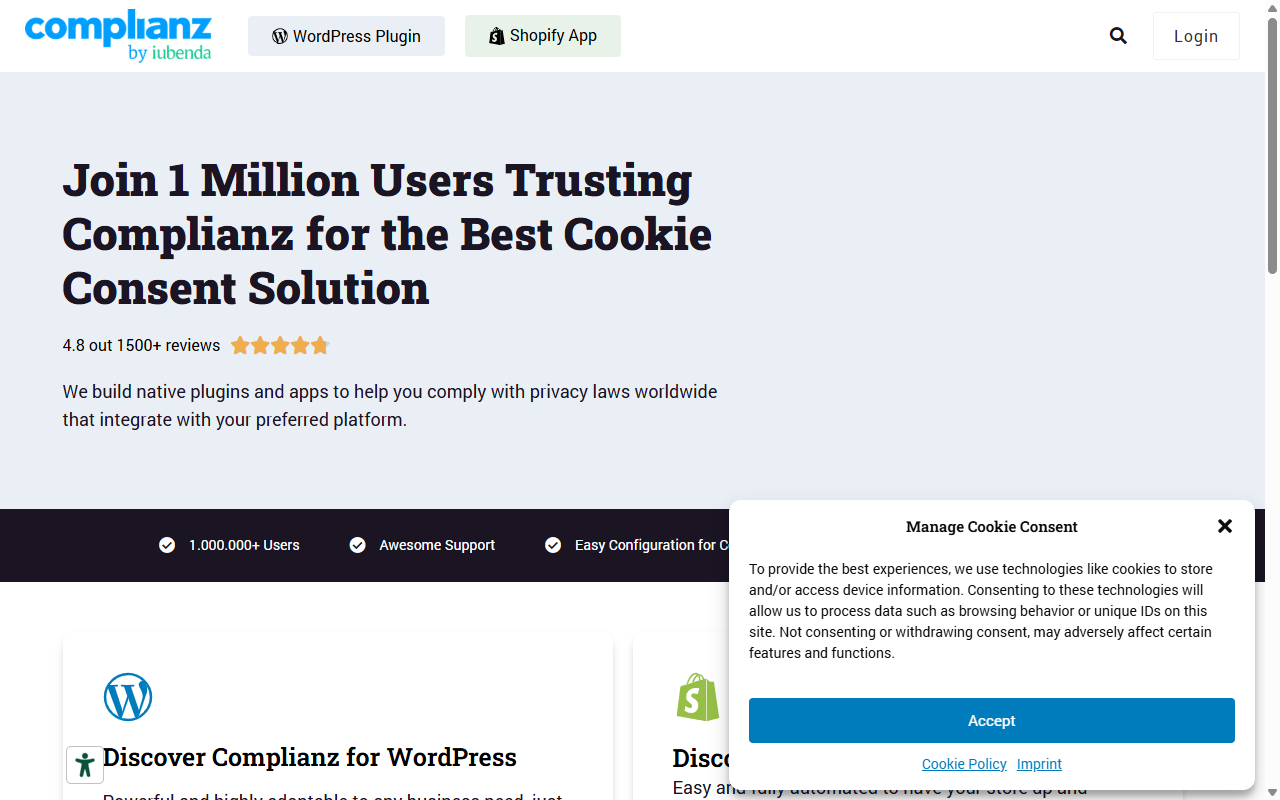
Complianz is a privacy suite built specifically for the WordPress environment. It functions as a wizard-driven setup tool that walks you through a series of legal questions about your business and site operations. Based on your answers, Complianz automatically generates custom cookie policies and configures your banner behavior.
Because it’s a self-contained WordPress tool, your visitor data and settings stay securely inside your own database. Developers who care about data ownership and page-load performance tend to appreciate this approach.
Core Features
- Guides you through a detailed legal questionnaire to customize your policies.
- Configures targeted banners based on specific regional requirements (GDPR, CCPA, DSGVO).
- Integrates with popular analytics tools to manage script tracking behavior.
- Generates legally structured policy pages for your footer menu.
A free version is available on WordPress.org. Premium licenses are sold on an annual basis for advanced integrations and multi-site support.
Pros & Cons
- Pro – All processing stays entirely on your own server.
- Pro – Deeply integrated with popular contact form tools and social feeds.
- Con – The detailed setup wizard can feel like a lot to work through at first.
- Con – Interface design can look busy for absolute beginners.
Verdict: A thorough, functional WordPress tool that’s excellent for technical users who want to manage complex legal frameworks locally.
5. iubenda
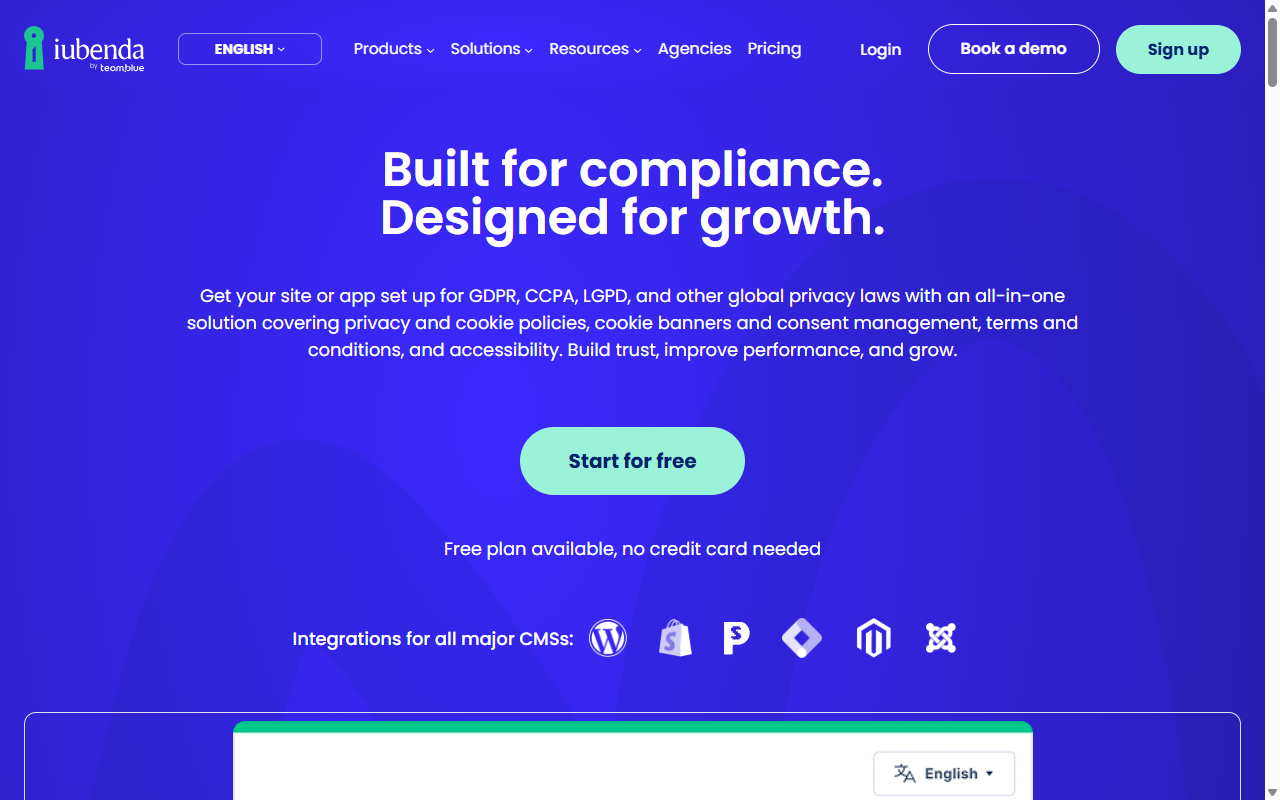
If you need a complete compliance solution that handles cookie banners, privacy policies, terms of service documents, and internal consent management all in one place, iubenda is worth a close look. Rather than just blocking cookies, it serves as an overarching platform for legal text generation and management.
The setup process involves building a legal document stack in your iubenda cloud dashboard, which is then dynamically fed to your WordPress site through their integration script.
Core Features
- Connects dynamically generated legal documents directly to your site pages.
- Updates cookie policies automatically whenever global privacy laws shift.
- Records consent preferences with timestamped records for legal proof.
- Allows extensive custom branding configurations across all banner types.
A limited entry-level plan is available, with paid tiers for more advanced features.
Pros & Cons
- Pro – Complete legal coverage that goes beyond simple cookie consent.
- Pro – Auto-updates documents when legal regulations change.
- Con – The modular pricing can add up depending on your needs.
- Con – Steeper learning curve compared to simpler single-purpose tools.
Verdict: Best for businesses that want a centralized, legally-backed service to handle both legal documentation and cookie compliance together.
6. Termly
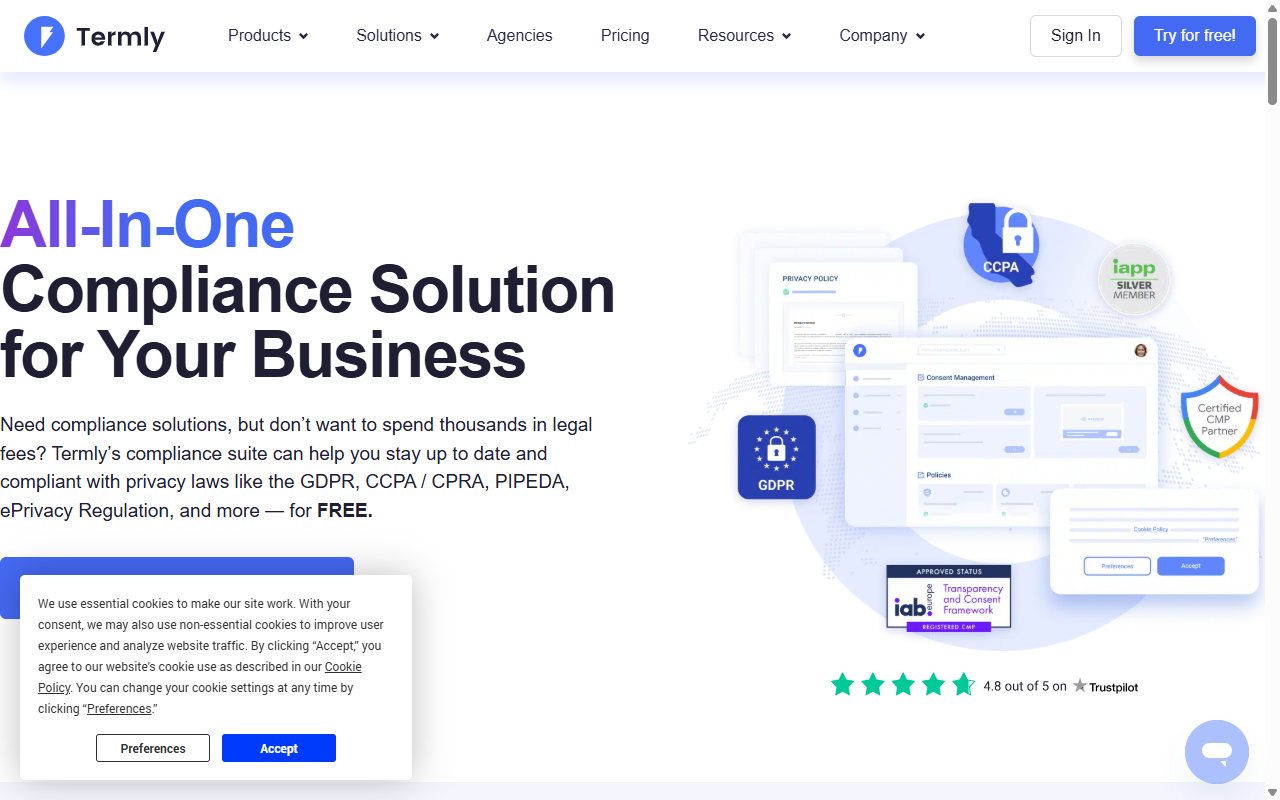
Termly is built with small business owners in mind who need quick, clean compliance setups. Their suite includes policy builders alongside a cookie consent banner, and the setup process takes you through a series of forms to identify your tracking tools and design a banner that fits your site (it’s simpler than it sounds, really).
No coding skills needed to make it look polished and professional.
Core Features
- Builds custom compliance policies using intuitive question-based generators.
- Detects trackers through an automated monthly scanning utility.
- Maintains clear audit trails to show compliance regulators if needed.
- Adapts your cookie banner design to fit standard mobile screens.
Premium tiers unlock unlimited page views and advanced policy templates.
Pros & Cons
- Pro – Clean and modern setup wizard.
- Pro – Simple visual controls for non-technical users.
- Con – Page-view caps on the entry-level plan can be limiting for growing sites.
- Con – Settings live outside your WordPress database.
Verdict: A great option for smaller blogs and boutique business sites that want an easy-to-use setup wizard and modern design.
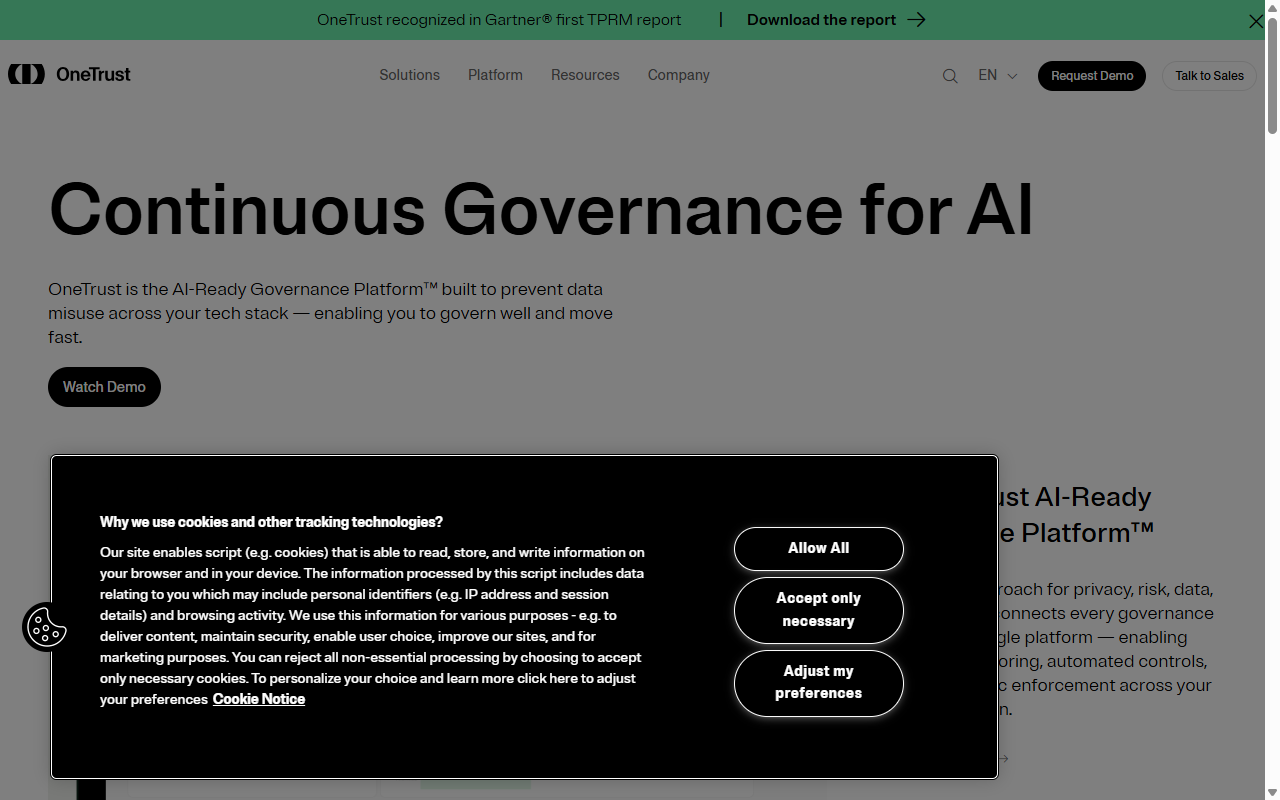
7. OneTrust
For large organizations and enterprise-level businesses, OneTrust is often considered the gold standard of data privacy management. It goes far beyond standard cookie consent to handle general data governance, vendor risk assessment, and complex user preference centers. It scales to handle massive traffic volume across large site portfolios.
Integrating OneTrust on WordPress typically requires their cloud console to configure rules and deploying code via Tag Managers or custom header setups.
Core Features
- Manages enterprise compliance across hundreds of global domains from one console.
- Applies geo-location rules based on state and national jurisdictions.
- Interfaces with CRM systems to coordinate user marketing preferences.
- Provides detailed analytics dashboards showing opt-in rates across regions.
Contact their sales team or purchase specialized plans to get full access.
Pros & Cons
- Pro – Unmatched depth of features for large-scale compliance needs.
- Pro – Built to handle complex global privacy audits.
- Con – Overkill for simple blog sites or local business pages.
- Con – Significant cost and professional setup time required.
Verdict: Built for corporate platforms and enterprise systems that need heavy-duty compliance infrastructure and have the budget to support it.
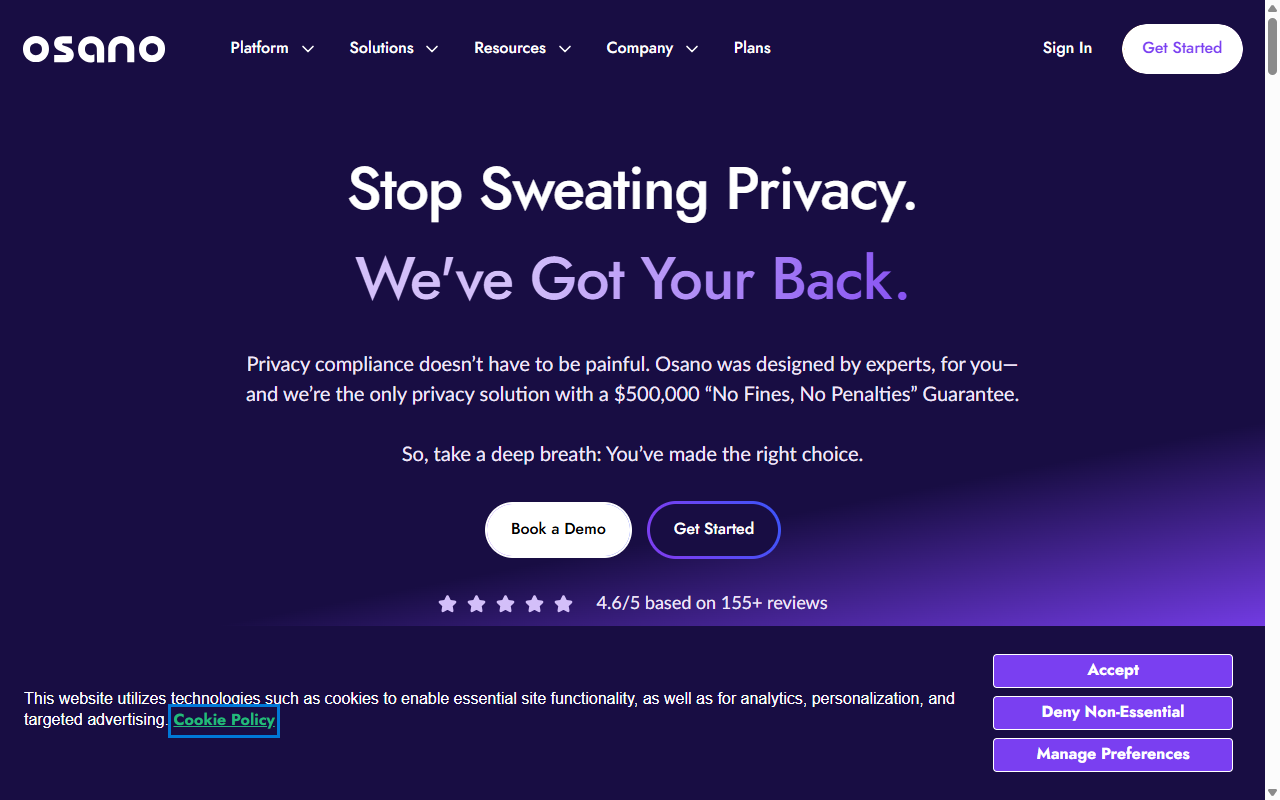
8. Osano
Osano positions itself as a secure, low-maintenance compliance tool. Its standout offer is a compliance guarantee, giving companies peace of mind about potential regulatory issues. Osano manages consent scripts by routing them through their proxy servers, so trackers are blocked before the user makes a choice.
Configuring Osano on WordPress involves inserting a script tag into your theme header. From that point, all script blocking is handled by Osano’s external cloud engine.
Core Features
- Blocks unknown tracking scripts automatically before user review.
- Guarantees compliance up to specific financial limits for peace of mind.
- Translates your consent banners into 30-plus languages.
- Saves regional consent history logs dynamically for audit readiness.
Commercial plans are billed on a monthly scale based on traffic and domain numbers.
Pros & Cons
- Pro – Clean, minimalist banner style that looks at home anywhere.
- Pro – Reliable cloud infrastructure keeps banner load times fast.
- Con – Higher pricing compared to some alternatives at similar traffic levels.
- Con – Granular CSS customization requires professional-tier access.
Verdict: A premium, low-maintenance cloud tool for growing companies that want legal security and minimal hands-on upkeep.
9. GDPR Cookie Consent (By WebToffee)
This is a widely used dedicated consent banner tool available in the official WordPress repository. It keeps things practical, giving you direct control of cookie records right from your WordPress admin panel. It’s straightforward, functional, and gets the job done without complex cloud connections.
Setup is easy: install the tool, scan your site, and use the standard WordPress settings page to configure your banner styles and preferences.
Core Features
- Categorizes scripts manually or automatically through built-in scanners.
- Generates clean cookie policy tables you can insert with shortcodes.
- Adjusts cookie banner behavior based on user actions like scrolling or clicking.
- Resets user consent automatically after a set number of calendar days.
Premium add-ons are available for multi-lingual translation and advanced geo-targeting features.
Pros & Cons
- Pro – Fully operational within your native WordPress administration panel.
- Pro – Simple shortcode system to display cookie list tables on any page.
- Con – Styling options in the entry-level plan can look a bit dated.
- Con – Advanced script blocking requires careful manual setup.
Verdict: A reliable, classic local tool that’s great for simple setups where you want full control over your tracking configuration.
10. Real Cookie Banner
Real Cookie Banner is a modern tool built for WordPress users with a strong focus on European regulations like GDPR and ePrivacy. It works directly inside your admin panel, with a focus on clear explanations and a visually polished interface. It includes pre-made configurations for hundreds of popular third-party services, which makes script blocking much simpler to get right.
The configuration wizard walks you through setting up block rules for things like YouTube videos, Google Maps, and social media pixels.
Core Features
- Blocks specific script elements like videos and maps with local placeholders.
- Pre-configures compliance rules for over 150 popular tracking scripts.
- Checks your system settings for compliance issues through an active scanner.
- Saves design customizer changes with real-time visual previews.
A free version is available on WordPress.org. The Pro version is sold on an annual subscription for extended script profiles.
Pros & Cons
- Pro – Excellent local placeholder system for external media like maps or videos.
- Pro – Modern dashboard design that matches the native WordPress style.
- Con – The entry-level plan is quite limited compared to the premium edition.
- Con – Heavy focus on German and European laws may feel overly detailed for US-only sites.
Verdict: An outstanding choice for European sites that need to block embedded media and want deep, developer-friendly local control.
Step-by-Step Selection Guide
To find your best fit, ask yourself a few practical questions about your daily workflow. This quick checklist will point you in the right direction:
- Do you want to stay in your WordPress dashboard? If so, choose a native tool like the Cookie Consent capability in Elementor or Complianz. This keeps your interface clean and your setup quick.
- Are you running multiple sites across different platforms? If you’ve got a Shopify store, a Webflow landing page, and a WordPress blog, a cloud service like Cookiebot or CookieYes lets you manage them all from one place.
- Do you have strict ad tracking requirements? Make sure the tool you choose supports Google Consent Mode v2 natively so your marketing data stays clean and accurate.
- Do you need custom designs? Look for a solution that integrates with your page builder or theme customizer so you don’t have to write custom CSS just to change a button color.
“Modern privacy compliance is no longer just about showing a banner on your homepage. It’s about respecting user data preferences reliably behind the scenes. Using a native cookie consent tool lets WordPress creators maintain a fast, compliant, and beautifully designed user experience without leaving their core editor environment.”
– Itamar Haim, Web Compliance Specialist
Frequently Asked Questions
Do I really need a cookie consent banner on my WordPress site?
Yes, if you have visitors from the European Union, United Kingdom, California, or several other jurisdictions, you’re legally required to notify them about tracking scripts and offer a clear way to choose which cookies they allow. Even simple analytics tracking requires proper consent in these regions.
Will a cookie banner slow down my website performance?
It depends on how the tool is built. Native tools that run light scripts inside your WordPress environment usually have negligible performance impact. Some external cloud tools can cause slight layout shifts, but choosing a well-built solution keeps your pages fast.
What is Google Consent Mode v2, and do I need it?
Google Consent Mode v2 tells Google’s advertising and analytics services how to behave based on user consent choices. If you run Google Ads or Google Analytics and serve audiences in the EU or UK, you need to support this feature to keep tracking conversions and building custom audiences.
Can I make my own cookie banner using basic HTML?
You can design the visual banner yourself, but the tricky part is the script blocking. A proper setup must actively prevent cookies like Facebook Pixels or Google Analytics from loading until the user clicks “Accept.” Building that manual blocking logic yourself is time-consuming, which is why pre-built tools are so popular.
What happens if I don’t comply with GDPR or CCPA?
Regulators have the authority to issue financial penalties for non-compliance. While small websites are rarely targeted with major immediate fines, you risk having ad accounts suspended or receiving formal warning letters. Keeping your site compliant from day one is much safer and builds real trust with your audience.
What is the difference between a privacy policy and a cookie consent banner?
A privacy policy is a dedicated document explaining what data you collect, how you use it, and who you share it with. A cookie banner is an active, on-screen tool that lets users accept or reject tracking scripts in real time. You need both to be fully compliant.
How do I know if my cookie consent setup is working correctly?
Open your site in a private browsing window (incognito mode), launch your browser’s developer tools, and check the cookie storage panel. No tracking cookies should appear in storage until you click “Accept” on your consent banner. That’s your quick smoke test.
Is there a completely free option to remain compliant?
Yes, many tools, including the native Cookie Consent capability, offer functional entry-level plans with automatic scanning, banner display, and basic compliance settings. That’s great for personal blogs or local business sites taking their first steps toward compliance.