If you’re running a WordPress site, you already know how fast privacy rules are changing. Keeping your site compliant can feel like chasing a moving target, and it’s genuinely stressful when you’re not sure if you’re doing it right. The good news is that choosing the right tool makes this a lot more manageable than it looks. We’ll walk through the top cookie consent options for 2026, breaking down how they actually work so you can make a confident, informed choice. Your visitors deserve to feel safe, and your site deserves to stay compliant without a headache.
Key Takeaways
- Native tools reduce bloat, Choosing a WordPress-native solution keeps your database light and spares you from managing external dashboards.
- Consent Mode v2 is essential, If you use Google services and serve visitors in the EU, your consent tool must support Google Consent Mode v2.
- Geo-targeting saves conversions, Showing banners only to visitors who legally require them keeps your site clean for everyone else.
- Audit readiness is key, Real compliance means keeping secure, local consent logs in case a regulator ever asks for proof.
Why Privacy Compliance Matters for Your WordPress Site in 2026
Privacy laws are no longer something only massive corporations have to worry about. Small businesses, bloggers, and e-commerce stores are all under the microscope. Regulatory bodies worldwide are actively enforcing rules like the General Data Protection Regulation (GDPR) in Europe and the California Consumer Privacy Act (CCPA) in the United States. Failing to meet these standards can lead to substantial fines, but more importantly, it can damage the trust you’ve built with your audience.
Beyond legal exposure, search engines and advertising networks now demand compliance too. Google requires Consent Mode v2 for any site using Google Ads or Google Analytics to target audiences in the European Economic Area. Without a compatible setup, your tracking will stop working correctly, which directly hurts your marketing efforts. Finding a tool that handles these updates automatically is a smart move for your business.
The good news is that setting up a banner doesn’t have to ruin your design. Modern tools let you match your brand style perfectly while keeping all the technical tracking running smoothly behind the scenes. You can protect your visitors and keep your site running beautifully at the same time, and the whole process is much less painful than you might expect.
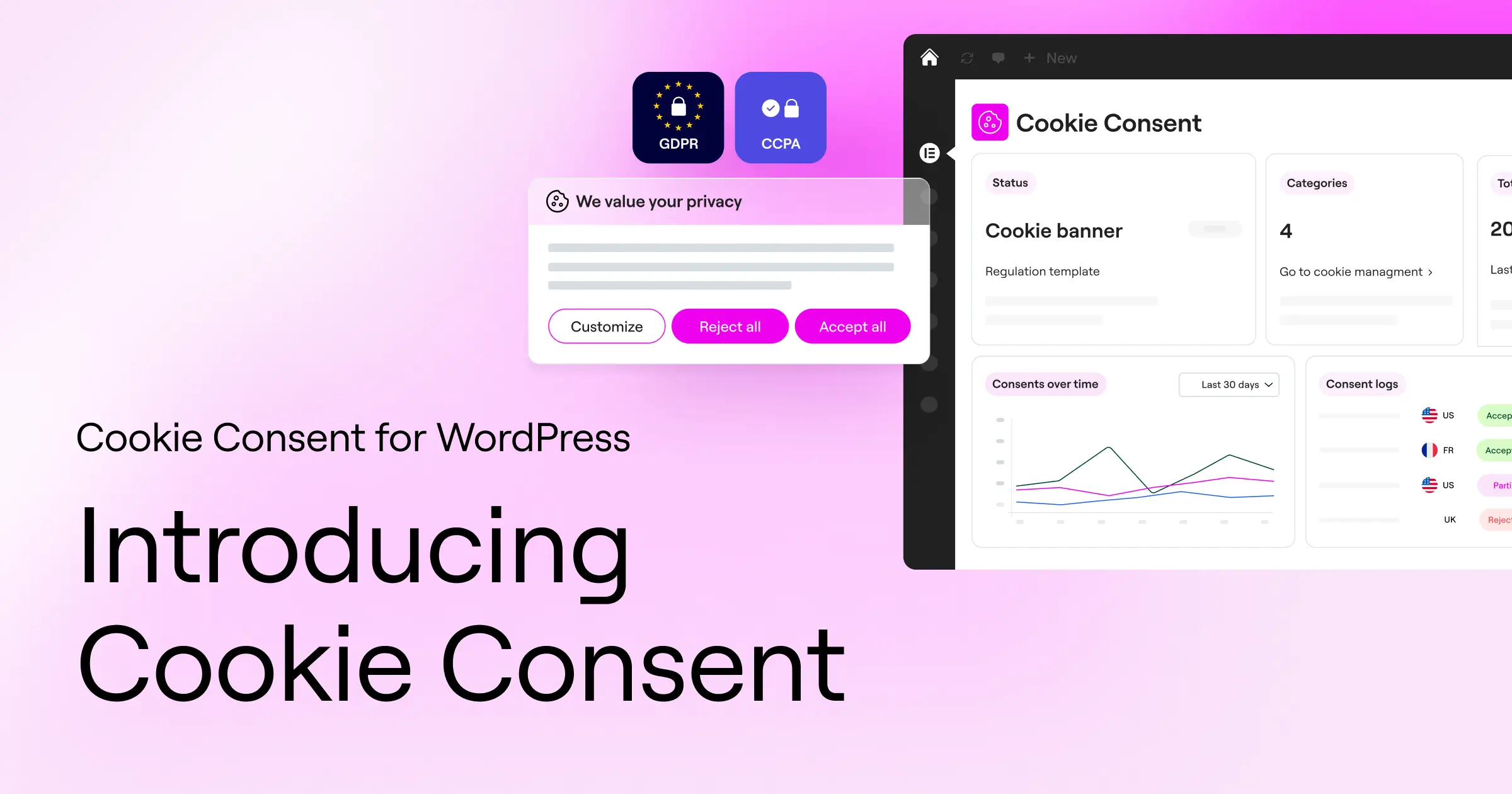
Privacy compliance is no longer just a legal checklist; it’s a fundamental part of the modern user experience. WordPress site owners need reliable, local tools that respect user choices without slowing down page performance.
– Itamar Haim, Web Compliance Specialist
The Ultimate Cookie Consent Comparison Chart (2026)
To give you a quick bird’s-eye view, here’s a clear comparison of the top tools. It highlights the core differences so you can see at a glance which one fits your workflow.
| Consent Tool | Dashboard Location | Consent Mode v2 Support | Geo-Targeting | Best For |
|---|---|---|---|---|
| Cookie Consent | WordPress Native | Yes | Yes | WordPress site owners wanting a clean, fast, native dashboard experience. |
| Cookiebot | External Cloud | Yes | Yes | Users looking for automated, cloud-based scanning. |
| CookieYes | External Cloud & WP | Yes | Yes | Multi-platform sites that need a unified external portal. |
| Complianz | WordPress Native | Yes | Yes | Sites requiring complex, region-specific legal document generation. |
| iubenda | External Cloud | Yes | Yes | Agencies needing complete legal policy generation across apps. |
| Termly | External Cloud | Yes | Yes | Small business owners looking for simple cloud-hosted compliance suites. |
A Detailed Look: The Top Cookie Consent Solutions for WordPress
Let’s dig into each of these tools in depth. We’ll look at how they work, who they’re best for, and what makes them stand out. That way you can match the exact feature set to what your website actually needs.
Cookie Consent
The first option worth highlighting is Cookie Consent. This is Elementor’s cookie consent capability, built natively for WordPress. It manages GDPR and CCPA compliance directly from your WordPress dashboard, meaning there are no external accounts to create and no separate platforms to check. It’s designed to be lightweight while giving you full control over your privacy settings.
Because it’s native, setup is genuinely fast. You can get a banner up and running in under five minutes (it’s simpler than it sounds). It also integrates smoothly with Elementor design tools, so you can style your banner to look like a natural part of your website rather than an awkward add-on. It’s a strong choice for anyone who values speed, clean code, and dashboard simplicity.
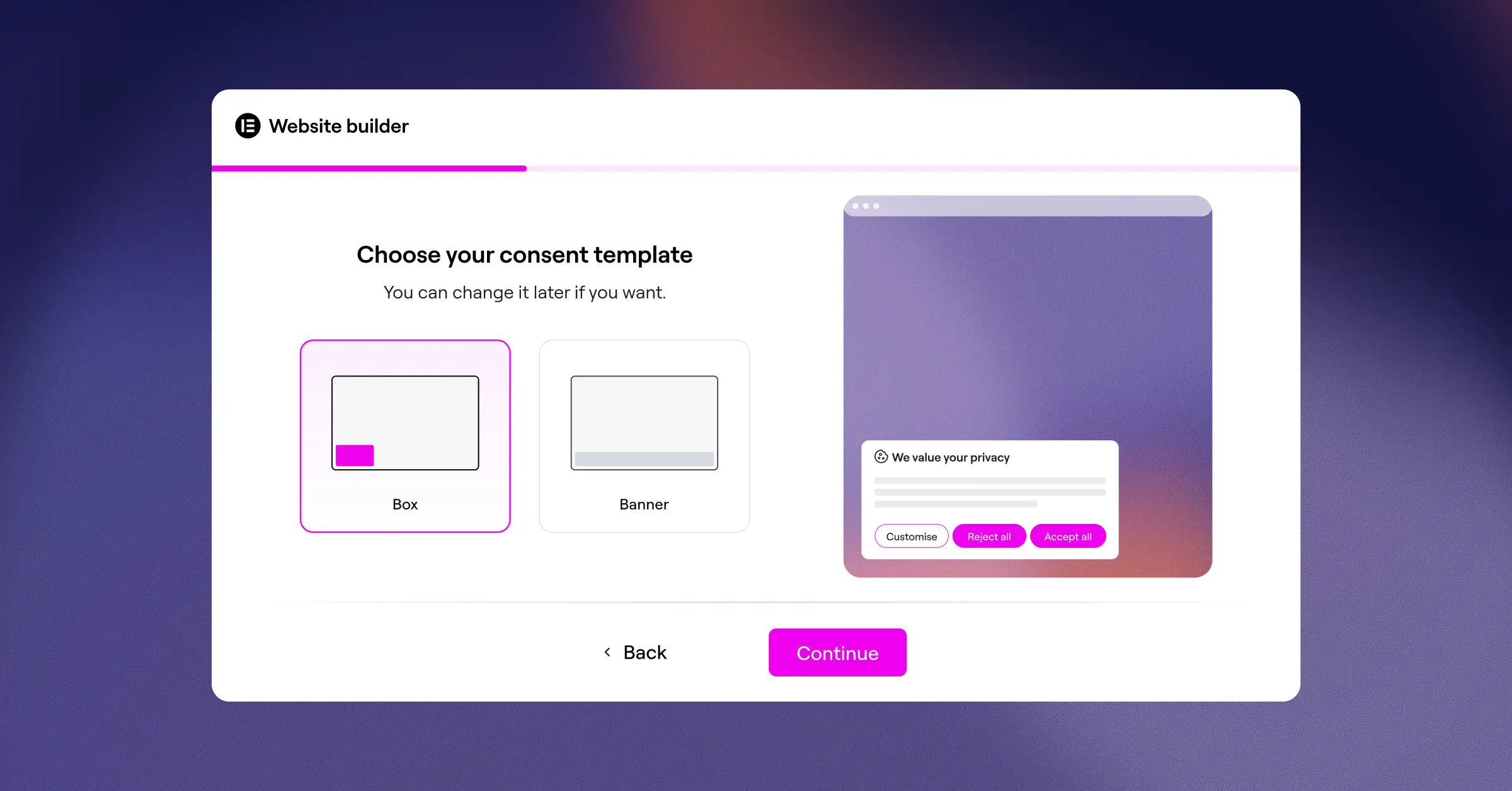
- Scans and categorizes cookies and scripts automatically to prevent unauthorized tracking before user consent is given.
- Keeps consent logs directly inside your database to provide a secure audit trail for regulatory checks.
- Supports Google Consent Mode v2 and Global Privacy Control (GPC) out of the box to keep your marketing data accurate.
- Displays geo-targeted banners so that only visitors from specific regions see the consent prompts.
- Includes a built-in policy generator to help you build compliance pages quickly.
- Works with multilingual sites to translate your banner text dynamically for global audiences.
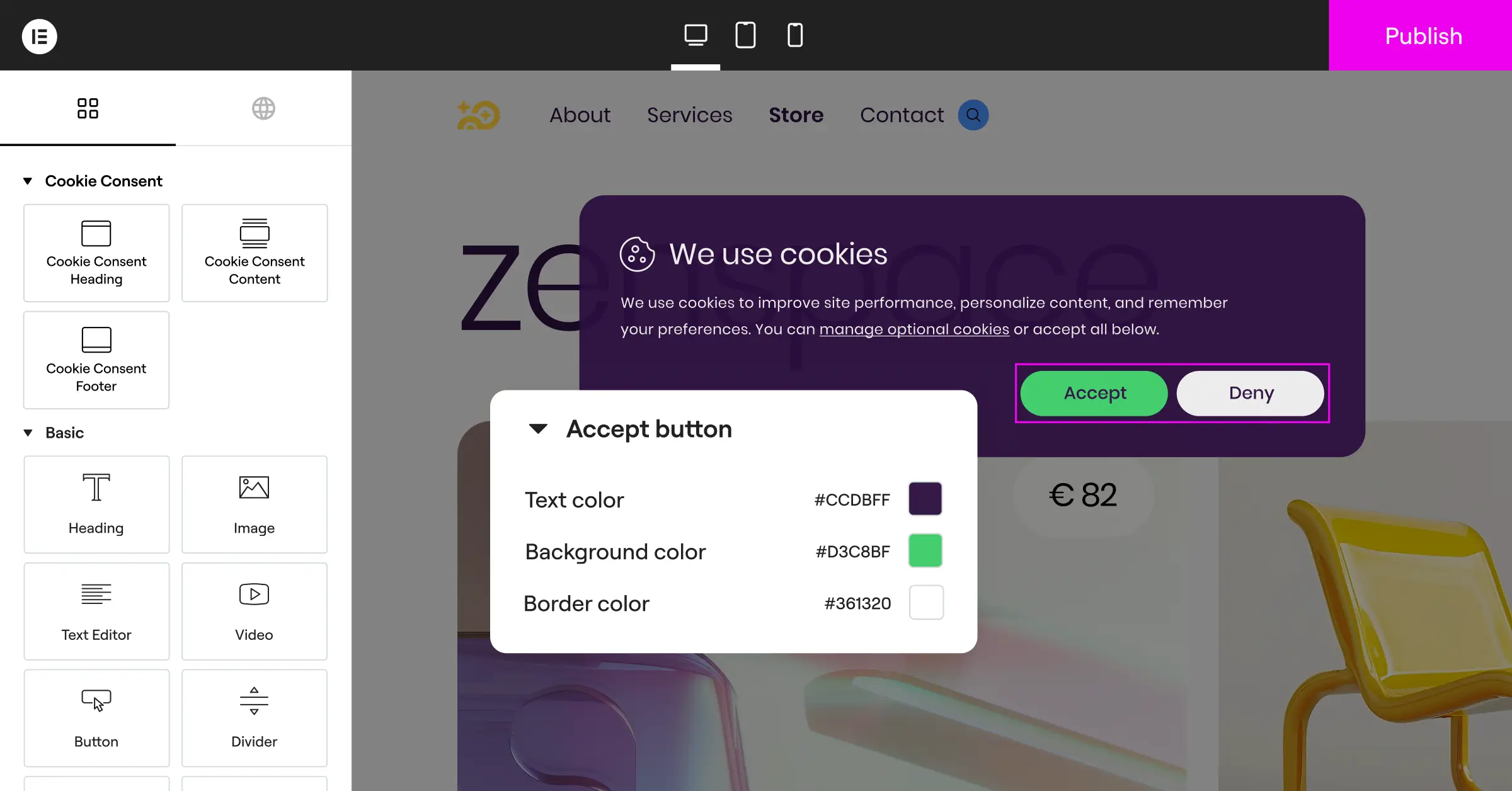
This capability is available on an entry-level plan and is also included in professional bundles like Elementor One. It’s built to solve the problem of fragmented third-party dashboards by keeping everything in one place.
Cookiebot
Cookiebot is an established, cloud-based consent management platform that works across multiple website platforms, including WordPress. It’s well-regarded for its thorough scanning engine, which crawls your site regularly to identify and classify tracking scripts. Because it runs on an external cloud, most of the processing happens off your server.
Managing your banners is done through the Cookiebot web portal. While that does add an extra login to your workflow, it makes it straightforward to manage consent across multiple non-WordPress websites from a single interface. It’s a reliable option for businesses that need deep automated scanning and are comfortable working within an external interface.
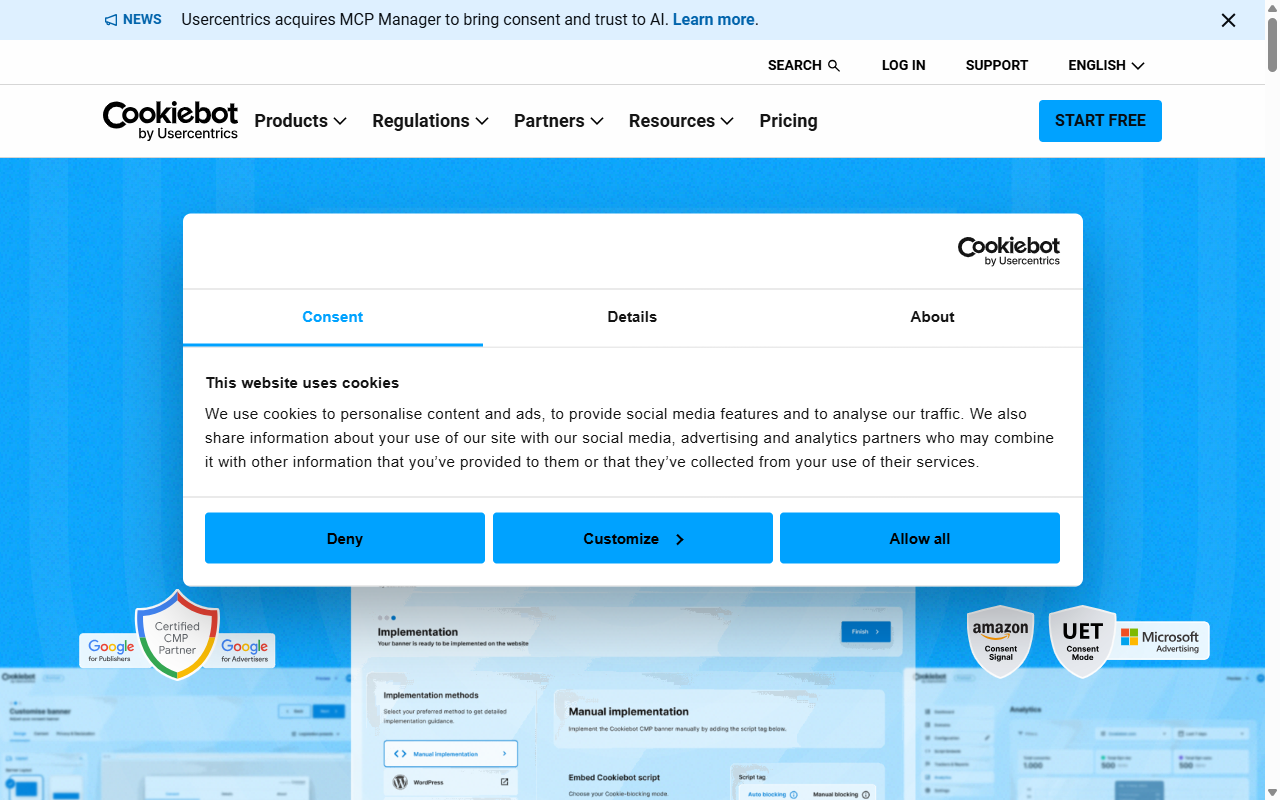
- Conducts automated scans of your site on a regular schedule to discover new cookies and keep your policy current.
- Hosts consent data on secure cloud servers to keep your local database clean.
- Integrates with Google Tag Manager to simplify script deployment based on user preferences.
- Provides a customizable widget that visitors can click at any time to update their settings.
- Supports custom CSS styling so developers can match the design to their website theme.
- Generates an automatic cookie declaration that you can embed on your privacy page.
Cookiebot offers an entry-level plan for very small websites, with tiered pricing for larger sites and higher scan volumes.
CookieYes
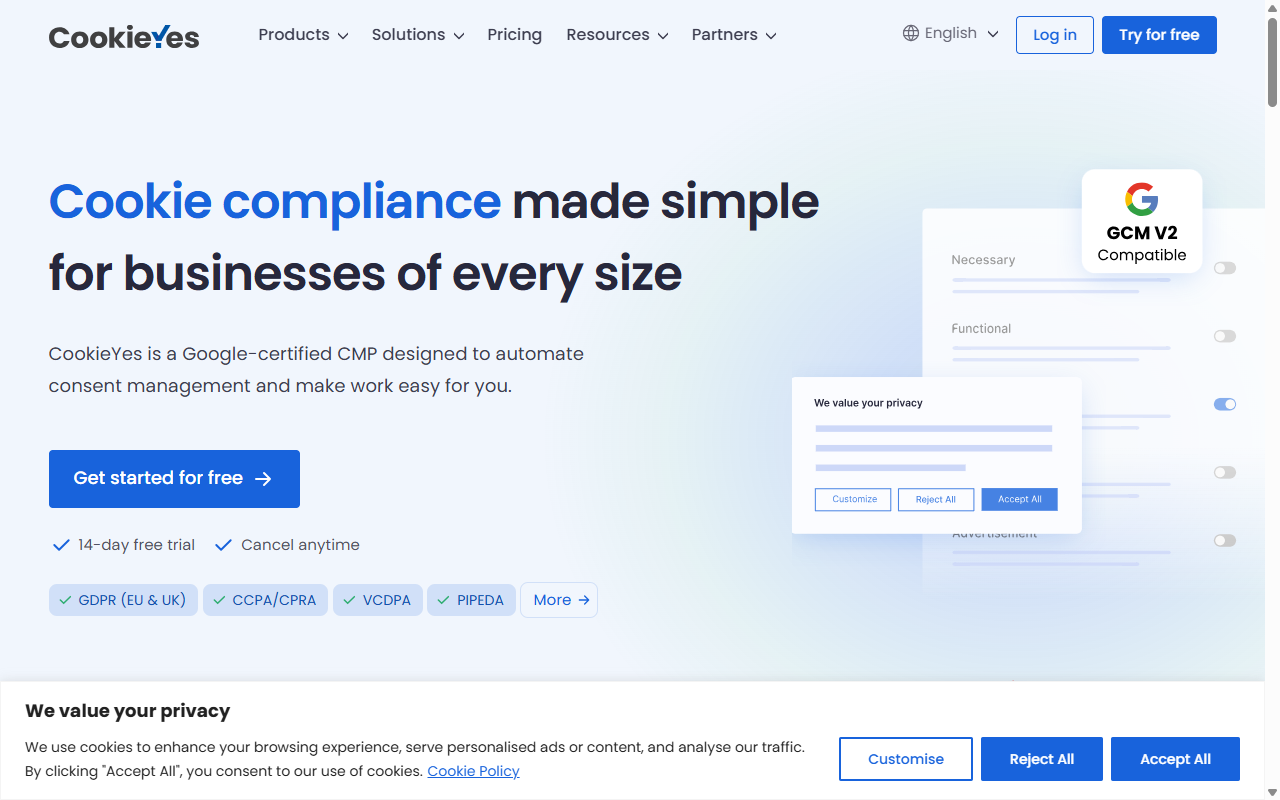
CookieYes is another well-known cloud-based service with a popular WordPress companion. It’s recognized for its clean, user-friendly interface and quick setup process. Like other cloud tools, it stores your configurations on its own servers, letting you control multiple sites from one centralized dashboard.
The tool is focused on helping you achieve compliance without requiring complex coding knowledge. It supports major privacy laws globally and handles cookie blocking automatically before users click accept. It’s a popular choice for users who want a balance between ease of use and solid features.
- Blocks scripts automatically until the visitor provides explicit consent via the banner.
- Features a centralized dashboard where you can manage multiple websites under one account.
- Supports geo-targeting to show different banners to EU versus US visitors.
- Offers a wide selection of pre-made templates that look professional right out of the box.
- Records user consent choices to help you maintain a reliable compliance log.
- Handles Google Consent Mode v2 to keep your analytics data compliant with current standards.
Complianz
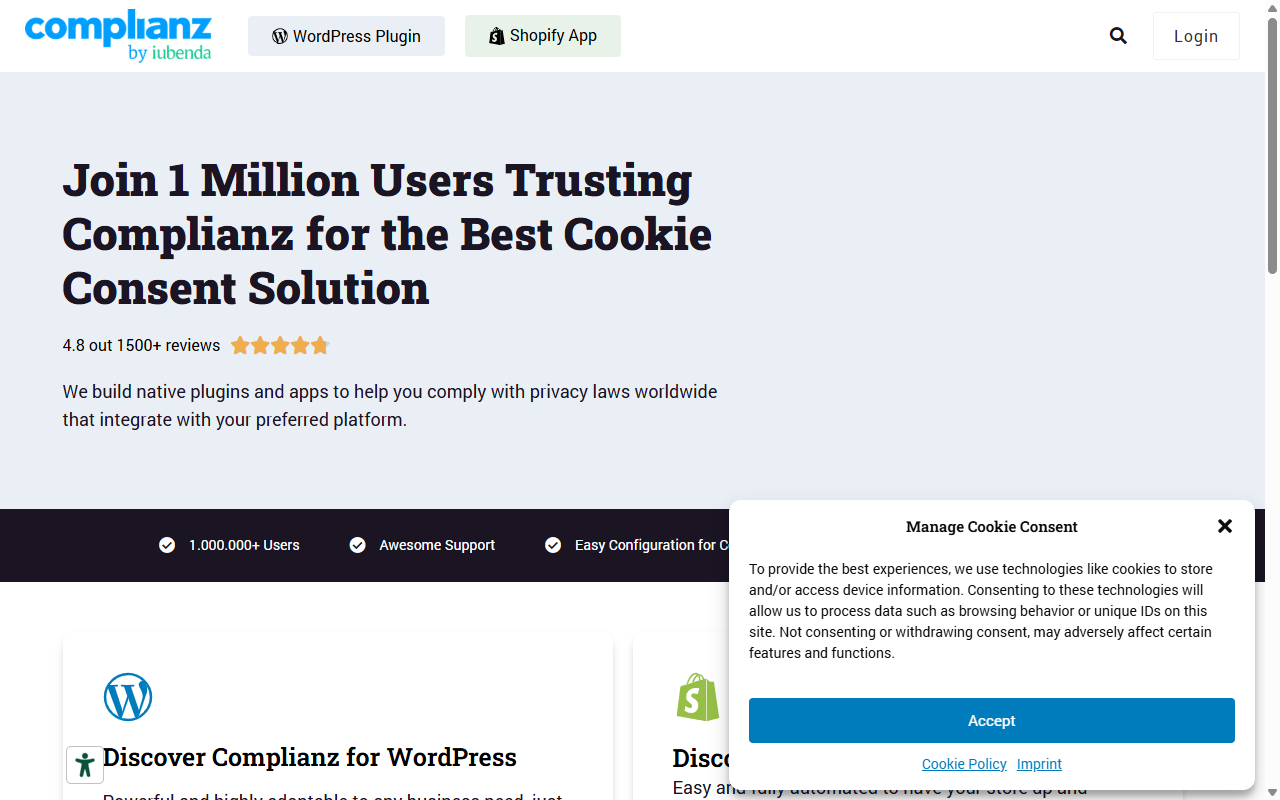
Complianz is a privacy suite built specifically for the WordPress ecosystem. It operates entirely within your own dashboard and takes a legal-first approach to setup. When you get started, it walks you through a complete wizard that asks about your business model, target audience, and data-gathering practices to build a customized compliance policy.
It’s an excellent option for those who want deep legal customization directly in WordPress. It doesn’t just build banners; it also helps you generate legally recognized documents like Cookie Policies and Impressums based on your specific answers. It’s detailed and well-suited for sites with complex legal needs.
- Guides you through a legal wizard to determine exactly which privacy laws apply to your business.
- Generates dynamic legal documents that automatically update when laws or site configurations change.
- Integrates directly with popular WordPress tools to block tracking scripts automatically.
- Keeps your site data private by handling consent management entirely on your own server.
- Supports regional consent options to adapt banner behavior based on local privacy laws.
- Offers native integrations with major translation tools to make localization straightforward.
Complianz offers an entry-level plan with core features, while premium versions unlock advanced legal documents and regional settings.
iubenda
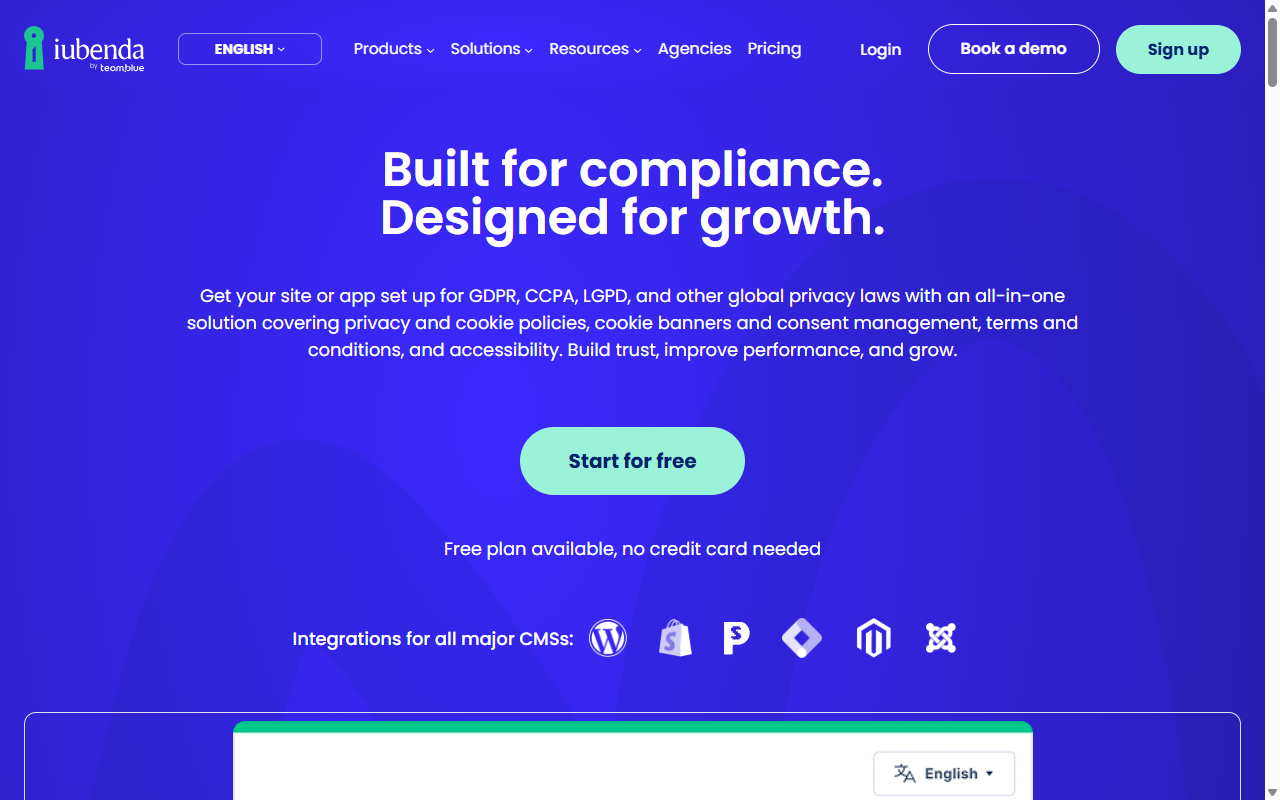
iubenda is a complete compliance suite for businesses that need to manage privacy policies, terms of service, and cookie consent across websites, mobile apps, and e-commerce platforms. It runs through a cloud dashboard, and you connect it to WordPress using their integration tools. It’s a professional-grade option that’s widely used by agencies.
The main advantage of iubenda is its legal backing. Their privacy policies are drafted and updated regularly by a team of lawyers, giving you solid assurance that your legal text stays accurate over time. If you’ve got both an app and a website and want a single compliance system for both, iubenda is worth a close look.
- Provides lawyer-crafted privacy policy templates that update automatically as international laws change.
- Manages cookie consent banners and privacy policies under a single unified dashboard.
- Supports complex multi-site configurations, making it highly practical for web agencies.
- Includes built-in support for the IAB Transparency and Consent Framework for publishers using ads.
- Monitors your site automatically to flag new scripts that need legal disclosure.
- Supports advanced styling options through their cloud-based customizer interface.
Termly
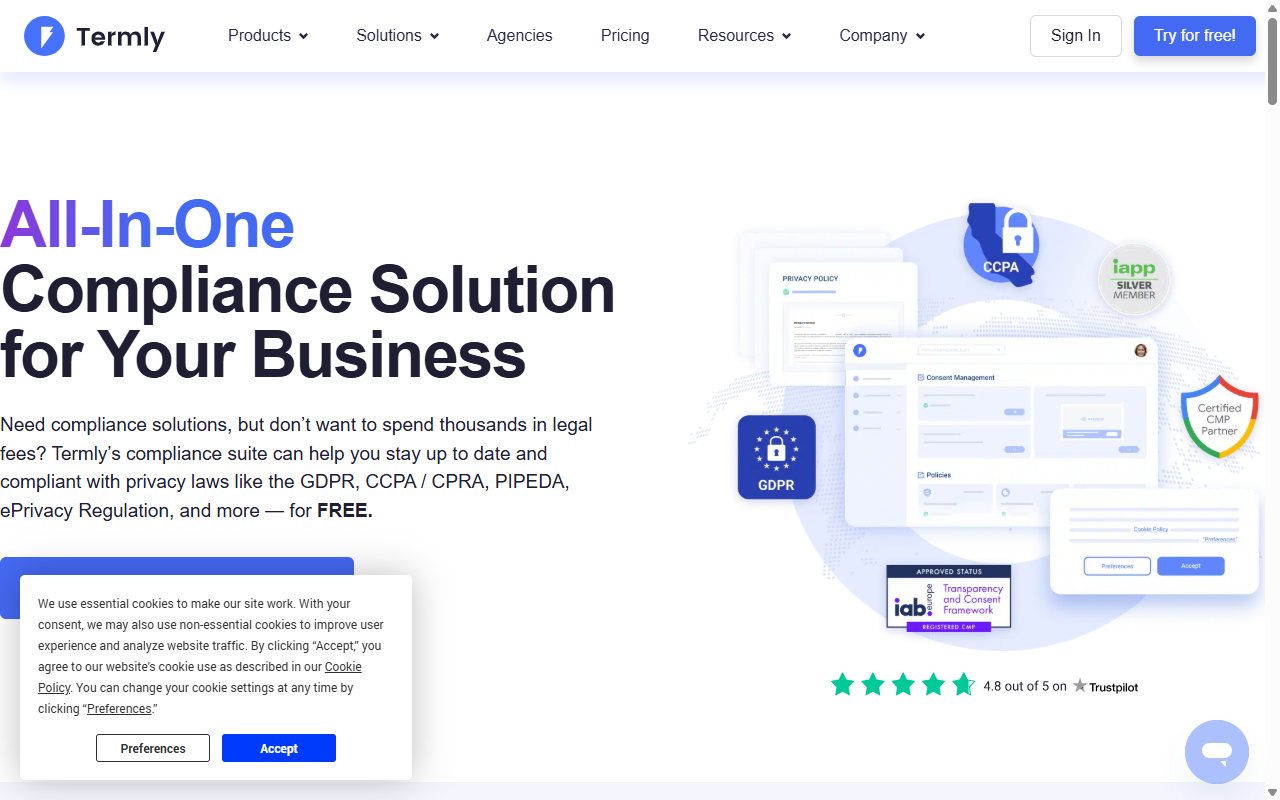
Termly is a cloud-hosted compliance suite aimed primarily at small businesses and startups. It offers an accessible way to generate privacy policies, terms and conditions, and cookie consent banners. It’s built to be a one-stop shop for straightforward legal compliance.
The platform is genuinely easy to use. Its intuitive dashboard walks you through setting up your cookie banner and policies step by step. It’s a solid match for business owners who want a no-fuss approach to compliance without diving deep into developer settings (worth bookmarking if you’re just getting started).
- Provides a complete compliance generator for cookie banners, terms of service, and privacy policies.
- Scans your website automatically to detect tracking scripts and organize them into categories.
- Updates your policies in real-time whenever legal requirements change globally.
- Features a simple style editor to adjust colors and fonts without writing CSS.
- Integrates with WordPress via a straightforward code snippet or integration tool.
- Supports Consent Mode v2 to assist with current Google tracking standards.
Termly offers an entry-level plan with basic features and limits on page scans, with premium plans available for growing businesses.
Key Features to Look For in a Cookie Consent Tool
With so many options out there, it helps to know exactly what features make a real difference in your day-to-day management. When you’re evaluating different capabilities, keep these essential factors in mind.
1. Google Consent Mode v2 Support
This is non-negotiable if you plan on using Google Analytics or running ad campaigns in Europe. The tool you choose must be able to communicate user consent choices directly to Google’s tags. If a visitor declines cookies, Google Consent Mode v2 lets Google’s tags send anonymous pings instead of storing cookies, preserving your tracking data while respecting user privacy.
2. Geo-Targeting Capabilities
Not every visitor to your site needs to see a cookie banner. A visitor from a country with no strict cookie laws might find a banner unnecessary or even annoying. Geo-targeting lets you show your banner only to users from areas like the European Union or California, keeping the experience clean for your other visitors while staying fully legal where it counts.
3. Automatic Script Blocking
Showing a banner alone isn’t enough. To comply with GDPR, your website must actually stop cookies and tracking scripts from loading until the user clicks “Accept.” A good compliance tool blocks these scripts automatically. If a tool only shows a banner but lets scripts run in the background anyway, you’re not actually compliant (this one trips a lot of people up).
4. Dashboard Location
Think about where you want to manage your settings. If you love having everything in one place, a WordPress-native option is ideal, since it keeps your workflow simple and avoids the need to manage extra passwords. But if you manage many sites across different platforms, an external cloud dashboard might be worth the extra login for the unified oversight it provides.
How to Set Up Your Cookie Consent Banner Step-by-Step
Ready to get your banner up and running? Let’s walk through the basic process of setting up a native cookie consent tool directly inside your WordPress dashboard. It’s more straightforward than it sounds, and you’ll have it live before you know it.
- Activate the capability, Go to your compliance dashboard in WordPress and enable the Cookie Consent feature. This prepares your system to start managing scripts.
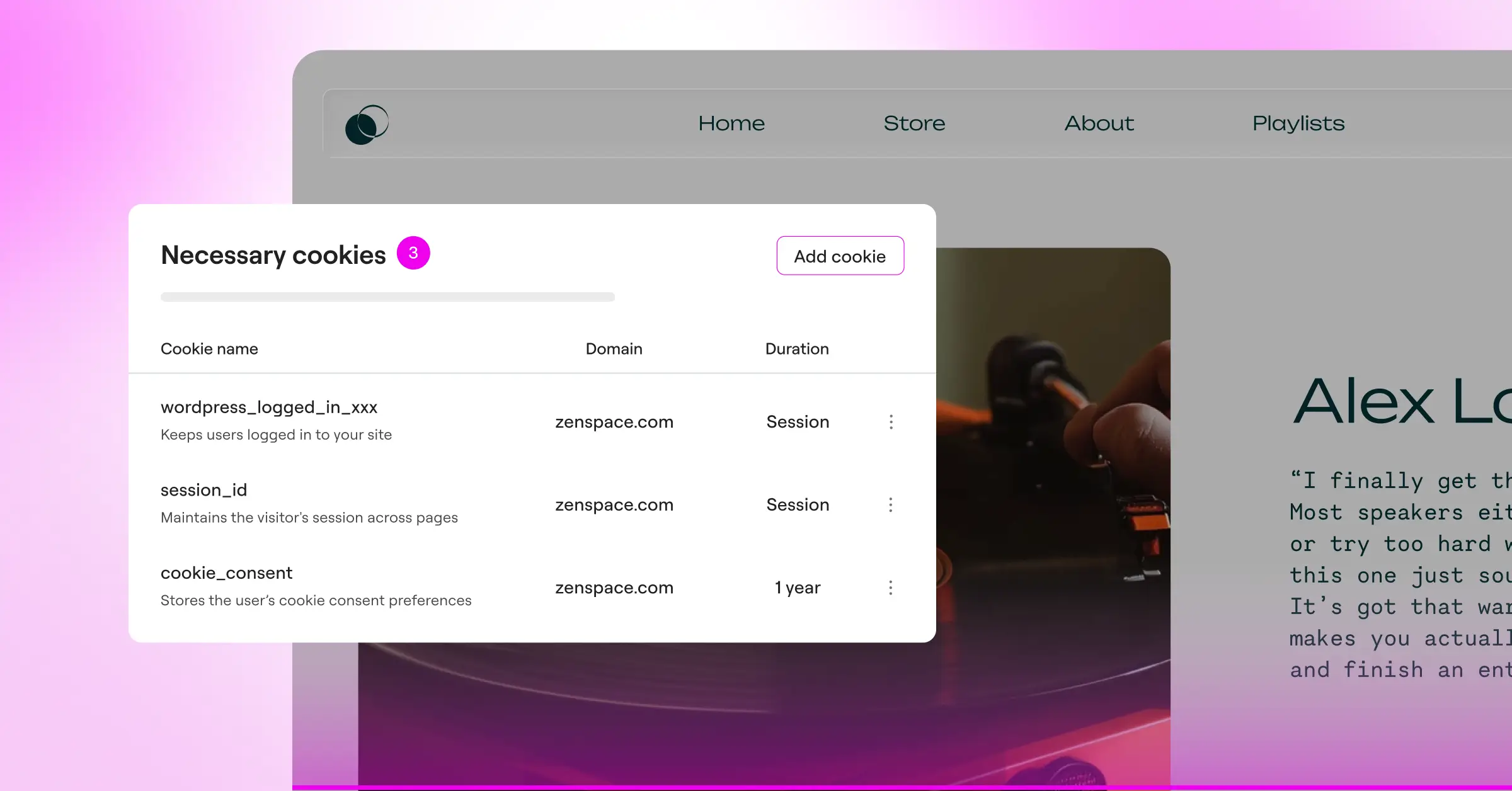
- Run an automatic scan, Start the built-in scanner. The tool will crawl your site to find any active cookies, pixels, or tracking scripts, automatically sorting them into groups like Essential, Analytical, and Marketing.
- Customize the design, Use the built-in style controls to match your brand. Choose where you want the banner to appear, adjust the colors to match your theme, and make sure the text is clear and friendly.
- Configure your geo-targeting settings, Set your target regions. You can show the banner globally or restrict it to specific areas like the EU to protect your conversion rates elsewhere.
- Save and publish, Review your banner settings, make sure Consent Mode v2 is turned on, and click publish. Your site is now actively managing user consent.
Once your banner is live, it’s a great habit to test it yourself. Open an incognito browser window, visit your site, and check that no non-essential cookies are loaded until you click accept. That quick check gives you real peace of mind.
How to Verify Your Consent Banner is Working
Once you’ve configured everything, you’ll want to confirm it’s actually doing its job. This makes sure your tracking scripts are behaving exactly as they should.
- Open an incognito window, This makes sure your browser doesn’t have any cached cookies or active sessions that could skew the test.
- Inspect your cookies, Right-click on your page, select “Inspect”, and look at the “Application” or “Storage” tab. Check the “Cookies” section before you click anything on the banner. You should only see strictly necessary cookies at this point.
- Accept and verify, Click the “Accept” button on your banner, then check the cookie storage again. You should see your analytical and marketing cookies load in real-time.
Steps for Handling an Audit Request
If a regulatory body or a client asks for proof of your site’s compliance, having a clear workflow keeps you calm and prepared.
- Export your consent logs, Go to your native WordPress dashboard and download the encrypted consent log for the specified timeframe.
- Generate your cookie declaration, Run a fresh scan of your site to show an up-to-date, categorized list of all tracking scripts currently in use.
- Provide your privacy policy, Share the live, system-generated policy page that matches your active tracking setup.
Frequently Asked Questions
Do I really need a cookie consent banner on my WordPress site?
If your website has visitors from the European Union, the United Kingdom, California, or other regions with active privacy laws, yes. If you use analytical tools like Google Analytics, marketing pixels like Meta Pixels, or run ads, these tools place cookies on your visitors’ devices. To stay legally compliant, you must get explicit consent before those tracking cookies load.
What happens if I don’t use a compliant cookie banner?
If you don’t comply with privacy laws, you could face regulatory warnings or legal fines. While large fines typically target bigger companies, smaller sites are also regularly audited. Major services like Google can also restrict or disable your advertising and tracking capabilities if they detect your website isn’t compliant with Google Consent Mode v2.
Is a WordPress-native tool better than a cloud-based service?
It depends on what you need. A native tool like Cookie Consent keeps everything inside your WordPress dashboard, which keeps your site fast, cuts out external accounts, and makes it easy to match the banner to your brand. Cloud-based tools are helpful if you manage multiple sites across different platforms, but they do require you to handle settings in an external portal.
Does a cookie consent banner slow down my website load speed?
Some cloud-based banners can cause minor layout shifts or add extra loading time because they fetch scripts from external servers. Choosing a lightweight, native option minimizes this impact since the code runs directly on your server. That keeps your load times fast and supports healthy search engine performance.
What is Google Consent Mode v2 and why is it required?
Google Consent Mode v2 is a system that lets your website communicate visitor consent choices directly to Google’s tracking systems. If a user declines analytical cookies, Consent Mode v2 tells Google Analytics to stop tracking personal data while still collecting basic, anonymous metrics. Google requires this for any site running ads or tracking conversions in Europe.
Can I customize the design of my banner to match my brand?
Yes, most modern tools let you customize your banner’s design. If you use a native capability like Cookie Consent, you can use built-in styling tools to match your site’s fonts, colors, and layouts. That makes the banner feel like a natural part of your design, which can genuinely improve your user acceptance rates.
What is the difference between GDPR and CCPA regarding cookie consent?
The GDPR in Europe requires “opt-in” consent, meaning you must block all non-essential cookies until a visitor explicitly clicks “Accept.” The CCPA in California historically focused more on “opt-out” rights, meaning you must give visitors an easy way to opt out of the sale or sharing of their data, often using a “Do Not Sell My Personal Information” link.
How do automatic cookie scanners work?
An automatic scanner crawls your website much like a search engine would. It looks for tracking cookies, local storage variables, and tracking scripts used by tools like Google Analytics or social media widgets. Once found, the scanner categorizes them so your banner can automatically block them until a visitor grants permission.