Setting up your website is one of those genuinely exciting milestones. You design the layout, write your copy, and put your content out into the world. But then reality arrives with a reminder: you also need to think about privacy laws. Sorting through GDPR, CCPA, and Google’s compliance requirements can feel like a lot, especially when you’re running a simple blog or a small business site. Don’t worry, though, this is much more manageable than it looks at first glance. We’ve researched and pulled together the most reliable options to keep your site legally compliant without spending a fortune.
Key Takeaways
- WordPress-Native Tools Win – Keeping your consent settings inside your WordPress dashboard saves you from juggling external SaaS accounts.
- Consent Mode v2 is Crucial – If you use Google Analytics or Google Ads for European traffic, your consent tool needs to support Google Consent Mode v2.
- Free Plans Have Limits – Most external tools cap free monthly pageviews, which means your banner could stop working when your traffic grows.
- Performance Matters – Lightweight, native options keep your site loading quickly instead of dragging it down.
Why Privacy Compliance Matters More Than Ever for Your Website
You might wonder whether small websites really need to worry about privacy laws. The honest answer is yes. Regulatory bodies around the world have stepped up their oversight, and even modest personal blogs can face scrutiny if they track visitors without permission. It’s no longer just about putting a simple banner up that says, “We use cookies.” Visitors expect clear choices, and search engines reward sites that genuinely respect user privacy.
When visitors land on your site, they want to feel that their data is handled responsibly. A clear, friendly consent banner builds immediate trust. If your site serves visitors in Europe, the United Kingdom, or California, you’re legally required to give them a way to opt out of tracking. And since web browsers are steadily phasing out third-party cookies, having a modern consent system in place is genuinely useful for your long-term growth.
Google has also updated its requirements. If you run ads or track analytics for European audiences, Google Consent Mode v2 is now a firm requirement. If your banner doesn’t communicate properly with Google’s services, your analytics data can drop significantly and your ad campaigns may stop running as expected. Picking the right tool keeps your site compliant and protects your marketing data.
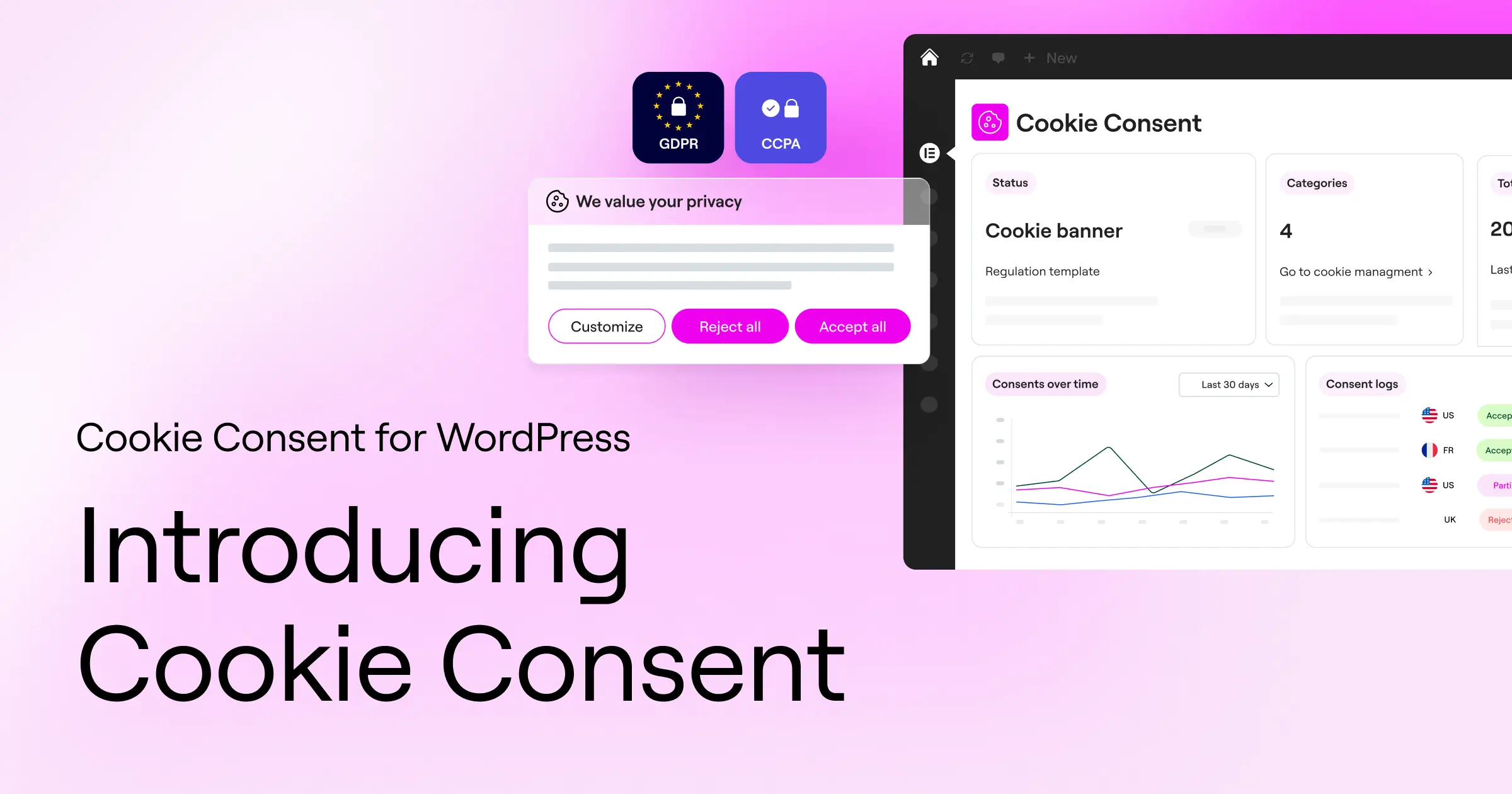
The Benefits of a WordPress-Native Capability
Many cookie consent tools are built as Software-as-a-Service (SaaS) platforms. That means you create a separate account on their website, configure your banner there, and paste a code snippet back into WordPress. It works, but it adds unnecessary steps to your workflow. Every time you need to check your consent logs or adjust your banner design, you’re leaving WordPress to log into a separate dashboard.
A WordPress-native tool keeps everything in one place. You manage your banners, scan your site, and view your logs right where you write posts and update pages. This saves time and means your site isn’t depending on third-party servers that could have their own downtime. It’s a simpler, cleaner way to run things.
Comparison Table: Top Free Cookie Consent Alternatives at a Glance
To help you compare your options quickly, here’s a table showing how these top choices stack up.
| Cookie Consent Tool | WordPress-Native? | Google Consent Mode v2? | Free Plan Available? | Best Suited For |
|---|---|---|---|---|
| Cookie Consent (Elementor) | Yes | Yes | Yes (Included in Elementor) | WordPress sites wanting an all-in-one native setup |
| Cookiebot | No (External Dashboard) | Yes | Yes (Up to 50 pages) | Sites requiring deep, automated cloud scanning |
| CookieYes | No (Hybrid Setup) | Yes | Yes (Up to 25,000 pageviews/mo) | Growing blogs needing easy multilingual options |
| Complianz | Yes | Yes | Yes | Users who want a step-by-step setup wizard |
| iubenda | No (SaaS Model) | Yes | Yes (Basic tier) | Businesses needing auto-updating legal policies |
| Termly | No (SaaS Model) | Yes | Yes (Up to 10,000 pageviews/mo) | Small sites looking for quick legal generation |
| OneTrust | No (SaaS Model) | Yes | Yes (Limited free option) | Enterprise-level organizations with compliance teams |
| Osano | No (SaaS Model) | Yes | Yes (Up to 5,000 pageviews/mo) | Sites wanting strict vendor compliance monitoring |
| WP GDPR Compliance | Yes | Yes | Yes | Simple sites needing form integration checkboxes |
| Klaro | Yes (Self-Hosted) | Yes (With custom code) | Yes (Open Source) | Developers who prefer absolute code-level control |
“The shift toward privacy-first web design is no longer optional. Site owners need tools that make compliance simple without cluttering their dashboards or slowing down their performance.”
1. Cookie Consent
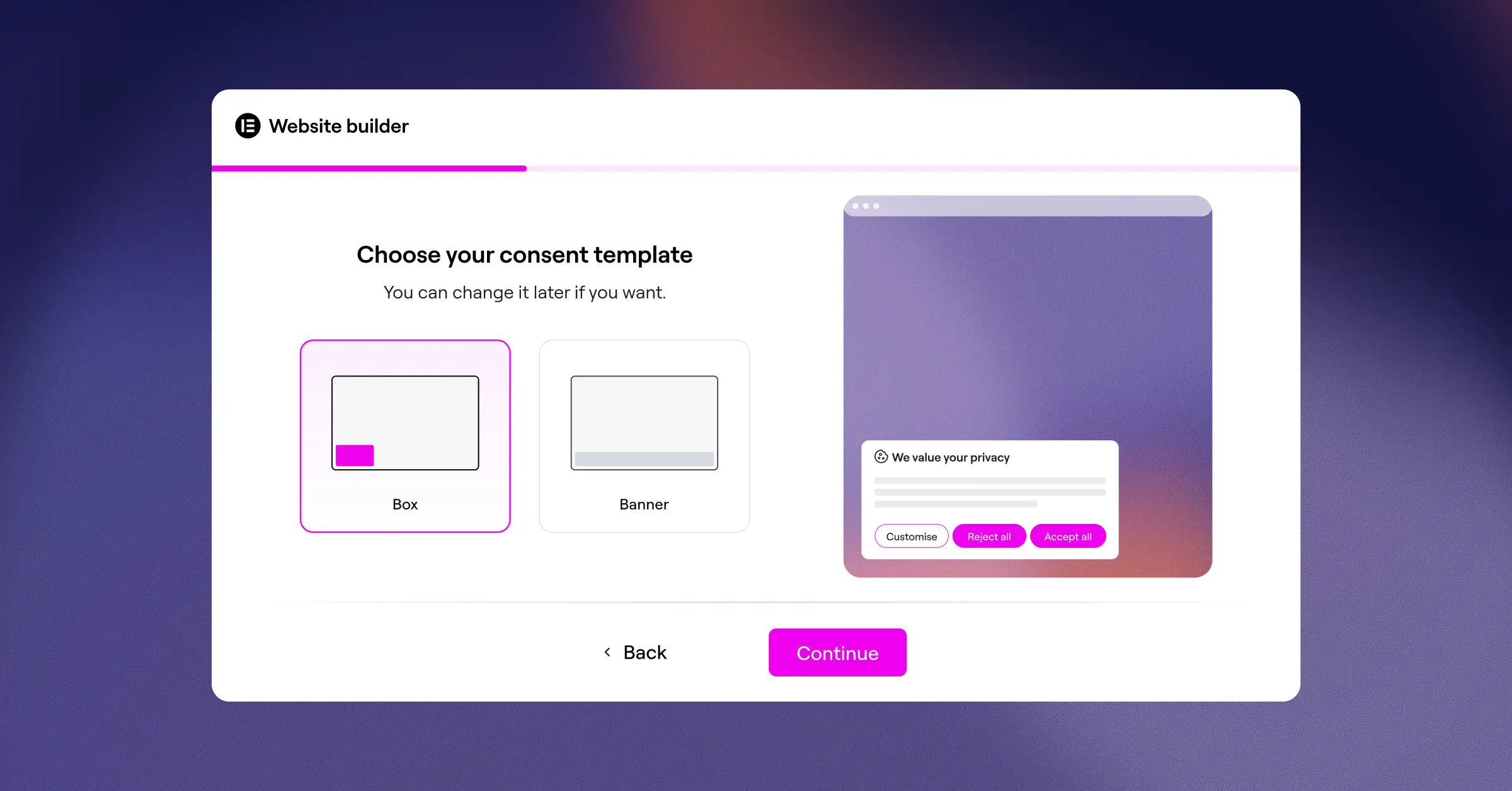
We’re starting our list with Cookie Consent, which is the built-in consent management capability from Elementor. If you want a clean, no-fuss way to stay compliant without dealing with external platforms, this is an excellent place to start. It handles privacy requirements directly from your WordPress dashboard, making it genuinely simple to set up and maintain.
Because it’s a native capability, you don’t need to juggle extra third-party tools that might conflict with your theme. Cookie Consent handles everything from scanning to design adjustments in one central place. It works naturally with the rest of the Elementor ecosystem, letting you create on-brand banners that match your site perfectly.
Core Features
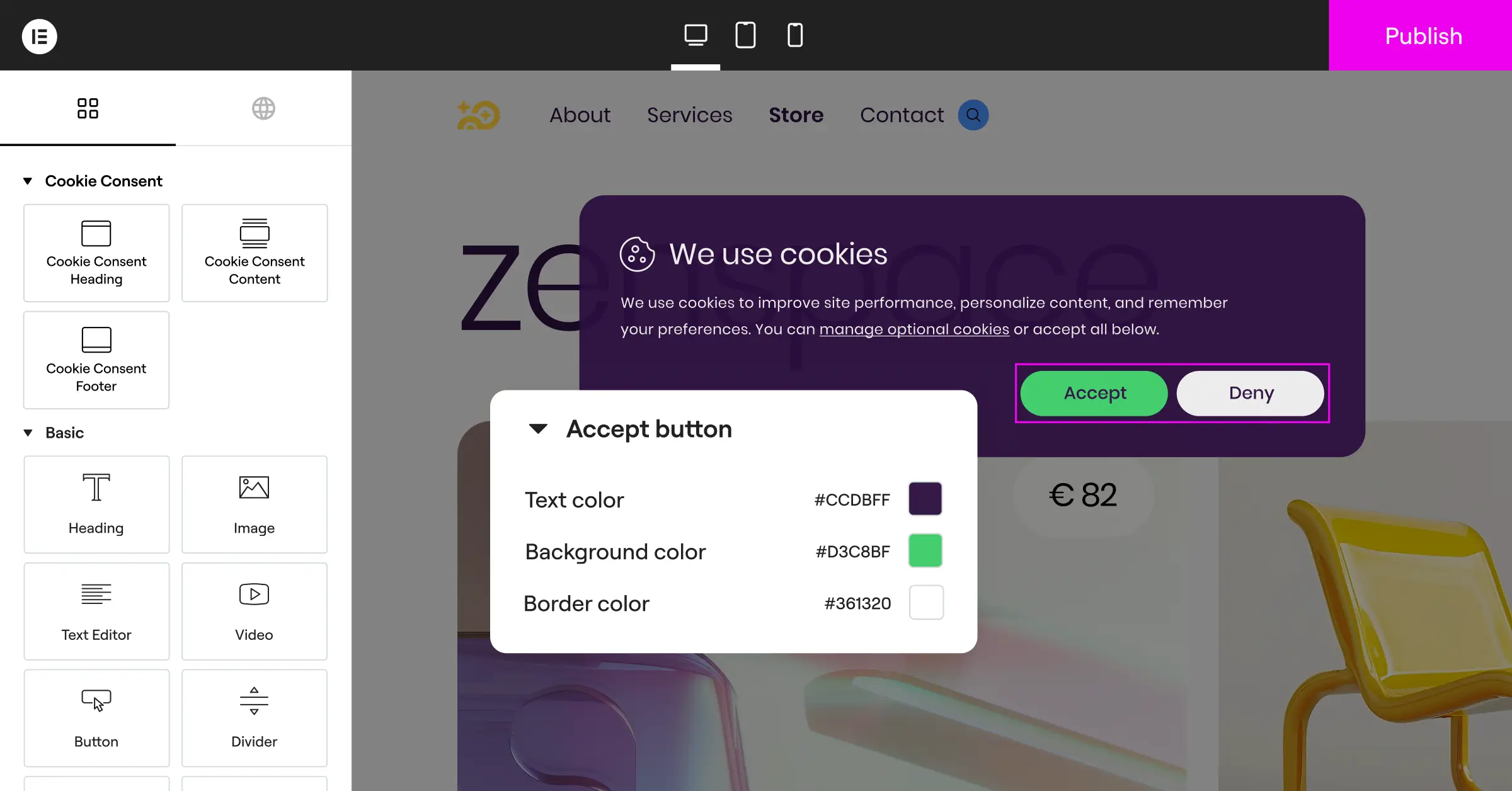
- Builds beautiful, custom consent banners using your existing WordPress design tools.
- Scans your site automatically to find and identify active cookies.
- Categorizes trackers so scripts don’t load before a visitor agrees.
- Stores detailed consent logs directly on your server for compliance auditing.
- Supports Google Consent Mode v2 to keep your analytics and ads running properly.
- Applies geo-targeting to show banners only to visitors from specific regions.
Pros and Cons
- Pro – No external dashboards or separate accounts to manage.
- Pro – Fully integrated into your existing design flow.
- Pro – Free tier is available and included as part of Elementor’s compliance toolkit.
- Con – Works best on sites using the Elementor core system.
Verdict
For WordPress users who want a simple, native way to handle cookie consent without third-party fees, Cookie Consent is a genuinely strong choice. It keeps your dashboard clean and gets your compliance sorted in under five minutes.
2. Cookiebot
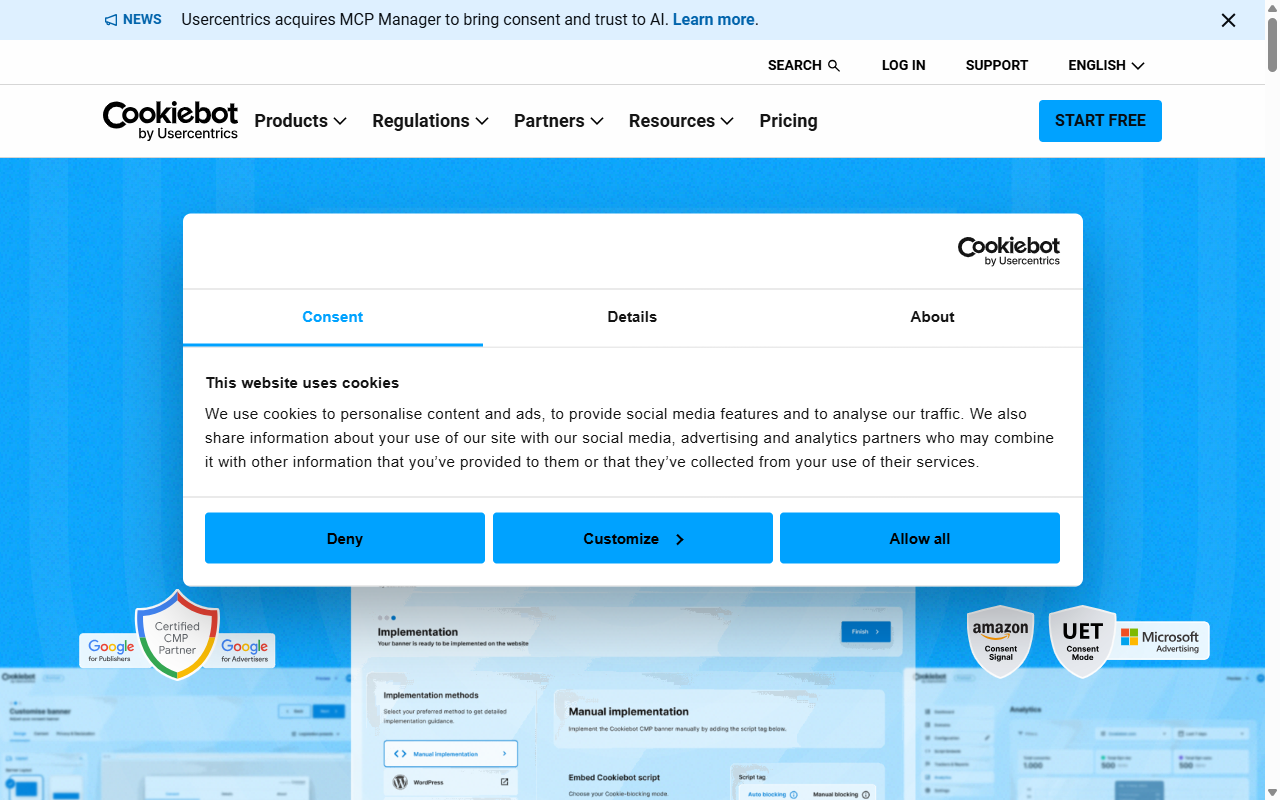
Cookiebot is a well-known name in the privacy compliance space. It operates as a cloud-based service that scans your website to find trackers and then generates a customized banner based on what it discovers.
The tool is recognized for its scanning capabilities. Its automated crawler indexes your site on a monthly basis, updates your cookie policy, and groups cookies into clear categories. Keep in mind that you’ll need to manage your settings from Cookiebot’s web manager outside of WordPress.
Core Features
- Detects tracking scripts automatically with a deep cloud-based crawler.
- Displays clear consent options based on the visitor’s geographic location.
- Holds historical consent records in a secure, remote database.
- Generates an automated cookie declaration page that you can embed on your site.
Pros and Cons
- Pro – Solid automatic scanning and categorization.
- Pro – Reliable cloud infrastructure.
- Con – The free plan is strictly capped at 50 website pages, which is limiting for growing sites.
- Con – Requires an external account and dashboard login.
Verdict
Cookiebot is a reliable option for smaller, static websites with under 50 pages. If your site has many articles or product pages, you’ll likely outgrow the free tier quickly.
3. CookieYes
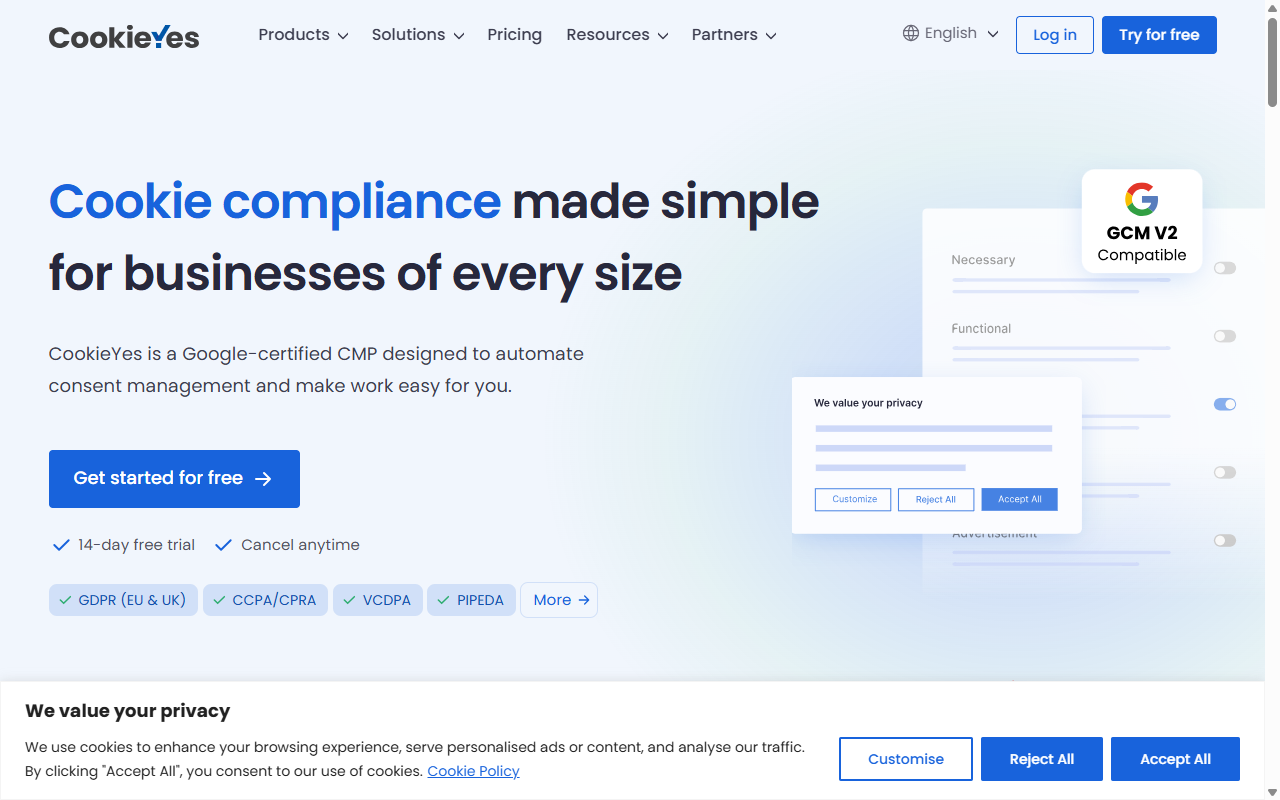
CookieYes is a popular hybrid solution that combines a WordPress helper tool with a centralized cloud service. It’s designed to be approachable for beginners who need a quick compliance setup.
The free plan of CookieYes is fairly generous compared to some alternatives, letting you handle up to 25,000 pageviews per month. The interface is clean and gets your banners running quickly. (Worth noting: even though the WordPress side feels native, you’ll still need to connect it to an external account to access all its features.)
Core Features
- Manages visitor consent choices through an intuitive step-by-step assistant.
- Blocks tracking codes automatically until the visitor accepts.
- Translates your compliance messages into over 30 languages.
- Records consent status to help you demonstrate compliance during audits.
Pros and Cons
- Pro – Generous monthly pageview limit on the free plan.
- Pro – Clean, attractive interface and templates.
- Con – Requires connecting to an external account.
- Con – Advanced styling and analytics are behind paid tiers.
Verdict
CookieYes is a good fit for medium-sized blogs that need a reliable, attractive banner with multilingual support, provided you’re comfortable managing settings through an external portal.
4. Complianz
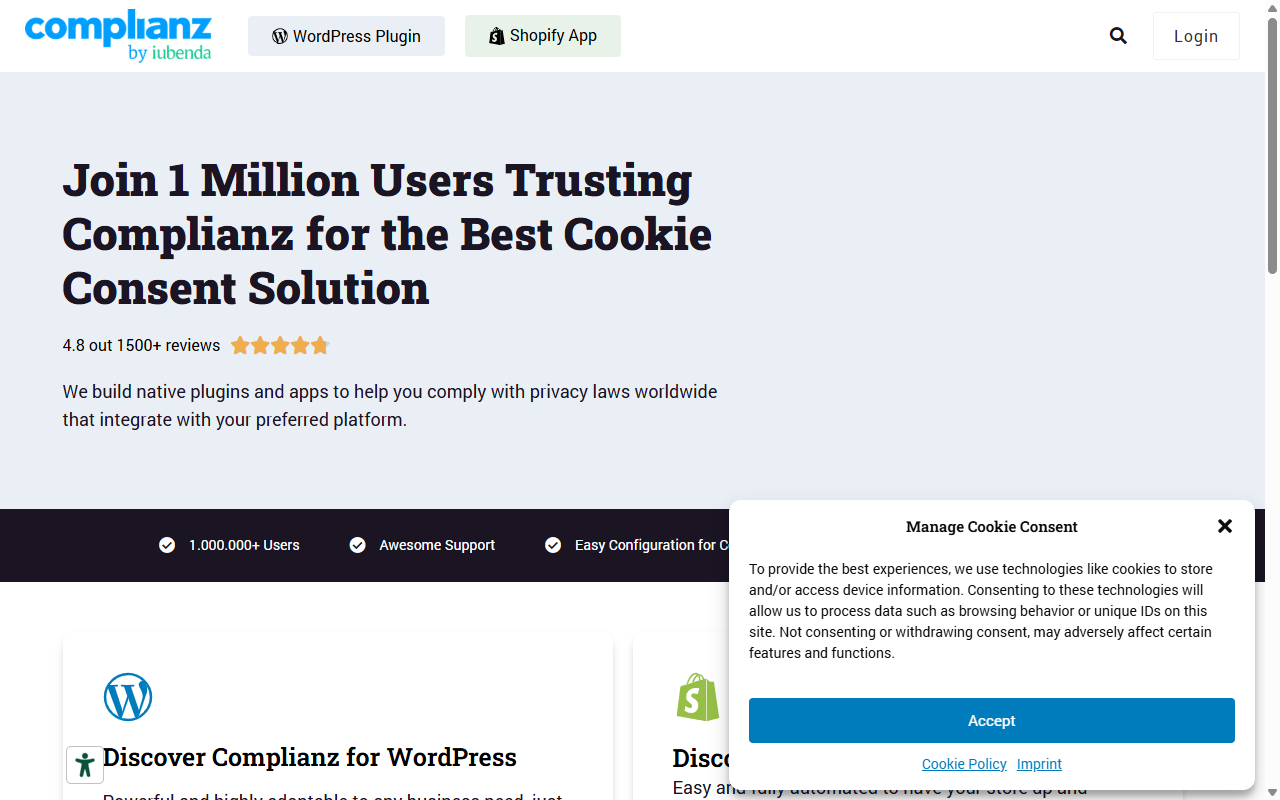
Complianz is a popular option built specifically for the WordPress community. It acts like a guided assistant that walks you through building out your privacy setup step by step.
When you install it, you go through a detailed wizard that asks questions about your business, your audience, and how you collect data. Based on your answers, Complianz generates your custom legal documents and configures your banner settings automatically.
Core Features
- Configures your cookie settings using an interactive, interview-style wizard.
- Generates personalized cookie policy documents that update as regulations change.
- Integrates with major WordPress platforms, including eCommerce checkouts.
- Blocks third-party embeds like YouTube and Google Maps until user approval.
Pros and Cons
- Pro – Runs entirely on your own WordPress site without external accounts.
- Pro – Generates quality legal documents at no cost.
- Con – The setup wizard can feel long for simple sites.
- Con – Some compliance regions require paid add-ons.
Verdict
Complianz is a solid native option for site owners who want a guided setup process and automated legal document creation built directly into their dashboard.
5. iubenda
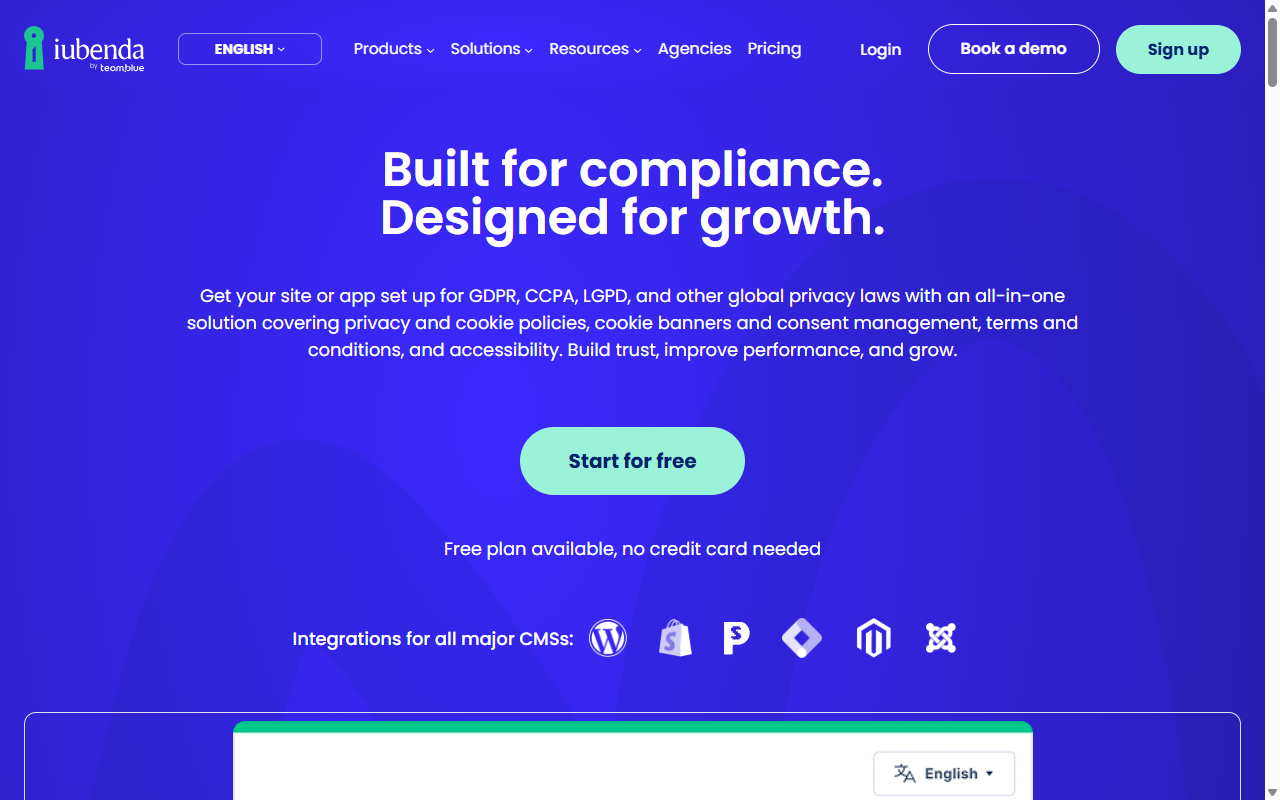
iubenda is a complete compliance suite designed to help website owners handle privacy policies, terms of service, and cookie consent together. It’s a SaaS-first platform that integrates with WordPress using code snippets.
iubenda’s main strength is its legal-first approach. The team monitors privacy laws around the world and updates your policies automatically. While the cookie consent banner is just one piece of their overall suite, it’s professional and reliable.
Core Features
- Links your consent banner directly to dynamically updated privacy policies.
- Tracks international privacy law changes to keep your site current.
- Saves visitor consent selections inside a secure, cloud-hosted record.
- Adapts the banner presentation to match local legal requirements.
Pros and Cons
- Pro – Complete compliance suite covering privacy policies and terms.
- Pro – Policies update automatically when global regulations shift.
- Con – The free plan is quite limited and may feel like a trial version.
- Con – Setup can be confusing given the many technical legal options.
Verdict
If you’re looking for a complete compliance package that handles privacy policies alongside cookie banners, iubenda is a reasonable choice, though you’ll likely need a paid plan to unlock its full range of features.
6. Termly
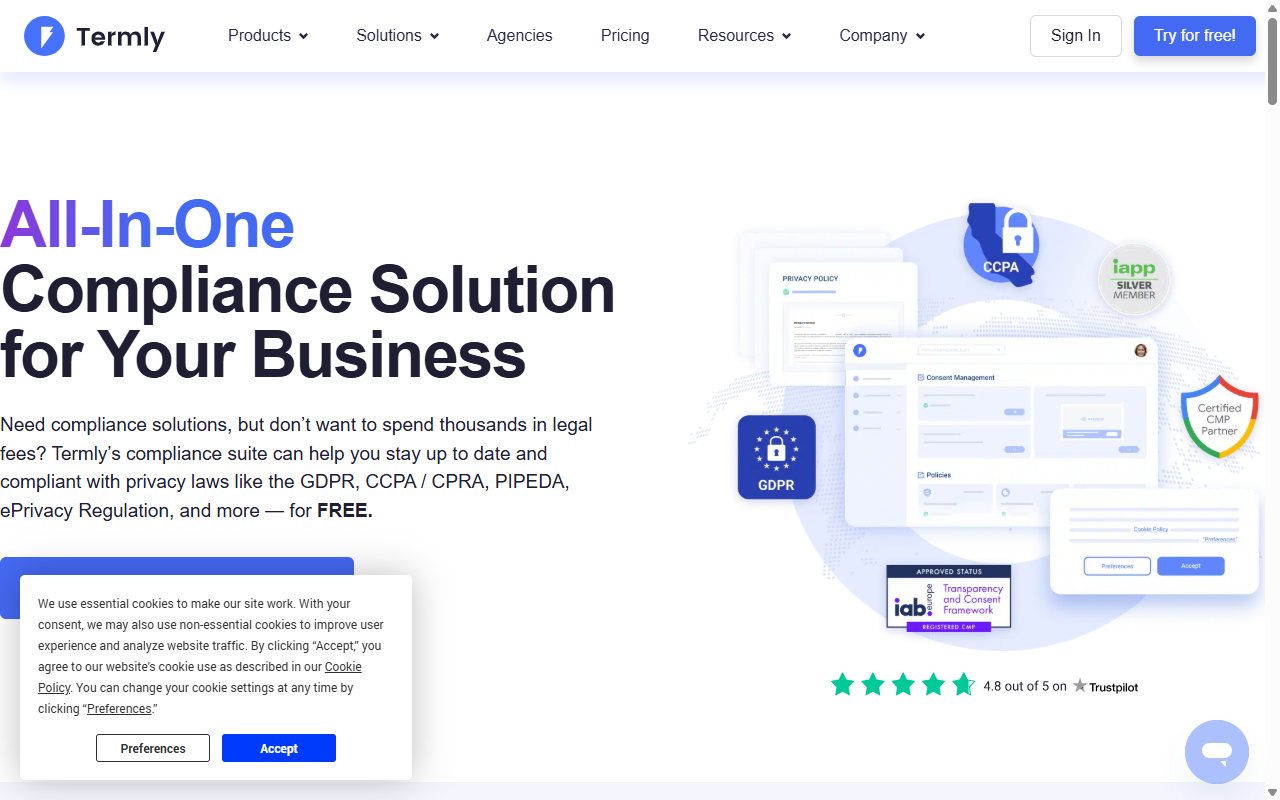
Termly is a compliance platform built with small businesses, startups, and independent site owners in mind. It aims to simplify the often-confusing world of data privacy through step-by-step builders.
The free plan lets you scan one domain and handle up to 10,000 pageviews per month. It’s a clean option, though it stores your custom styling configurations in their cloud portal.
Core Features
- Scans your website weekly to detect new cookies and trackers.
- Builds professional banners using pre-designed templates.
- Keeps your privacy policies aligned with GDPR, UK GDPR, and CCPA.
- Provides a clean interface for managing user data access requests.
Pros and Cons
- Pro – Clean, well-designed interface that’s straightforward to use.
- Pro – Policy generators included in the dashboard.
- Con – The 10,000 pageviews per month limit can be reached quickly on busy sites.
- Con – The free plan displays Termly branding on your banner.
Verdict
Termly is a good fit for new business sites and startups that need clean banners and basic legal policies quickly, and don’t mind some branding on the free tier.
7. OneTrust
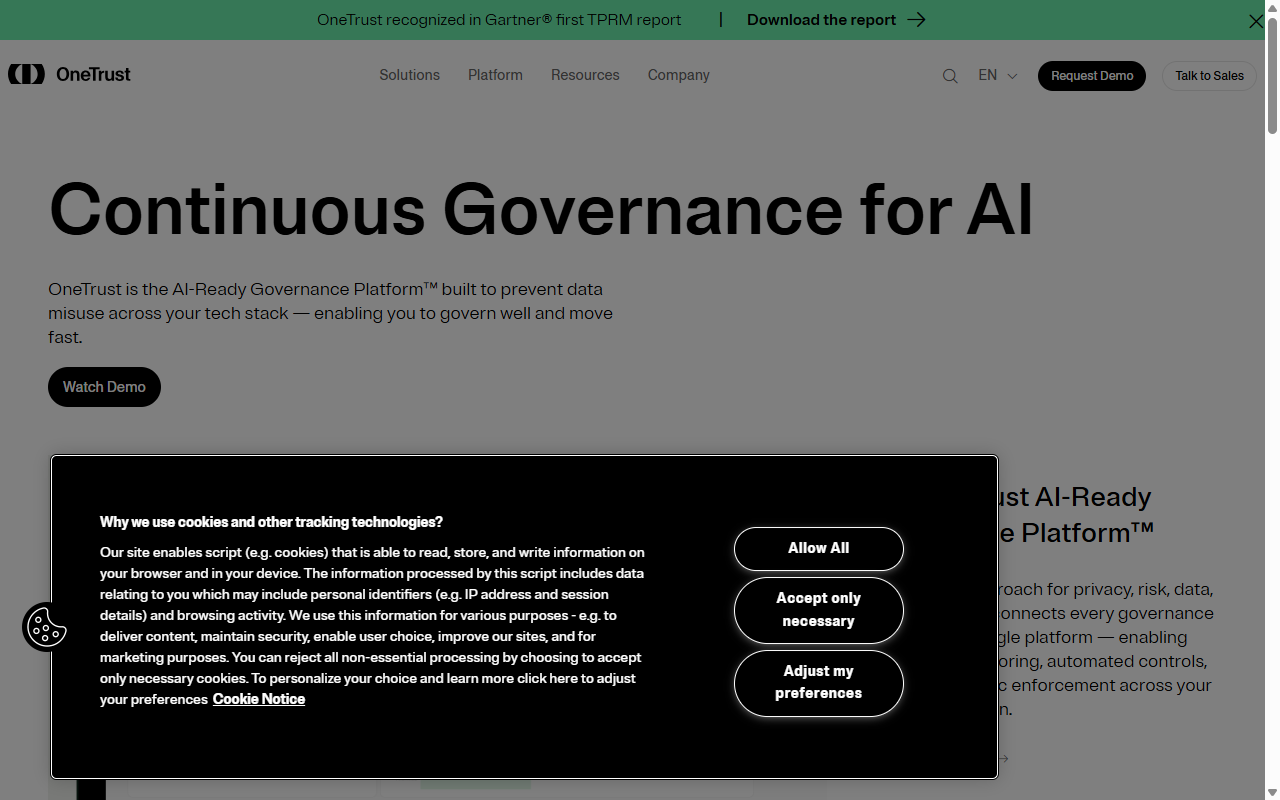
OneTrust is a significant player in the enterprise compliance market. They offer advanced tools designed for large organizations that need to manage privacy across many websites and jurisdictions.
While OneTrust is typically associated with large enterprises, they do offer basic tiers that smaller websites can access. It’s a detailed platform with a lot of depth, though it can feel like more than most standard WordPress sites need.
Core Features
- Scales compliance settings across multiple large domains.
- Maps data tracking flows to show your legal compliance posture.
- Manages consumer request portals for data deletion requests.
- Provides detailed reporting dashboards for legal and compliance teams.
Pros and Cons
- Pro – Detailed compliance tools used by major brands.
- Pro – Extensive customization and localization options.
- Con – Steep learning curve for beginners.
- Con – Setup can take considerable time and effort.
Verdict
OneTrust is designed for enterprise organizations or sites with dedicated legal teams. For the typical WordPress user, simpler native tools will be much more practical to manage.
8. Osano
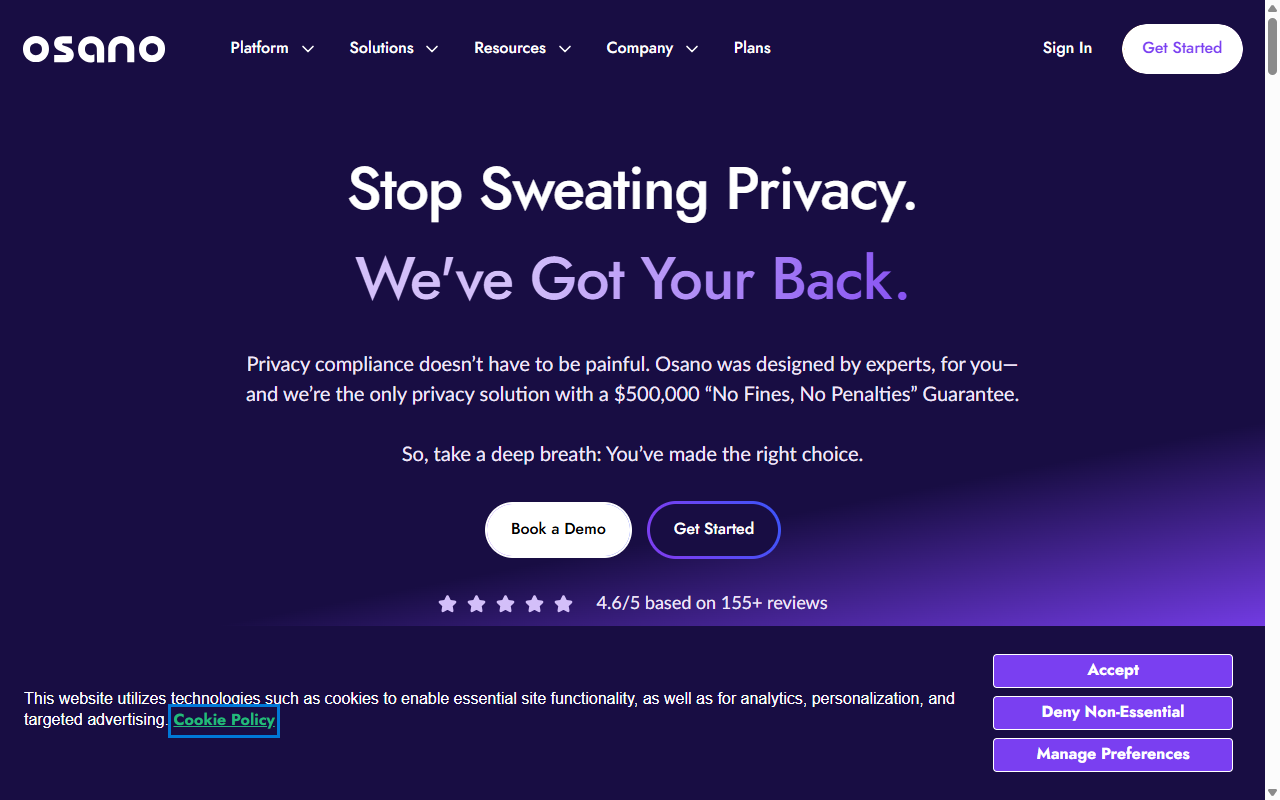
Osano is a privacy platform that focuses on vendor monitoring and data safety. They maintain a database of third-party vendors, helping you understand which scripts on your site carry privacy implications.
Osano is straightforward to install, but like other SaaS tools, it runs from an external platform. The free plan gives you a basic cookie consent banner suited to small personal sites with modest traffic.
Core Features
- Blocks unapproved third-party scripts to help prevent unwanted data collection.
- Displays geo-targeted cookie banners using visitor IP tracking.
- Evaluates vendor safety levels using their proprietary rating system.
- Simplifies compliance with a lightweight, cloud-hosted script snippet.
Pros and Cons
- Pro – Strong focus on vendor tracking and data safety.
- Pro – Fast cloud delivery keeps banners loading quickly.
- Con – The free plan visitor limit of 5,000 per month is the lowest on this list.
- Con – More advanced features require a paid subscription.
Verdict
Osano is a quality compliance tool with a limited free plan. It’s best suited for small sites that place a premium on vendor security and privacy tracking.
9. WP GDPR Compliance
WP GDPR Compliance is a lightweight utility built specifically for WordPress. Rather than focusing purely on banners, it specializes in adding consent checkboxes to other tools on your site.
If you run contact forms, comment sections, or eCommerce checkouts, you need to make sure visitors agree to your data storage terms before submitting. This tool connects directly with popular form solutions to add those consent steps where they’re needed.
Core Features
- Integrates compliance checkboxes into major contact and comment forms.
- Permits visitors to easily request access to their stored personal data.
- Deletes user information from your database automatically when requested.
- Adds clean consent prompts without relying on slow external scripts.
Pros and Cons
- Pro – Free and open-source.
- Pro – Integrates well with native WordPress features.
- Con – Doesn’t include the visual banner design options of other tools.
- Con – Requires some manual setup to connect with all your forms.
Verdict
WP GDPR Compliance is a helpful, lightweight utility to run alongside your primary banner. It makes form-level compliance simple and keeps your site fast.
10. Klaro
Klaro is a developer-focused, open-source consent manager. It’s designed for those who want direct access to their code and prefer to host all their compliance tools locally on their own servers.
Because Klaro is lightweight and fully customizable, it’s a solid choice for custom WordPress development projects. You configure it through a simple JavaScript file, giving you complete control over how scripts are blocked and allowed.
Core Features
- Runs entirely from open-source code hosted on your own server.
- Saves browser processing by executing logic client-side.
- Allows deep, developer-level configuration via JavaScript files.
- Keeps tracking organized without requiring external database connections.
Pros and Cons
- Pro – No monthly caps or fees.
- Pro – Lightweight and privacy-respecting by design.
- Con – Requires direct code editing to configure.
- Con – No visual editor or automated setup wizard for beginners.
Verdict
Klaro is the best fit for web developers and technically-minded site owners who want a zero-cost, open-source setup and don’t mind working directly with code.
How to Choose the Right Cookie Consent Tool
With so many options, finding the right fit comes down to balancing your design needs, your technical comfort level, and your traffic. Here are three practical steps to guide your decision:
- Evaluate your platform – If you’re already using the Elementor platform to build your site, the native Cookie Consent capability is a natural starting point. It matches your design right away and keeps your admin area unified in one place.
- Check your traffic – If you’re considering an external SaaS tool like CookieYes or Termly, make sure your average monthly pageviews don’t exceed their free plan limits. Once you cross those caps, your banner may stop showing.
- Verify your integration needs – If you use Google services, confirm that your chosen tool fully supports Google Consent Mode v2 so your analytics data stays accurate.
Frequently Asked Questions
Do I really need a cookie consent banner if my site is small?
Yes. Privacy laws like GDPR look at the location of your visitors, not the size of your business. If someone from the European Union or California visits your site and you use analytics tools or tracking pixels, you’re legally required to offer them consent choices. Setting up a basic, free consent tool early on is the simplest way to protect yourself and build visitor trust from day one.
What is Google Consent Mode v2 and why does it matter?
Google Consent Mode v2 is a system that lets your website communicate your visitors’ privacy choices directly to Google tools like Analytics and Ads. If a visitor declines cookies, Google’s services adapt and use modeling to track site performance without identifying that individual. (This sounds technical, but it’s genuinely important for accurate data.) If you serve European visitors, having a tool that supports this mode is essential.
Is it better to use a native WordPress tool or an external SaaS tool?
For most site owners, a native WordPress tool is much easier to manage day-to-day. It keeps your setup simple, lets you control everything from your dashboard, avoids reliance on external servers, and sidesteps monthly traffic caps. SaaS tools can be useful for large enterprise networks, but they add extra steps and costs for regular WordPress sites.
Will a cookie consent banner slow down my website?
It can if the tool isn’t well-optimized. Some external SaaS options require loading scripts from remote servers, which can delay your page rendering. Native tools and lightweight open-source options run directly on your server, helping keep load times fast and your site in good shape with search engines.
Can I customize the design of my consent banner to match my brand?
Most quality consent tools let you adjust colors, text, and button styles. If you use a native capability like Cookie Consent within the Elementor ecosystem, you get full access to design settings, letting you create a banner that feels like a natural part of your site rather than an intrusive pop-up.
What happens if I exceed the pageview limit on a free consent tool?
On many SaaS-based free plans, crossing your monthly limit means your banner simply stops displaying to visitors. You’d temporarily lose compliance coverage until the next billing cycle starts or you upgrade. Using a native WordPress tool without pageview limits is a straightforward way to avoid that risk entirely.
Do these tools also generate privacy policies?
Some do. Complianz and iubenda include policy generation assistants that build legal documents for you. Other tools focus purely on cookie banners and script blocking. If you go with a banner-only tool, you can pair it with a free policy builder or a native compliance toolkit to make sure your legal bases are fully covered.