Running a WordPress site means juggling a million different things at once. Between design, content, and security, privacy compliance can feel like the most daunting item on your list. You want to keep your visitors safe, but spending hours configuring external dashboards just to show a simple consent banner? That’s not what anyone signed up for.
CookieYes has been a popular solution for many years. But the way we build and manage sites has changed. Many site owners are now looking for simpler, more integrated ways to handle privacy without slowing their pages down or jumping between multiple third-party logins. Finding the right tool is much easier than it looks, and we’ve done the heavy lifting for you.
Key Takeaways
- Native integrations keep your website management inside a single dashboard, cutting setup time and eliminating dashboard fatigue.
- Google Consent Mode v2 support is now required for any site using Google services to serve traffic within Europe.
- Cookie Consent by Elementor offers a fast, WordPress-native way to manage compliance directly from your existing workspace.
- External SaaS tools are highly capable but often come with monthly fees that scale quickly based on page counts or domain numbers.
- Reliable consent logging is essential for audit readiness, giving you documented proof of compliance if a regulatory body ever comes knocking.
The Evolution of Consent: Why Look for a CookieYes Alternative?
For a long time, the standard approach to privacy compliance was simple: sign up for an external cloud service, copy a script tag, and paste it into your site header. This got the job done, but it also introduced friction to your creative workflow. Managing your privacy tools from a completely separate dashboard means constantly dealing with multiple accounts, different interfaces, and disconnected billing cycles.
There’s also the matter of performance. Every external script your website has to call before rendering a page adds to your total loading time. In a modern web environment where mobile performance and search engine rankings are closely tied to speed, every millisecond counts. Relying on heavy external scripts just to show a basic banner is no longer the most efficient path forward.
The regulatory field has also grown much stricter. Between GDPR in Europe, CCPA/CPRA in California, and various state-level privacy acts in the US, compliance is no longer set-and-forget. Site owners need a solution that updates automatically, categorizes scripts accurately, and supports standards like Google Consent Mode v2 and Global Privacy Control without expensive developer help.
What to Look for in a Modern Cookie Consent Alternative
Before choosing a replacement, it helps to understand what makes a privacy tool truly effective for your day-to-day work. The goal is staying compliant while maintaining a fast, stress-free management process. (It’s simpler than it sounds once you know what features actually matter.)
Is it native to your workspace?
If you’re already running your site on WordPress, managing cookie preferences from that same space saves you real time every week. A WordPress-native capability means you’re not keeping another browser tab open just to check consent logs or tweak your banner styling.
Does it support Google Consent Mode v2?
If you run Google Analytics, Google Ads, or any other Google tag on your site, this feature is absolutely essential. Google now requires Consent Mode v2 for any site tracking visitors in the European Economic Area. Your chosen alternative must be able to signal user consent choices directly to Google tags dynamically, keeping your marketing data clean and compliant.
How much styling control do you have?
Your privacy banner is often the very first thing a new visitor sees when they arrive on your site. If it looks like a generic, ugly pop-up that doesn’t match your fonts or colors, it can damage your credibility instantly. Look for tools that let you customize the visual presentation, placement, and language of your banners directly within your main site-building environment.
Top 7 CookieYes Alternatives Ranked and Reviewed
Let’s look at the best alternative tools currently available for WordPress creators. We’ve evaluated these options based on ease of use, integration style, and feature sets to help you make the best decision for your project.
1. Cookie Consent (by Elementor)
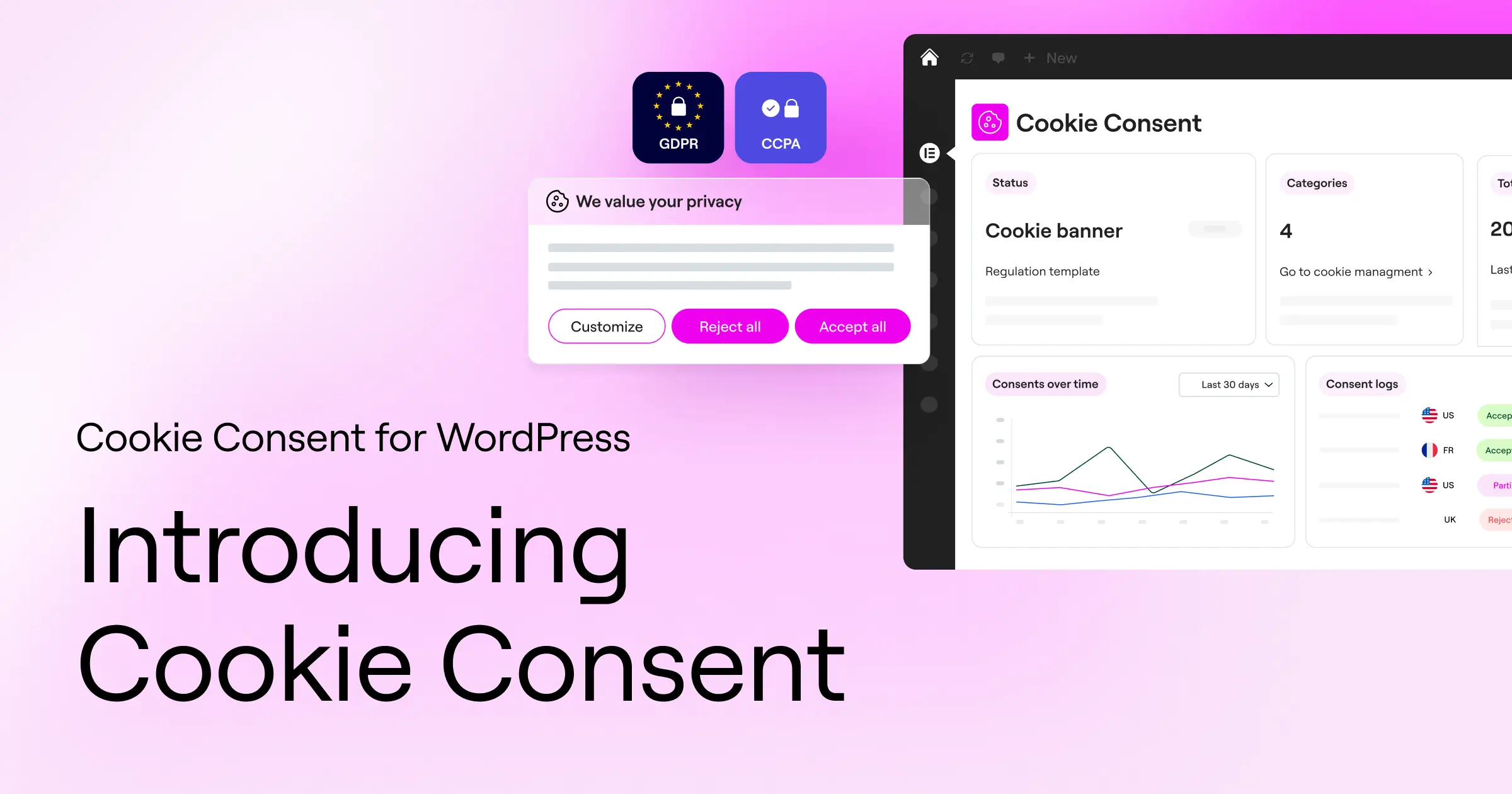
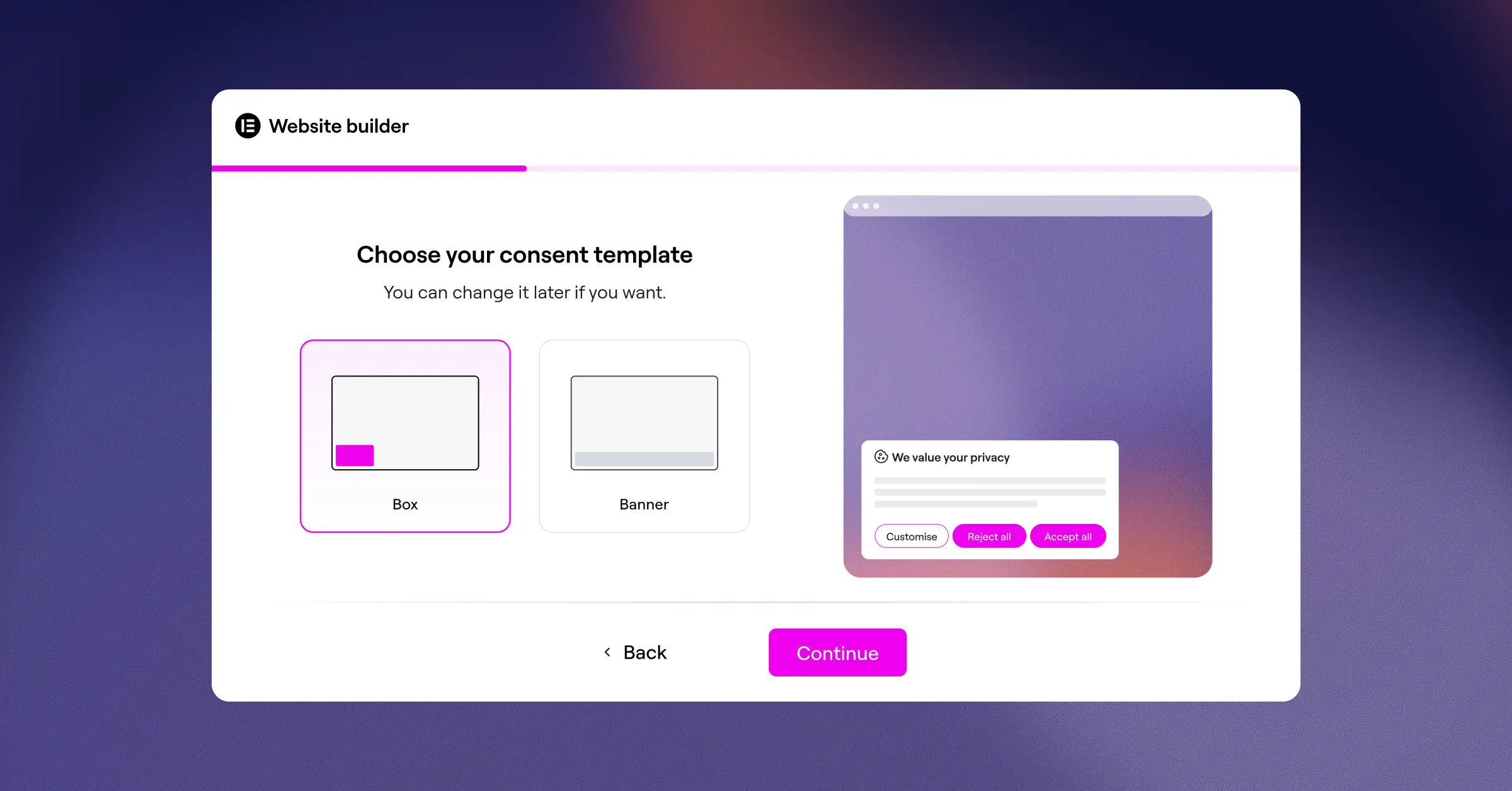
If you want a modern, tightly integrated compliance system, the Cookie Consent capability by Elementor is an exceptional option. Built natively for WordPress, it lets you handle all your privacy compliance needs directly from your familiar dashboard. No external platforms to connect, no separate login portals, no disconnected billing. It’s a clean, practical way to stay compliant while keeping your workflow simple.
- Builds beautiful custom consent banners directly inside your WordPress dashboard.
- Scans and categorizes cookies automatically to keep your website compliant.
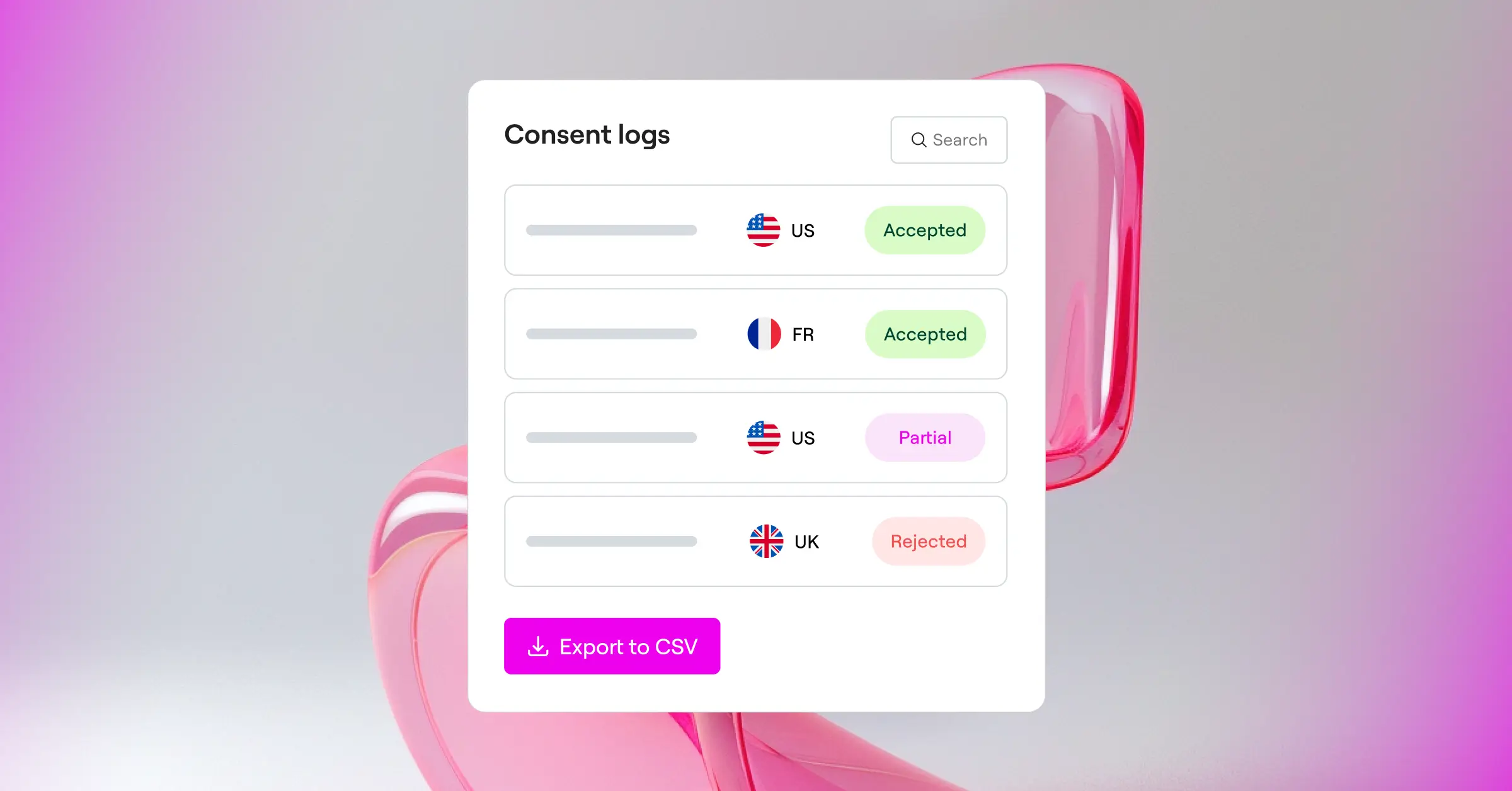
- Logs visitor consent to maintain reliable, audit-ready compliance trails.
- Supports Google Consent Mode v2 and Global Privacy Control out of the box.
- Targets specific visitor regions with built-in geo-targeting rules.
- Simplifies document creation with a built-in privacy policy generator.
Pros:
- Completely native to WordPress with no external dashboards.
- Intuitive design customization that matches your brand.
- Fast setup that takes under five minutes to complete.
- Includes cloud-based templates for quick banner styling.
Cons:
- Specifically built for creators working within the WordPress ecosystem.
Our Verdict: This is the top choice for WordPress creators who want to drop external SaaS dashboards and manage their privacy compliance in a unified, modern workspace.
2. Cookiebot
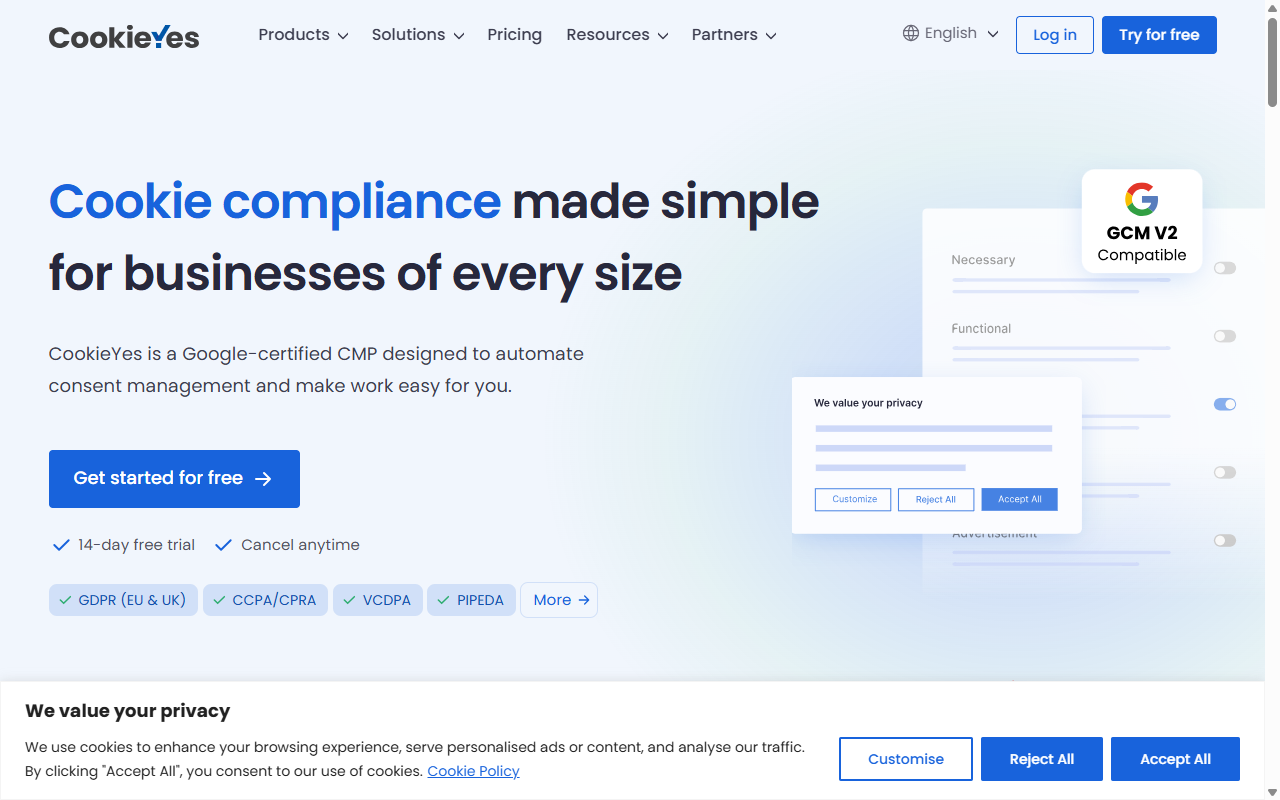
Cookiebot is a widely recognized cloud-based platform that specializes in automated scanning and cookie management. It operates as an external SaaS service: you configure most settings inside the Cookiebot cloud portal before connecting it to your WordPress site. It’s highly detailed and handles large enterprise websites with ease.
- Scans your entire website automatically on a monthly basis to find trackers.
- Stores user consent data securely in an encrypted cloud database.
- Blocks tracking scripts automatically until the user gives explicit consent.
- Generates a detailed cookie declaration page for your privacy policy.
Pros:
- Highly accurate automated cookie scanner.
- Extensive experience with global privacy standards.
- Supports multilingual banners natively.
Cons:
- Configuring settings requires logging into an external cloud dashboard.
Our Verdict: A highly capable option for enterprise sites with complex, multi-domain compliance requirements and a preference for cloud-based management.
3. Complianz
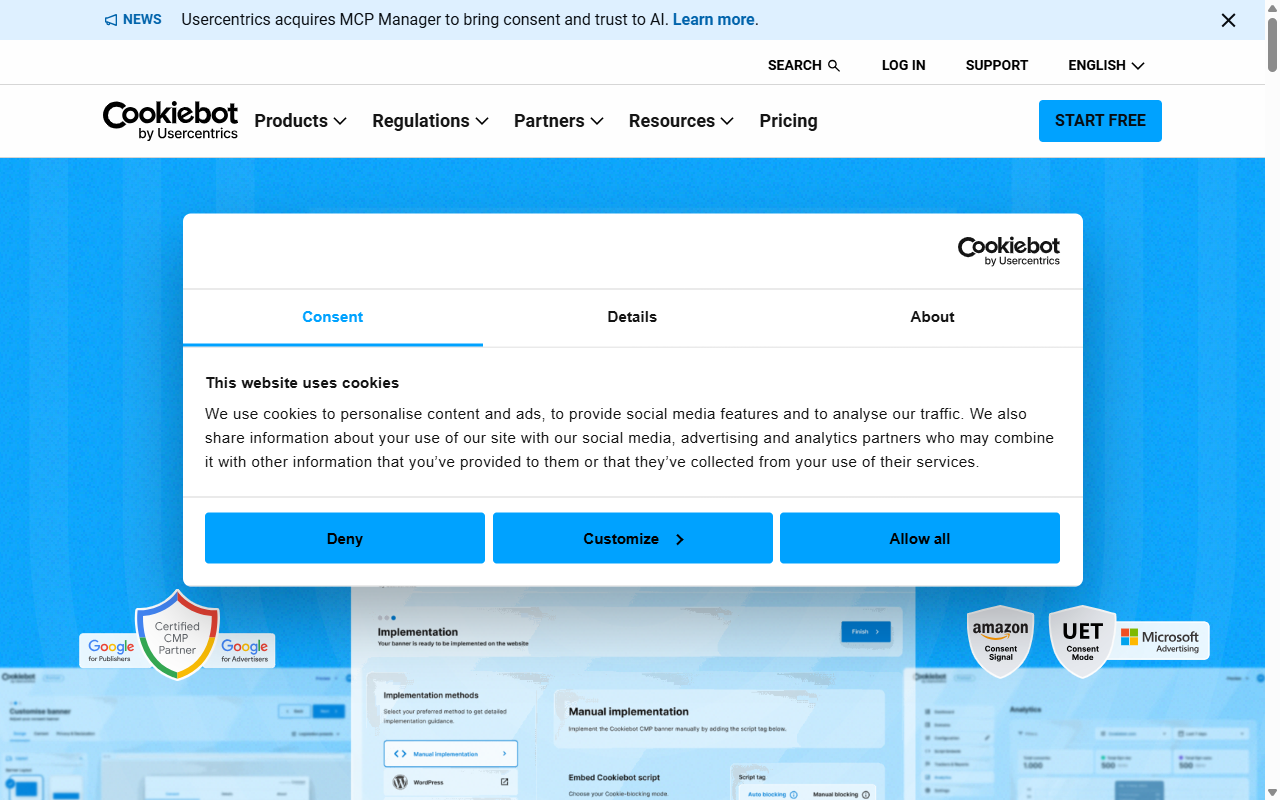
Complianz is a privacy tool built specifically for the WordPress environment. It uses a step-by-step wizard that asks about your business and site habits to generate a customized cookie policy and banner setup.
- Configures consent parameters through an interactive, step-by-step wizard.
- Integrates with popular WordPress analytics and tracking tools.
- Generates legally verified documents like cookie policies and disclaimers.
- Detects localized tracking scripts and storage systems automatically.
Pros:
- Wizard-based setup is educational and approachable for beginners.
- Generates complete legal documents, not just consent banners.
- Runs entirely within your WordPress environment.
Cons:
- The setup wizard can feel quite detailed and lengthy.
- Customizing banner styles sometimes requires CSS knowledge.
Our Verdict: A good fit for users who prefer a structured, wizard-led experience that helps them draft actual legal policies alongside their banner setup.
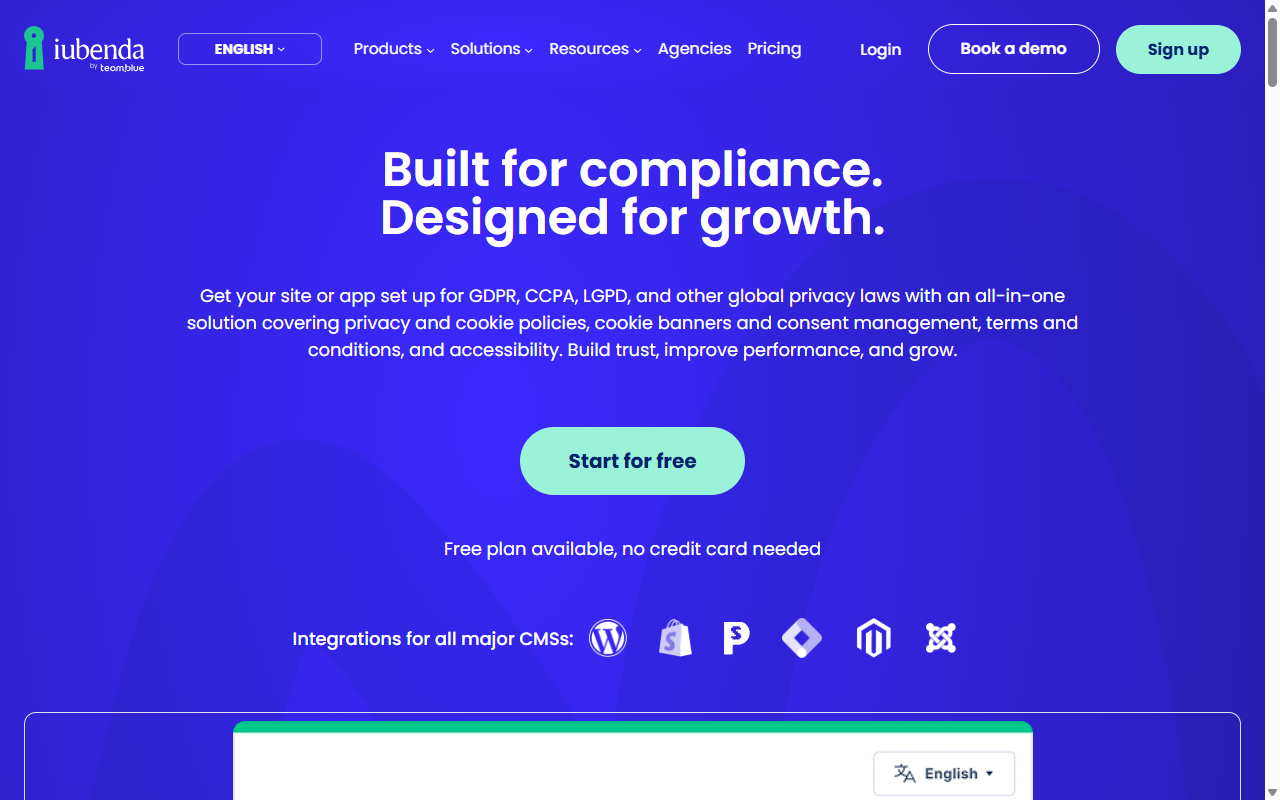
4. iubenda
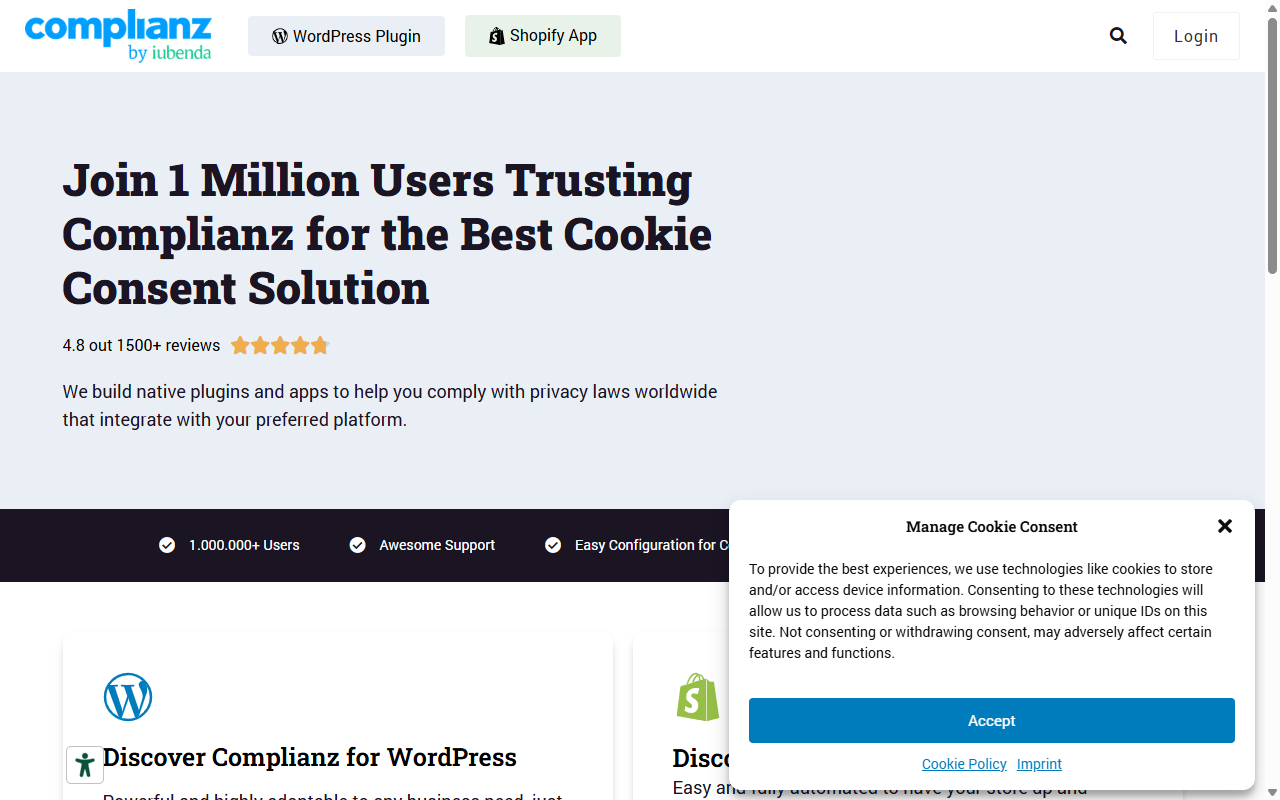
iubenda is a complete legal compliance suite covering cookie banners, privacy policies, and terms of service documents. It’s cloud-hosted: you configure your banner and legal documents in the iubenda dashboard, then embed them onto your site via integration codes.
- Generates auto-updating privacy and cookie policies drafted by legal professionals.
- Stores consent certificates in an encrypted, cloud-based archive.
- Detects changes in global privacy laws to update policies automatically.
- Provides fully translated legal documents in over ten languages.
Pros:
- Broad legal coverage beyond just cookie consent.
- Policies are maintained and updated by legal professionals.
- Strong multi-language and international support.
Cons:
- Requires managing assets in an external cloud workspace.
- Can feel overly complex if you only need a simple cookie banner.
Our Verdict: A solid choice for businesses that need a full legal overhaul, including terms of service and attorney-maintained privacy documents.
5. Termly
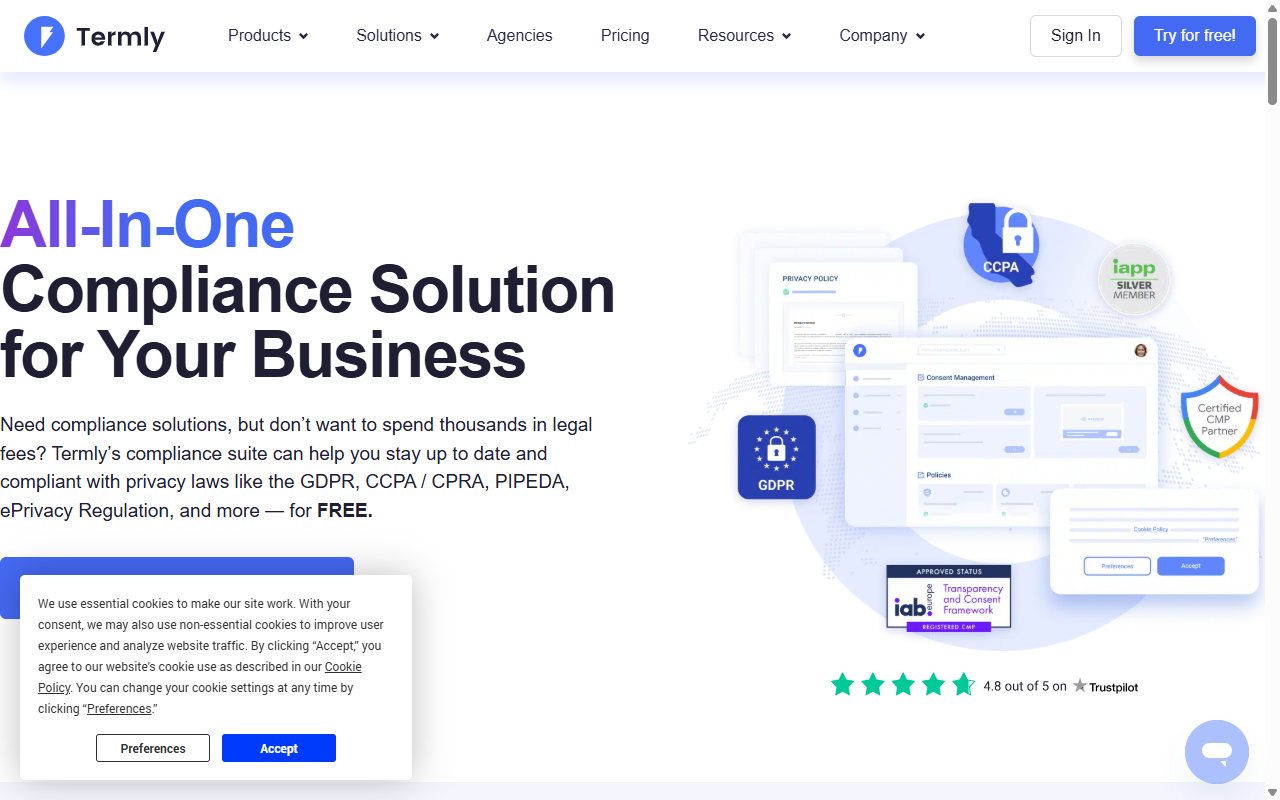
Termly is a cloud-based compliance generator aimed at small businesses and startups. It gives you a clean interface for generating privacy policies, terms of use, and cookie consent banners via straightforward questionnaires.
- Creates customizable legal policies based on your industry.
- Scans your site to categorize tracking technologies automatically.
- Generates clean, responsive cookie banners that fit modern screens.
- Hosts your legal documents on secure cloud servers for automatic updates.
Pros:
- Interface is approachable and well-organized.
- Generates policies quickly using plain-English questions.
- Works well for simple websites with standard compliance needs.
Cons:
- Your legal documents are hosted externally, which some owners prefer to avoid.
- Entry-level plan limitations are relatively strict.
Our Verdict: A practical option for small businesses wanting a fast, cloud-hosted path to basic legal documents and consent banners.
6. OneTrust
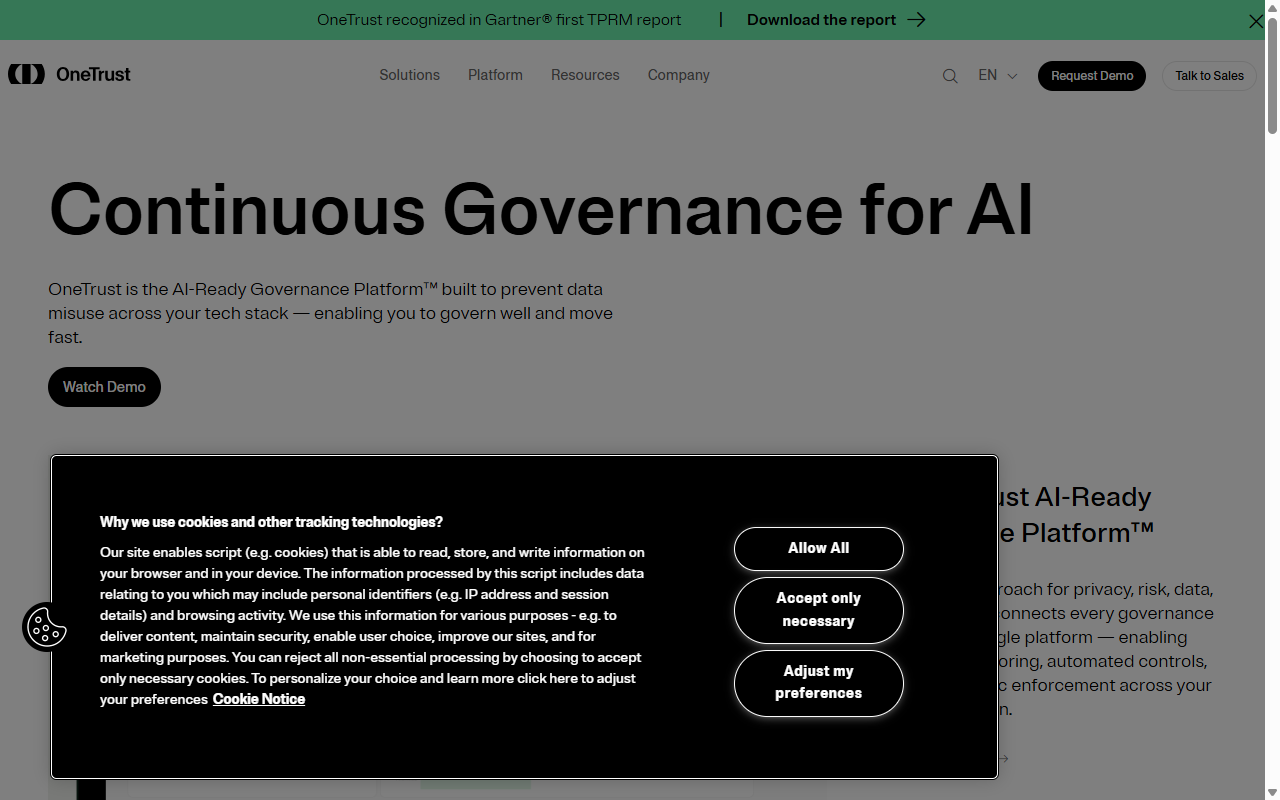
OneTrust is an enterprise-grade privacy and data governance platform. It’s built for corporations, multinational brands, and dedicated compliance teams managing complex data maps across many properties.
- Manages enterprise-wide privacy frameworks across thousands of domains.
- Scans websites with deep database lookups to track data flows.
- Maps data structures across multiple departments and server environments.
- Provides detailed dashboards for corporate compliance officers.
Pros:
- Deep feature set with extensive global legal support.
- Built for corporate audits and highly secure environments.
- Scales to manage thousands of complex digital properties.
Cons:
- Setup typically requires dedicated training and implementation time.
- Far too complex and costly for typical WordPress site owners.
Our Verdict: The established standard for enterprise organizations, but well beyond the scope of most blog, portfolio, or e-commerce sites.
7. Osano
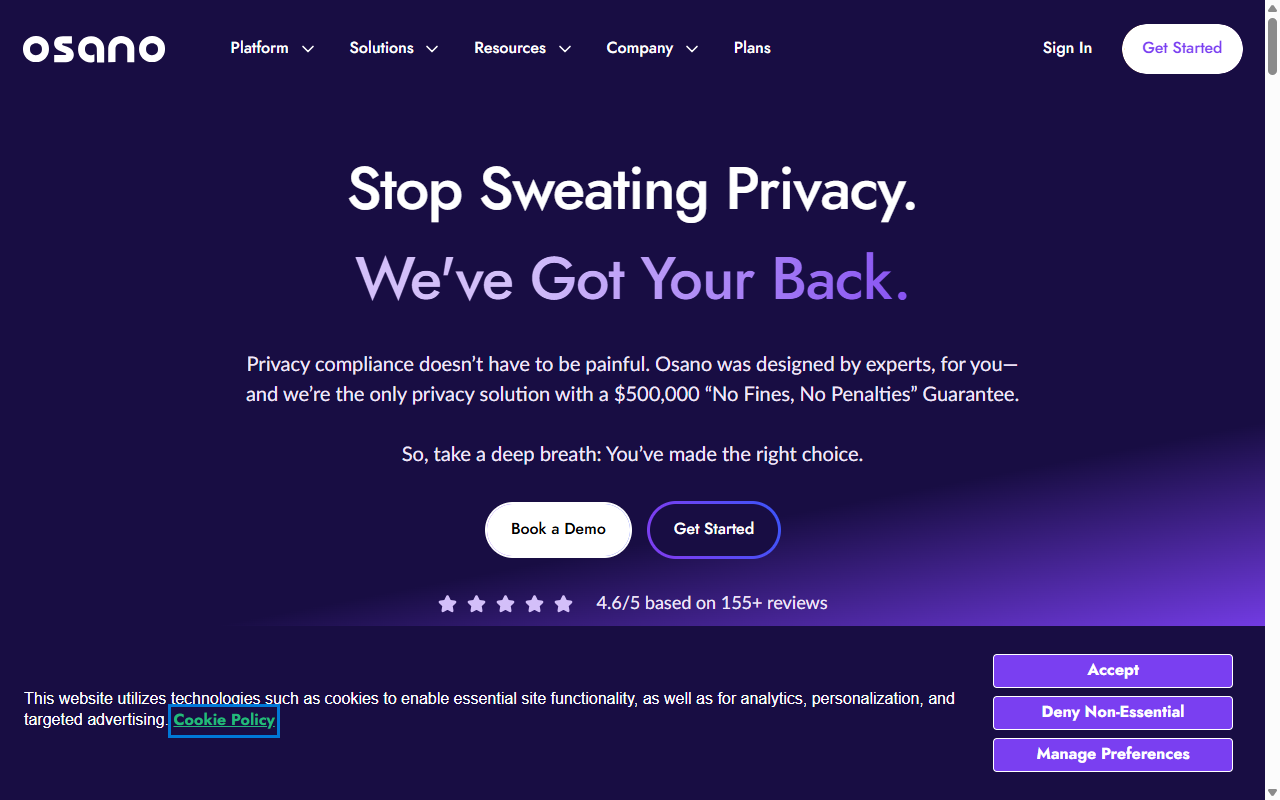
Osano is a B-Corp certified data privacy platform that focuses on trust, simplicity, and proactive script blocking. It includes a compliance guarantee for sites that configure their systems according to its legal guidelines.
- Blocks known data tracking scripts automatically before user consent.
- Guarantees compliance under a special financial defense pledge.
- Monitors the privacy practices of your site’s third-party vendors.
- Translates banners automatically to fit the visitor’s local language.
Pros:
- Includes a financial compliance guarantee for extra peace of mind.
- B-Corp certification appeals to ethically minded brands.
- Strong automatic script-blocking technology.
Cons:
- Premium pricing tier.
- Configuration happens entirely inside their external cloud platform.
Our Verdict: A high-trust option for businesses that want strong legal protection and are comfortable with a higher monthly SaaS investment.
Feature Comparison: How the Top Alternatives Stack Up
To help you visualize how these different options compare, here’s a quick reference table highlighting the key features of each alternative.
| Alternative Tool | Integration Style | Google Consent Mode v2 | Geo-Targeting | Policy Generator | Best Suited For |
|---|---|---|---|---|---|
| Cookie Consent by Elementor | WordPress-Native | Yes (Built-in) | Yes | Yes | WordPress site creators wanting a clean, unified dashboard |
| Cookiebot | External SaaS | Yes | Yes | No | Multi-domain sites with complex scanning needs |
| Complianz | WordPress-Native | Yes | Yes | Yes | Creators who prefer detailed, wizard-guided setup |
| iubenda | External SaaS | Yes | Yes | Yes | International businesses needing full legal document suites |
| Termly | External SaaS | Yes | Yes | Yes | Small startups wanting fast, out-of-the-box legal pages |
| OneTrust | External SaaS | Yes | Yes | No | Enterprise corporations with dedicated compliance teams |
| Osano | External SaaS | Yes | Yes | No | Businesses looking for legal compliance guarantees |
The Dashboard Fatigue Problem: Why Native Tools Are Winning in 2026
If you’ve been building websites for any length of time, you’ve probably noticed a frustrating trend: every feature you want to add seems to come with its own external login, monthly bill, and tracking script. Between your analytics platform, email marketing software, image optimization, hosting panel, and cookie management dashboard, you’re suddenly managing half a dozen different subscriptions just to keep a simple site online.
This is dashboard fatigue, and it’s why WordPress site owners are moving toward native capabilities. Managing compliance within WordPress keeps your focus in one place. You don’t have to copy and paste code snippets, verify external API keys, or worry about a third-party server outage breaking your consent banners.
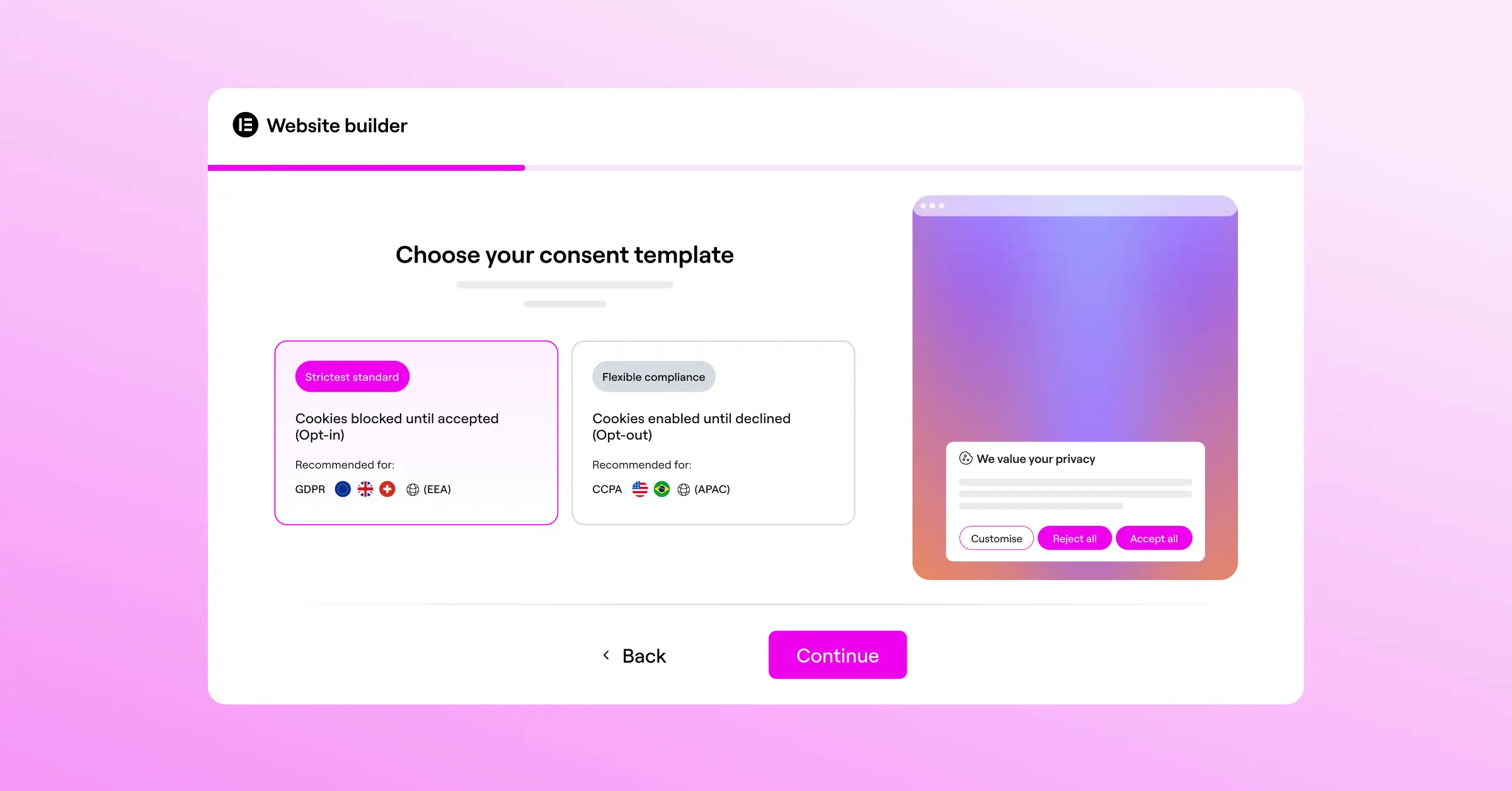
Choosing a tool like Cookie Consent by Elementor lets you keep everything nested inside your existing site editor. You get to style the banners using the same intuitive layout controls you use for your page designs, ensuring a beautiful, polished look while keeping your site fast and structurally simple.
“Managing user consent is no longer about slapping an annoying banner on your footer and hoping for the best. To build genuine trust and stay on the right side of modern privacy regulators, you need a system that feels like a natural part of your site architecture rather than a clunky third-party add-on.”
– Itamar Haim, Web Compliance Specialist
How to Move from CookieYes to a WordPress-Native Capability
Making the switch from an external SaaS system to a native WordPress capability is much easier than it sounds. Follow a methodical process and you can migrate your consent setup without compliance gaps or tracking dropouts. (Don’t worry, you’ve got this.)
- Audit your existing tracking scripts. Before turning off CookieYes, list all active third-party scripts like Google Analytics, Meta Pixel, or Hotjar. You’ll need to assign these correctly in your new tool.
- Export your historical consent logs. Download a copy of your existing consent history and store it safely. You may need it to prove prior user consent if questions arise.
- Remove the CookieYes integration code. Delete the integration script from your header files or deactivate the connector in WordPress to prevent duplicate banners.
- Activate your native tool. Turn on cookie consent from your site settings. If you’re using Cookie Consent by Elementor, you can jump straight into customization without installing anything extra.
- Scan and categorize your cookies. Run the automated scanner to find all tracking elements, then assign them to categories like analytical, marketing, or functional.
- Style and publish your new banner. Design your banner to match your theme, select target regions, turn on Google Consent Mode v2 support, and hit publish.
Frequently Asked Questions
Why should I look for a CookieYes alternative?
While CookieYes is highly reliable, many site owners prefer alternatives because of dashboard fatigue, subscription cost scaling, or script performance concerns. Switching to a native WordPress tool lets you manage banners and consent logs from your existing dashboard without paying for a separate monthly SaaS subscription.
Is Google Consent Mode v2 mandatory for my website?
Yes, if your website serves visitors inside the European Economic Area and you use Google services like Google Analytics or Google Ads. Without Consent Mode v2 active, you’ll lose the ability to accurately measure conversion metrics and serve personalized ads to European users.
Can I manage cookie consent natively in WordPress?
Absolutely. Modern tools like Cookie Consent by Elementor run entirely from your WordPress backend, eliminating the need for external cloud platforms and making it much easier to customize banners, check consent logs, and keep your site running fast.
Does a cookie consent banner slow down my site speed?
It can if it relies on heavy external cloud scripts that block the rest of your page from loading. This is why native WordPress tools are so beneficial. They load lighter, local scripts that keep your Core Web Vitals healthy and your visitor experience fast.
What is the difference between GDPR and CCPA compliance?
GDPR is a European regulation that requires prior, explicit user consent before you load any non-essential cookies. CCPA/CPRA is a California regulation focused on giving users the right to opt out of the sale or sharing of their personal information, often using a “Do Not Sell” link.
How do automated cookie scans work?
An automated scanner crawls your website just like a search engine bot. It detects any cookies, tracking pixels, or local storage scripts being set by your pages, then categorizes them automatically so your banner can block them until the user gives consent.
Can I customize my cookie consent banner to match my brand?
Yes. Choosing a design-oriented tool like Cookie Consent allows you to customize the fonts, colors, button styles, layout, and language of your banner directly within your layout editor, ensuring it looks like a natural extension of your site design.