Managing cookie consent on a modern website can feel like one of those tasks that’s always hovering at the back of your to-do list. You know it matters, the rules keep changing, and you really don’t want to spend hours hunting down the right tool. The good news is that the landscape of consent solutions has genuinely improved, and there are solid options for every kind of site, whether you’re running a personal blog or a busy e-commerce store.
Privacy regulations like GDPR and CCPA have moved the goalposts from “nice to have” to “non-negotiable,” and tools like Google Consent Mode v2 have added another layer of complexity for anyone running ads or analytics. But don’t let that put you off. Getting properly set up is much more straightforward than it sounds, especially with the right tool in your corner.
What follows is a practical comparison of the ten best cookie consent solutions available today, starting with the one that works most naturally for WordPress site owners.
Key Takeaways
- Privacy compliance is no longer optional, as global laws require active user consent before loading tracking cookies.
- Google Consent Mode v2 support is critical for any site running analytics or ads targeting European users.
- WordPress-native solutions keep your workflow simple by letting you manage compliance without leaving your dashboard.
- Geo-targeting features make sure you only show banners to visitors who actually need to see them, keeping the user experience clean.
Why Privacy Compliance Matters in 2026
Let’s talk honestly about the reality of website compliance right now. It’s not just about dodging fines from regulators, though that’s certainly a real concern. It’s about building genuine trust with the people who visit your site (readers, customers, subscribers) who want to feel safe when they hand over their attention and their data.
In the past, a simple notice that said “We use cookies, deal with it” might have been enough. Those days are well and truly gone. Today, rules like the General Data Protection Regulation (GDPR) in Europe and the California Consumer Privacy Act (CCPA) in the United States require active, informed consent. Tracking scripts can’t load until the user explicitly agrees. (This catches a lot of site owners off guard, but once you understand it, it’s not hard to get right.)
Things got more nuanced when browsers started phasing out third-party cookies and when Google Consent Mode v2 became required for sites using Google Ads or Analytics to serve EU traffic. Without a proper consent system in place, your marketing data suffers and your ad targeting becomes unreliable. A well-chosen compliance tool fixes all of this cleanly.
What to Look for in a Cookie Consent Solution
Picking the right tool isn’t about grabbing the first banner widget you find. It’s about finding something that fits your actual workflow, keeps your site fast, and stays current with the regulations that matter to your audience. Here are the things worth paying attention to:
- Integration with your platform: Managing compliance from your existing dashboard is a significant time-saver. Some tools stay entirely within WordPress; others send you to a separate cloud interface for every configuration change.
- Automatic cookie scanning: Your tool should regularly scan your site for new tracking scripts and categorize them correctly, so you’re not manually keeping track of every cookie your site drops.
- Geo-targeting: Visitors from different countries face different rules. Showing a strict GDPR opt-in to someone in a jurisdiction with no such requirement adds friction for no reason. Good tools handle this automatically.
- Google Consent Mode v2 support: If you use Google Analytics or Google Ads, this is essential. It tells Google’s tags exactly how to behave based on what each visitor has agreed to.
- Design flexibility: A banner that clashes with your site’s visual identity can undermine visitor trust. You want a tool that lets you match colors, fonts, and layouts to your brand (it’s simpler than it sounds).
Comparison Table of the Top Cookie Consent Tools
Before diving into the full reviews, here’s a quick look at how these ten tools line up across the features that matter most.
| Solution | Platform Style | Google Consent Mode v2 | Geo-Targeting | Free Tier Available |
|---|---|---|---|---|
| Cookie Consent | WordPress-Native | Yes | Yes | Yes |
| Cookiebot | Cloud-Based | Yes | Yes | Yes |
| CookieYes | Cloud Hybrid | Yes | Yes | Yes |
| Complianz | WordPress-Native | Yes | Yes | Yes |
| iubenda | Cloud-Based | Yes | Yes | Yes |
| OneTrust | Enterprise Cloud | Yes | Yes | No |
| Osano | Cloud-Based | Yes | Yes | Yes |
| Termly | Cloud-Based | Yes | Yes | Yes |
| Usercentrics | Cloud-Based | Yes | Yes | No |
| Consent Manager | Cloud-Based | Yes | Yes | Yes |
The 10 Best Cookie Consent Solutions for 2026
Here’s a practical look at each tool: what it does, how it works, and who it’s really built for.
1. Cookie Consent
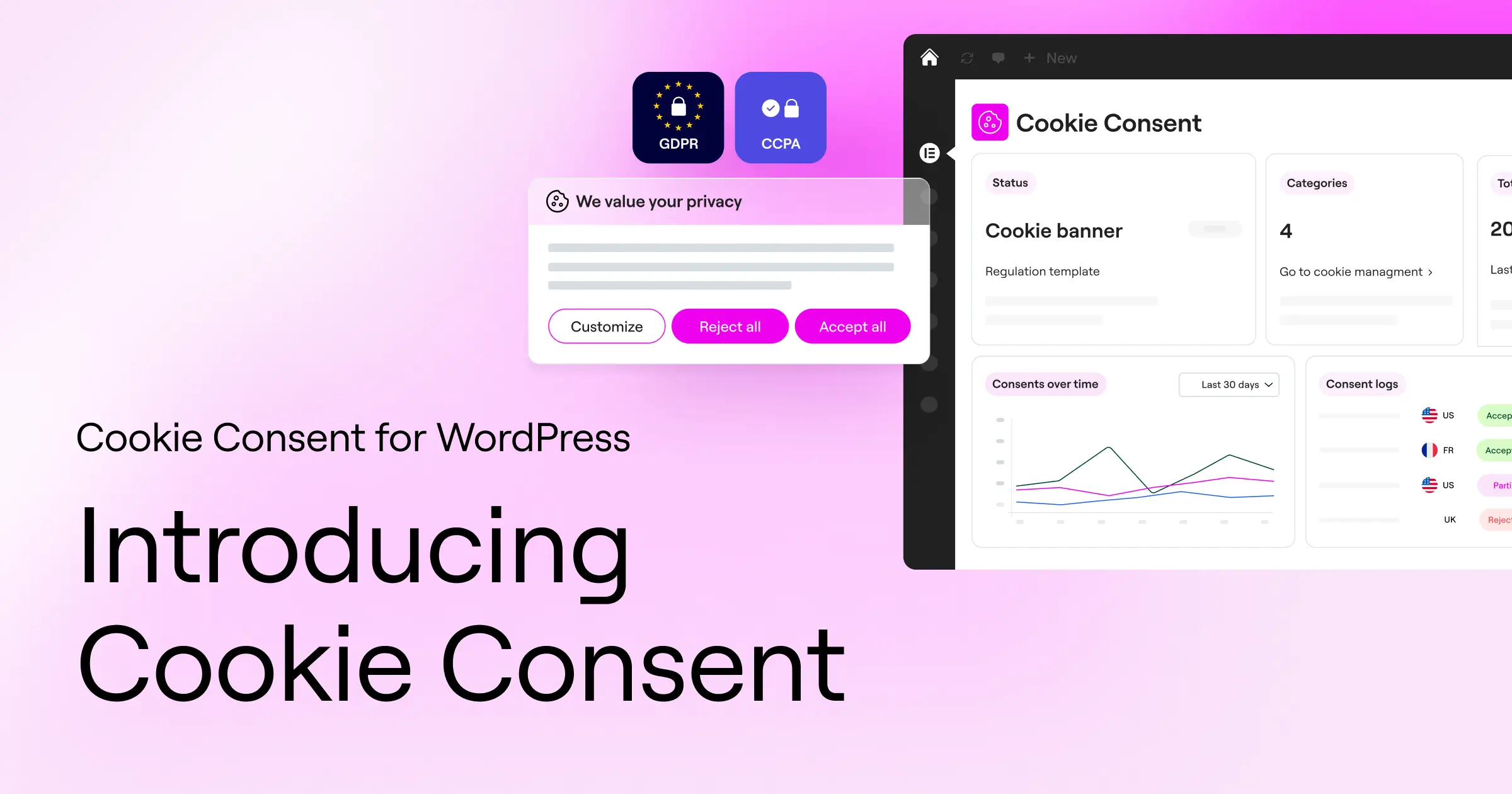
If you build and manage your WordPress site with Elementor, you’ve got access to Cookie Consent, a native compliance capability built directly into the WordPress ecosystem. There’s no external sign-up, no separate platform to log into, and no third-party script to maintain. Everything lives inside your WordPress dashboard, which makes the whole process feel a lot less like a compliance chore and a lot more like a natural part of running your site.
The setup takes under five minutes using a clear three-step onboarding flow, so you can go from zero to compliant in the time it takes to brew a coffee. And because this cookie consent capability connects directly to your existing design controls, your banner will look like it actually belongs on your site, not like a bolt-on afterthought from a third-party service.
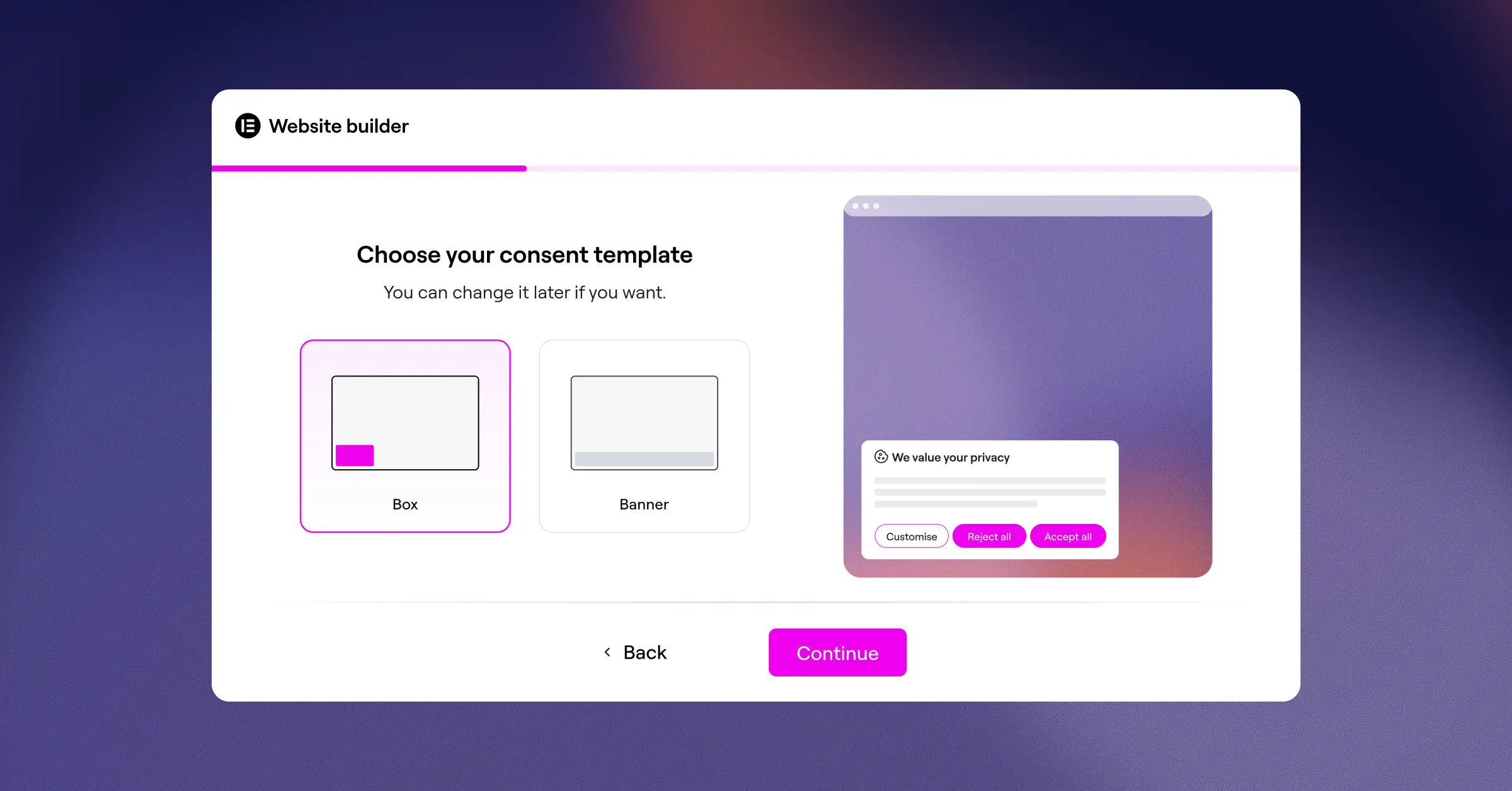
For web design teams and agencies, the white-label options and cloud-based templates make it practical across multiple client sites. And because it’s included in Elementor One, you’re not adding yet another subscription to your stack. It’s already there, ready to use.
- Tracks user choices directly from your local WordPress dashboard.
- Builds custom banner designs using native styling controls.
- Scans your website to identify and categorize tracking cookies automatically.
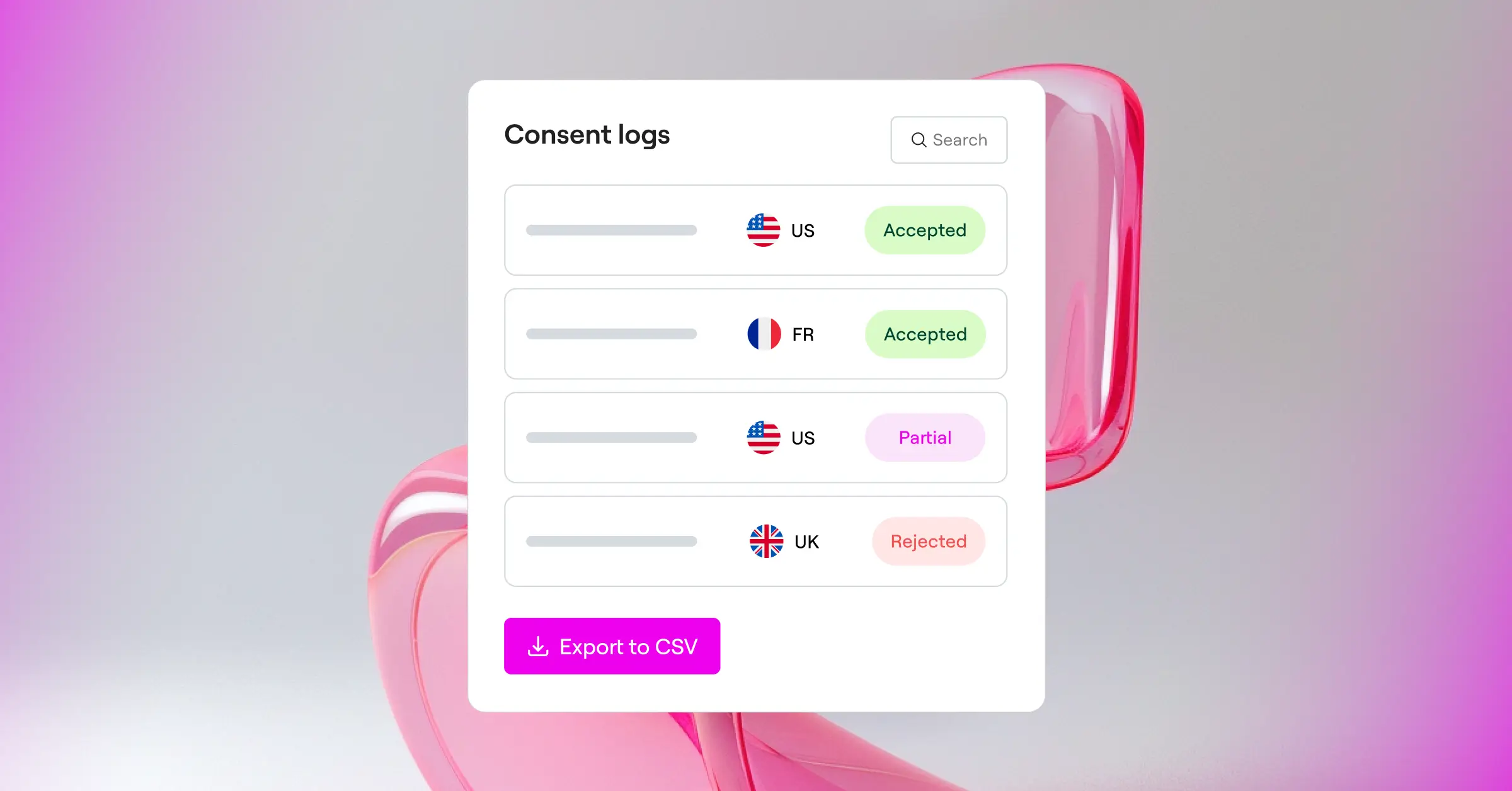
- Keeps complete consent logs to satisfy auditing requirements.
- Connects with Google Consent Mode v2 to protect your marketing data.
- Sets up in under five minutes using a clear three-step onboarding guide.
- Translates consent forms with native multilingual banner support.
- Filters banners by user location using smart geo-targeting.
- Generates custom privacy policies with a built-in policy generator.
- Pulls pre-made layouts from cloud-based template libraries.
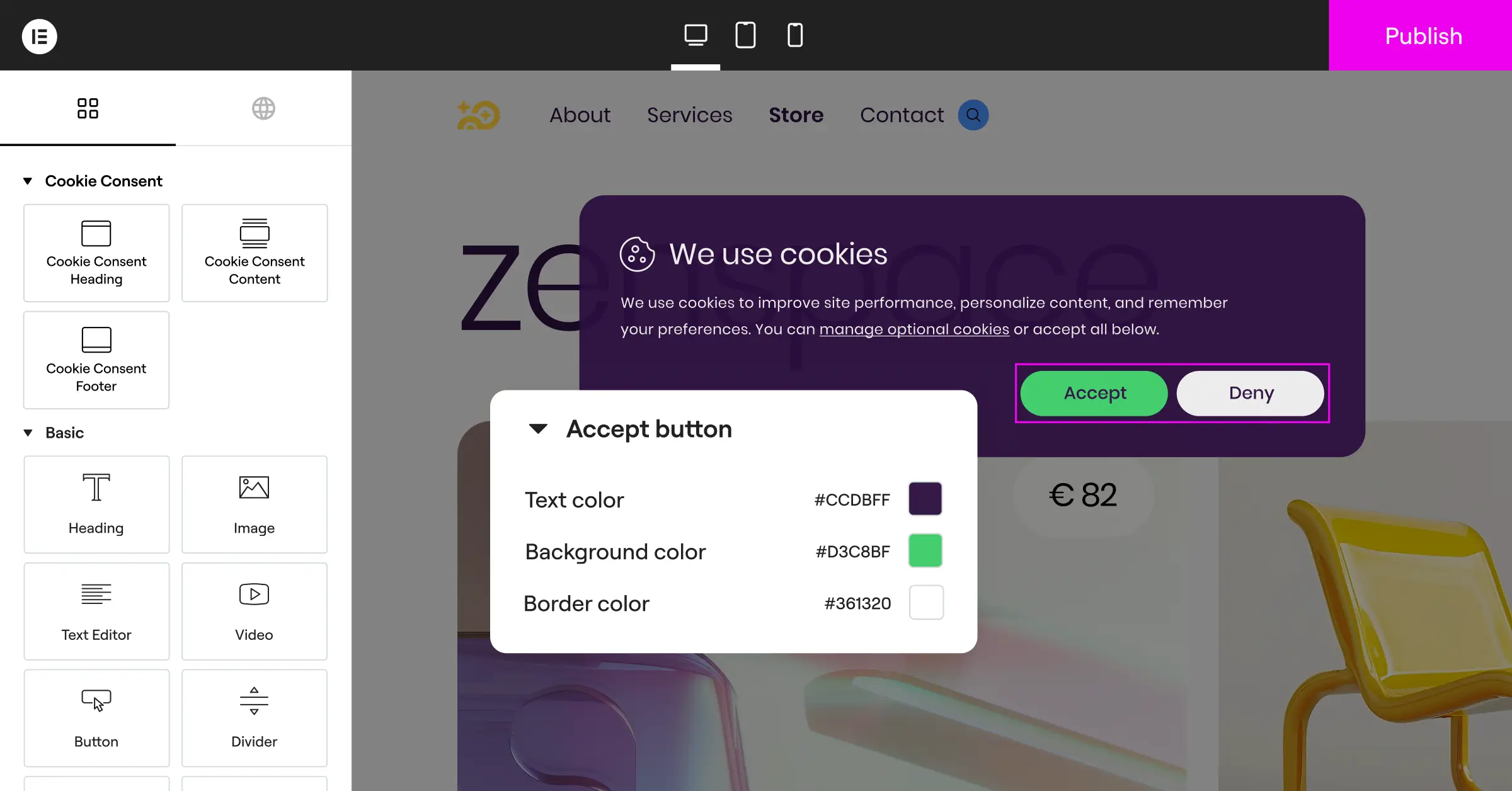
Pros: No external dashboards to manage, lightweight on site performance, matches your brand styles, and sets up in under five minutes.
Cons: Primarily designed for websites built within the WordPress and Elementor ecosystem.
Verdict: The best choice for WordPress site owners who want a straightforward, visually polished, and fully native way to manage cookie compliance without dealing with external cloud platforms.
2. Cookiebot
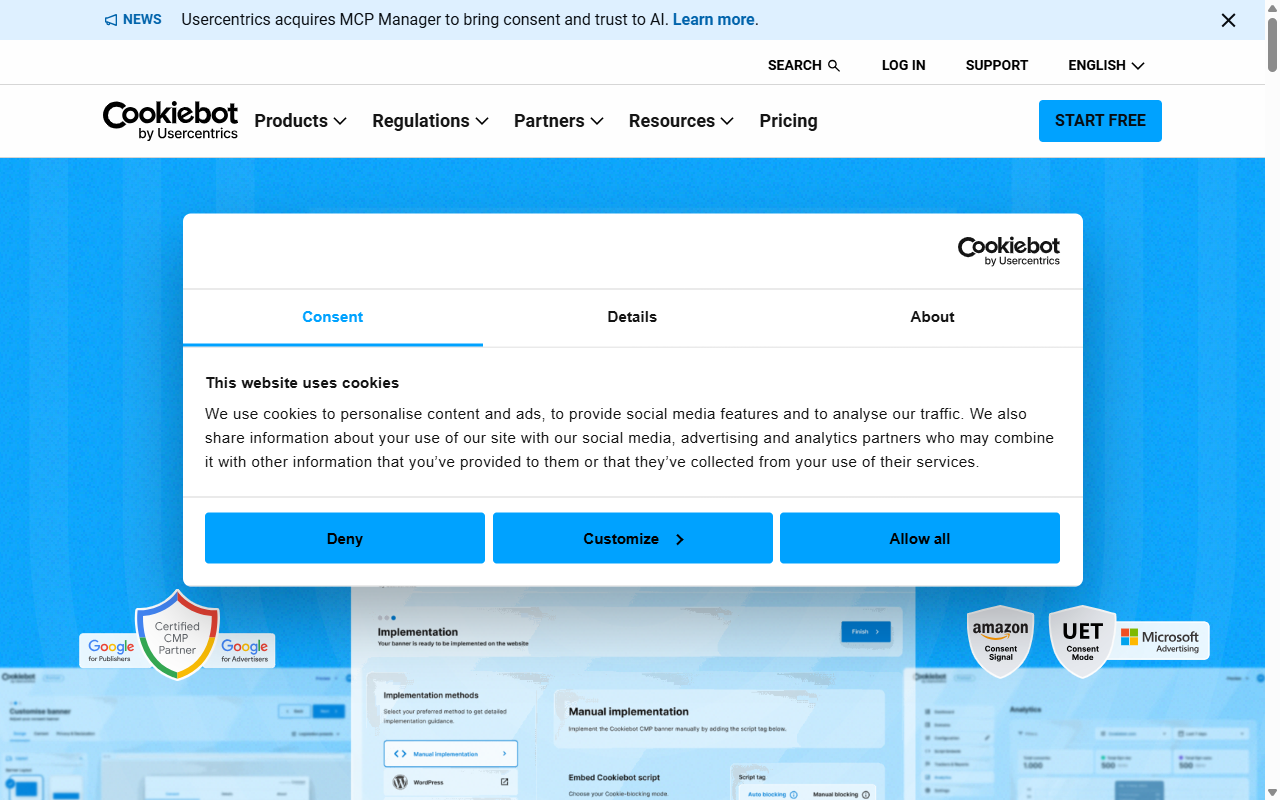
Cookiebot is an established cloud-based consent management platform that operates through an external portal. It’s known for its thorough scanning capabilities and its ability to hold cookie scripts in check until a user makes their choice. It works across almost any website platform, though it does require you to manage settings through their cloud-based panel rather than from within your CMS.
The setup can feel a bit technical for beginners, since you’ll need to insert scripts into your site’s header code. Once configured, it runs quietly in the background and updates your cookie declaration page automatically after each new scan.
- Scans your website regularly to identify new tracking scripts.
- Places cookies into clear functional categories automatically.
- Displays consent banners to users based on their location.
- Stores consent logs securely in cloud servers.
- Supports Google Consent Mode v2 out of the box.
- Simplifies policy creation with a dynamic cookie declaration page.
Pros: Thorough automated scans, strong support for international privacy laws, and reliable script blocking.
Cons: The free tier is limited by page count, and setup requires managing scripts outside of WordPress.
Verdict: A reliable, platform-agnostic cloud solution for site owners who don’t mind managing their privacy settings through an external interface.
3. CookieYes
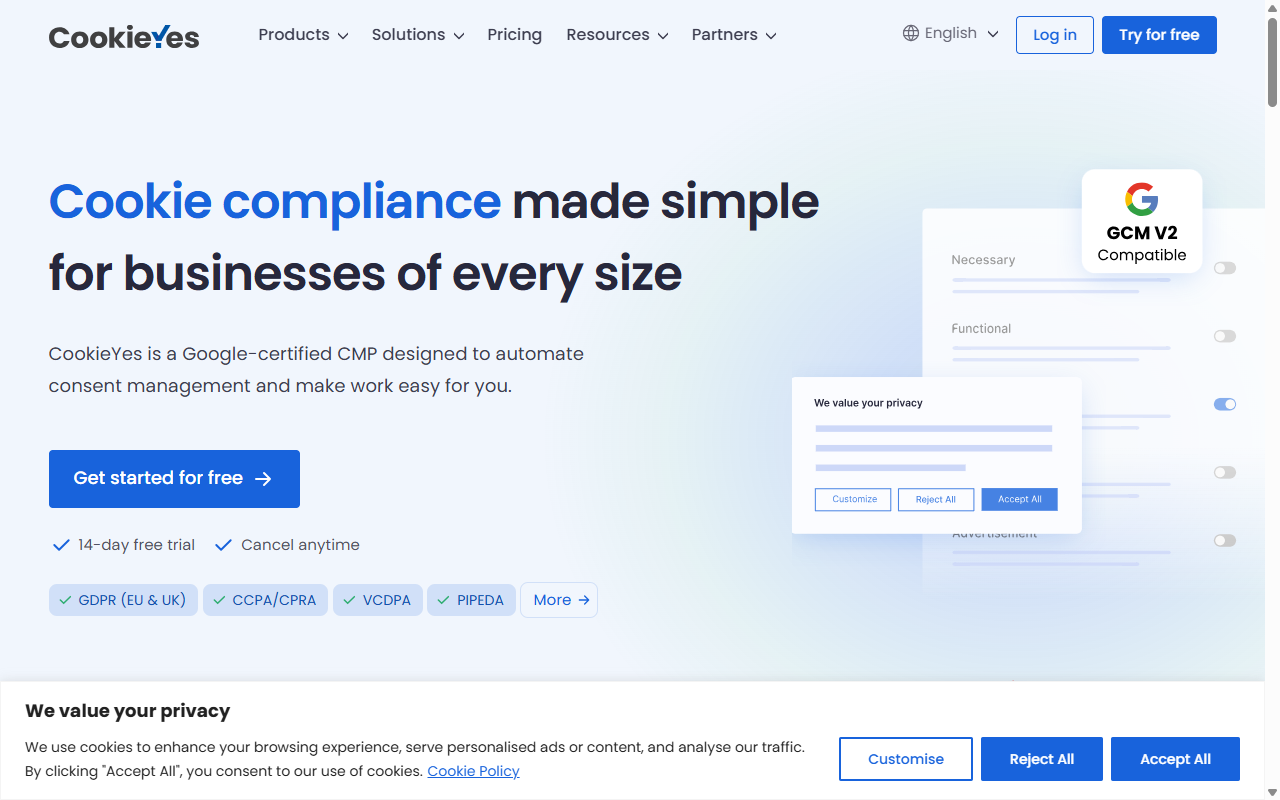
CookieYes is a hybrid cloud solution with a dedicated WordPress integration alongside a broader web app. It handles script blocking automatically and supports a wide variety of languages, which makes it popular with businesses serving a global audience.
The interface is clean and easy to navigate, though some advanced design customizations require logging into their web-based dashboard rather than managing them from within your CMS. It bridges the gap well between simple local features and heavier enterprise platforms.
- Blocks tracking scripts automatically before receiving user consent.
- Generates custom cookie banners that fit your website layout.
- Logs user consents to help you stay compliant with audits.
- Manages settings through an external web-based application.
- Supports multiple languages for international visitors automatically.
- Connects with major analytics platforms to share consent status.
Pros: Excellent multilingual support, easy-to-understand interface, and automatic script blocking.
Cons: Deep customization requires logging into their external web app, and the free tier has usage caps.
Verdict: A solid middle-ground option for websites that need good international language support and straightforward automated script blocking.
4. Complianz
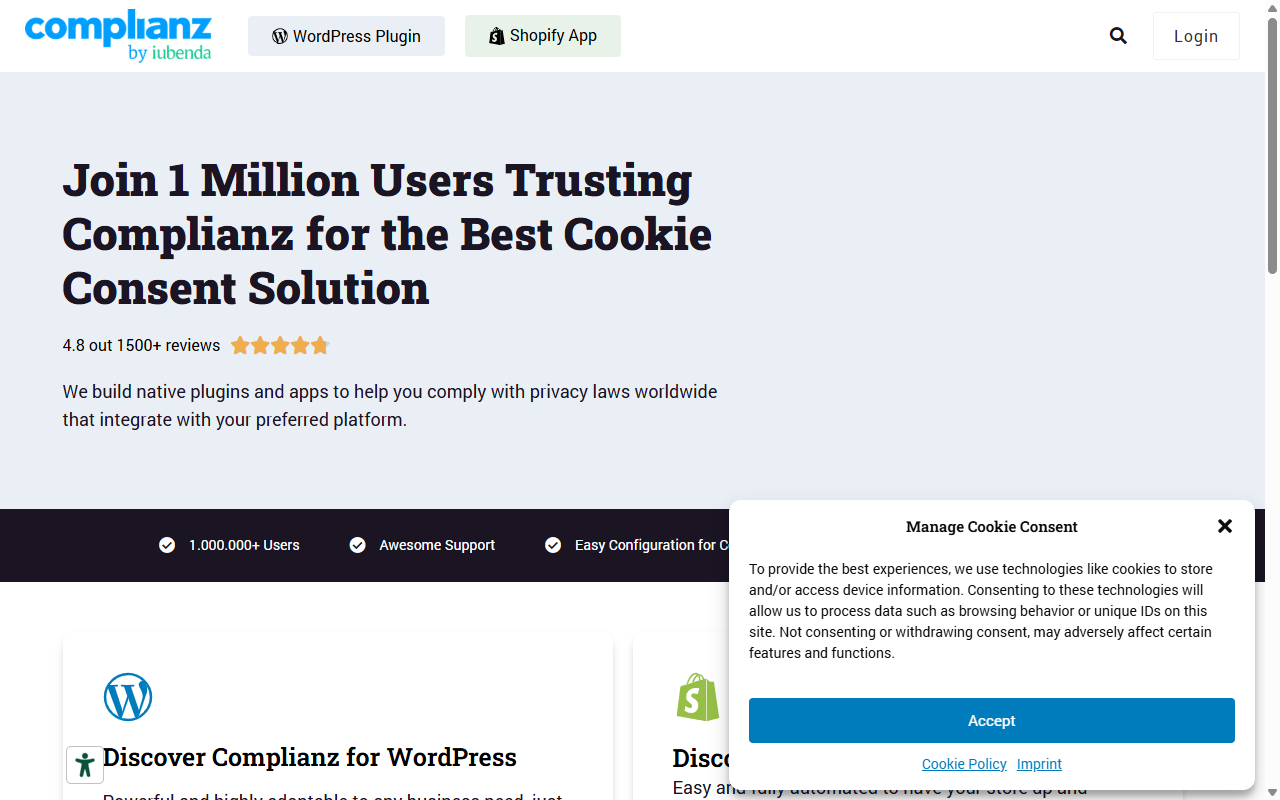
Complianz is a dedicated compliance tool built specifically for WordPress. It walks you through an interactive wizard that asks about your business, your audience, and the types of cookies you use, then automatically generates a matching policy and configures your banner for your region’s specific requirements.
Because it’s a WordPress-first tool, it integrates well with other popular plugins in the ecosystem. Making custom design changes outside the wizard’s standard options can take some extra work for developers who want full creative control.
- Configures privacy banners through a step-by-step wizard.
- Integrates directly with the WordPress dashboard.
- Blocks cookies from common third-party services automatically.
- Generates legal documents like cookie policies dynamically.
- Adapts to local privacy laws using built-in geo-targeting rules.
- Integrates with popular translation tools for multilingual setups.
Pros: No external cloud accounts required, excellent wizard-based setup, and generates localized legal documents.
Cons: The interface can feel overwhelming due to the volume of legal questions, and design options are somewhat structured.
Verdict: A strong local WordPress option for site owners who want a highly guided, legally focused setup to handle their compliance steps.
5. iubenda
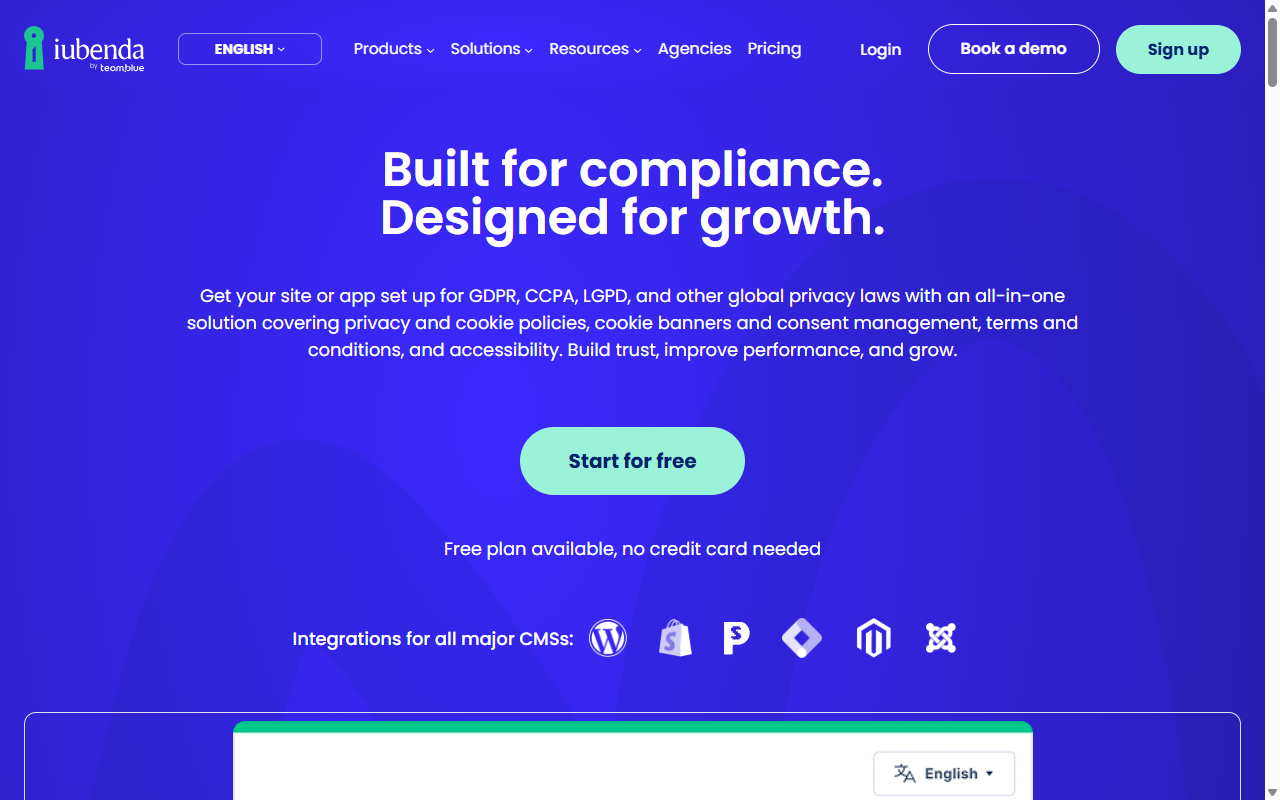
iubenda is a full compliance suite designed to handle cookie consent alongside privacy policies and terms of service. It takes a legal-first approach: their documents are drafted with legal input and updated automatically as international privacy regulations evolve. Everything is configured through a centralized cloud dashboard.
It’s highly versatile, though it can feel complex if all you need is a simple cookie banner. The full suite is better suited to businesses that want an all-in-one legal documentation solution rather than a standalone consent tool.
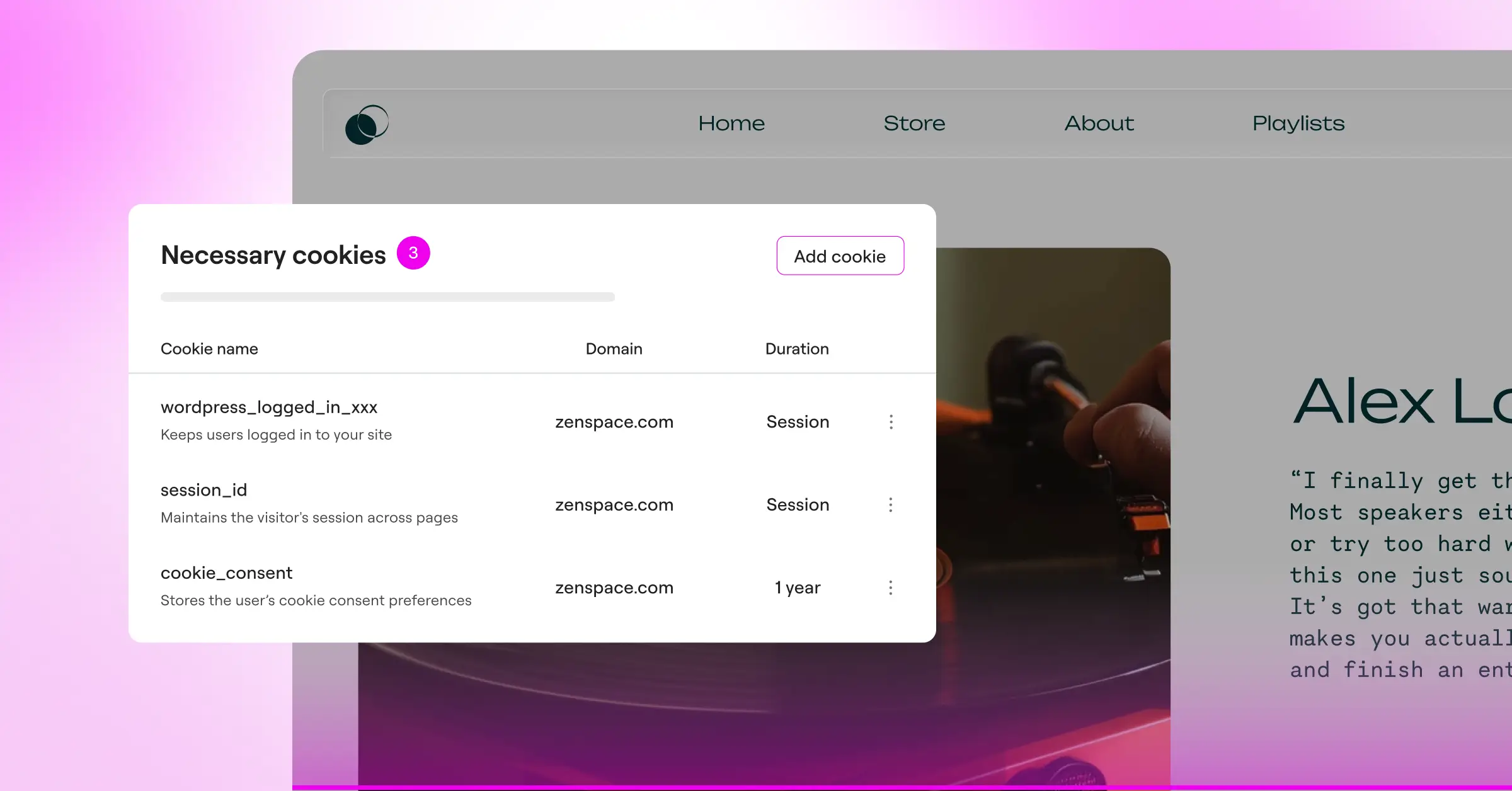
- Generates complete privacy and cookie policies for websites.
- Updates legal documents automatically when compliance rules change.
- Customizes consent banners with a visual editing tool.
- Supports global regulations including GDPR, CCPA, and LGPD.
- Syncs consent preferences across multiple web domains.
- Keeps historical records of consent in a secure database.
Pros: Legally informed documents that update automatically, professional approach, and covers multiple compliance needs at once.
Cons: The dashboard can be confusing for beginners, and the pricing structure scales up quickly for multi-domain use.
Verdict: A good choice for growing businesses and agencies that want to bundle cookie consent with professional, auto-updating legal policies.
6. OneTrust
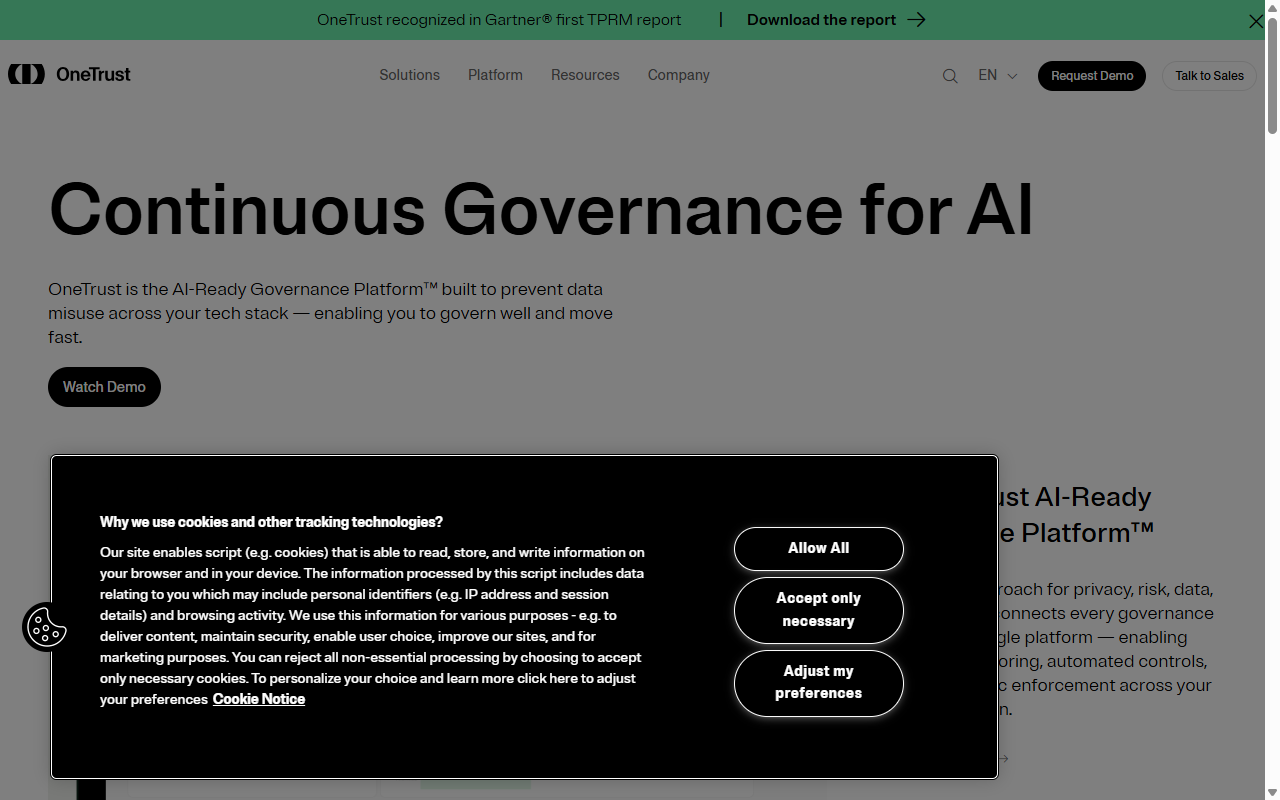
OneTrust is built for large-scale organizations, compliance officers, and enterprise web networks that need deep reporting, advanced data mapping, and vendor risk assessment alongside consent management. It’s a highly capable platform that covers everything from cookie consent to internal data governance workflows.
For a standard WordPress site or small business, OneTrust is typically more than is needed, both in complexity and cost. But for major organizations with strict auditing requirements, its feature depth is significant.
- Manages compliance across large enterprise website portfolios.
- Scans sites thoroughly to discover hidden tracking technologies.
- Customizes consent banners with detailed preference centers.
- Integrates with advanced tag management systems.
- Tracks regulatory changes across hundreds of jurisdictions.
- Documents user consent with enterprise-grade security logs.
Pros: Extensive compliance features, enterprise-grade security, and detailed reporting tools.
Cons: High price point, steep learning curve, and more than most small-to-medium sites will need.
Verdict: The standard choice for enterprise-level organizations that need full data governance capabilities alongside consent management.
7. Osano

Osano focuses on simplicity and reliability. It operates as a cloud-hosted script that intercepts cookies before they load on a visitor’s device, and the platform includes a compliance guarantee for enterprise customers. The dashboard is clean and visually accessible, making it practical for teams that want a straightforward cloud solution.
It’s designed for teams that don’t want to wade through legal terminology to get their banners configured, and the interface keeps things approachable without sacrificing underlying compliance capability.
- Blocks unauthorized trackers automatically to keep sites secure.
- Translates consent banners into dozens of languages.
- Monitors vendor compliance levels to flag potential risks.
- Stores consent records on a secure public ledger.
- Integrates with standard tag managers for cookie control.
- Manages consent rules for visitors from over forty countries.
Pros: Easy-to-navigate dashboard, solid automated script blocking, and compliance monitoring.
Cons: The free tier is quite restrictive on traffic limits, and premium plans represent a significant monthly cost.
Verdict: A polished, cloud-based platform for professional teams who want an elegant, low-maintenance consent setup.
8. Termly
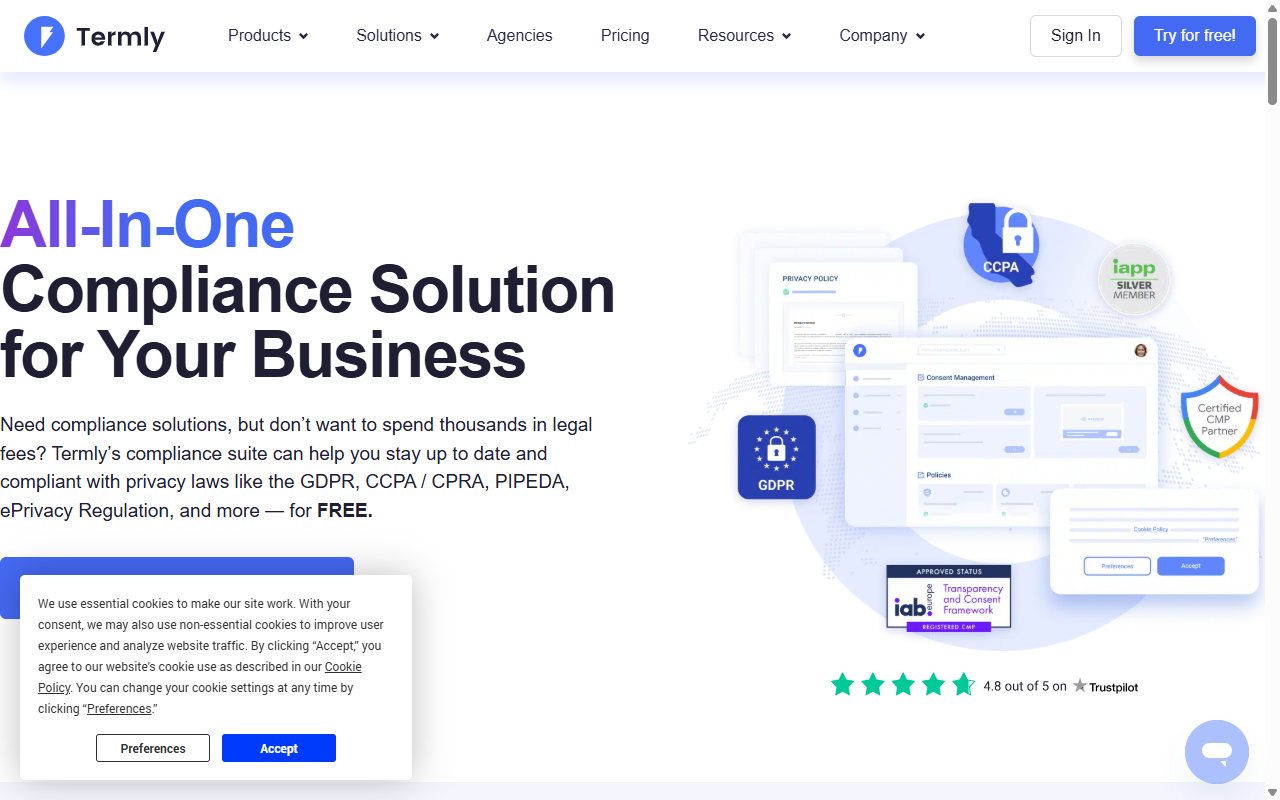
Termly is built with small business owners and independent creators in mind. It pairs a customizable cookie banner with a suite of simple policy generators, making compliance affordable and understandable for people who don’t have a dedicated legal team on call.
The interface is friendly and guides you through setup step by step. It doesn’t match the depth of enterprise platforms, but it covers the essentials cleanly for smaller projects (worth considering if you’re just getting started and want something low-friction).
- Creates customized cookie consent banners with a clean builder.
- Scans websites to find and categorize tracking scripts.
- Generates legal agreements like terms of service.
- Hosts compliance policies on external secure servers.
- Supports regional compliance styles for global audiences.
- Customizes banner designs to blend with website themes.
Pros: Budget-friendly plans, simple to set up, and includes policy generators for terms and conditions.
Cons: Limited reporting tools for advanced users, and the free plan displays Termly branding on your banner.
Verdict: A solid, budget-friendly option for freelancers, bloggers, and small business owners who need reliable consent banners and quick policies without a big investment.
9. Usercentrics
Usercentrics is a scalable consent management platform popular with developers and mid-market companies. It’s built to be highly customizable, offering both a visual manager and a developer API that lets you build fully custom consent experiences from scratch. That makes it particularly useful for web applications and sites with non-standard layouts.
It supports all major global regulations and has strong built-in compatibility with Google Consent Mode v2, which is reassuring for marketing teams that rely on accurate attribution data.
- Collects user consent across web applications and mobile apps.
- Integrates with major software platforms through clear API routes.
- Customizes user interfaces to match corporate brand guidelines.
- Adapts to evolving global privacy laws automatically.
- Synchronizes consent data with internal marketing databases.
- Supports Google Consent Mode v2 for accurate campaign tracking.
Pros: Excellent developer flexibility, strong API integration, and good performance across mobile and web.
Cons: Can be over-engineered for a basic blog, and doesn’t offer a free tier for general business use.
Verdict: A developer-first cloud solution built for custom web applications and businesses that need full control over their consent data via API.
10. Consent Manager
Consent Manager is aimed at publishers, advertisers, and high-traffic media sites that need to maximize consent rates without breaking any legal rules. It includes advanced split-testing features so you can experiment with different banner layouts and find what actually converts best for your audience.
The dashboard is data-rich, with detailed charts, tables, and reports on how visitors interact with your banners. The interface leans analytical and can feel clinical, but for conversion-driven teams, that depth is a genuine asset.
- Maximizes opt-in rates through smart banner optimization testing.
- Collects consent details to build reliable compliance archives.
- Adapts display rules to match the visitor’s specific country.
- Supports integration with key tag management platforms.
- Exports detailed compliance reports for auditors.
- Blocks third-party elements automatically until consent is given.
Pros: Excellent reporting and split-testing options, well-suited for media publishers, and strongly compliant.
Cons: The backend is quite technical and analytical, which can feel like a lot for casual users.
Verdict: A strong choice for publishers, media companies, and marketers who want to actively measure and optimize their consent rates with precise data.
How to Implement Cookie Consent Without Slowing Down Your Site
One of the most common worries among site owners is that a cookie banner will hurt page load times. It’s a legitimate concern, since loading heavy cloud-based scripts before your page renders can affect your Core Web Vitals, and that has real implications for search rankings. The good news is that you don’t have to choose between compliance and speed.
Here are three steps that make a real difference:
- Use a native dashboard tool: Choosing a tool that integrates directly into WordPress (like Elementor’s Cookie Consent capability) cuts out the external API calls and database lookups that slow things down. Everything runs locally, so load times stay clean.
- Load scripts asynchronously: Configure your consent tool to load without blocking your page’s visual elements. Your visitors’ perceived load speed stays fast, even as the consent layer initializes in the background.
- Keep banner design assets lightweight: Avoid heavy images, large illustrations, or custom external fonts inside your cookie banner. Simple CSS-based styles and system fonts keep the code footprint small.
“Managing user privacy is no longer just a legal box to check. It’s a foundational part of the user experience. Modern cookie consent solutions need to be easy to manage, gentle on site performance, and fully compliant with standards like Google Consent Mode v2 to keep your analytics clean.”
– Itamar Haim, Web Compliance Specialist
Frequently Asked Questions
What is Google Consent Mode v2 and why does it matter?
Google Consent Mode v2 lets your website communicate your visitors’ consent choices directly to Google’s tracking tags. If a visitor declines tracking, Google’s tags adjust their behavior to run without storing cookies, protecting user privacy while still allowing basic, anonymous conversion data to flow through. It’s important for anyone running Google Ads or Analytics targeting European visitors.
Can I use a free cookie consent tool?
Yes, several solid options offer free tiers. Elementor’s Cookie Consent capability includes a free tier that works well for standard WordPress websites. Free plans are a great starting point, though you may need to upgrade if you require advanced features like detailed audit logs or high-traffic geo-targeting.
How does geo-targeting work in a cookie consent tool?
Geo-targeting uses a visitor’s IP address to determine their approximate location when they load your site. The tool then decides whether to show a strict GDPR-style opt-in banner, a lighter CCPA opt-out banner, or no banner at all, based on the privacy laws applicable to that visitor’s country. It keeps the experience clean for visitors in regions with relaxed rules, while staying compliant everywhere it matters.
Do I need consent logs for GDPR compliance?
Yes, under GDPR the burden of proof sits with the website owner. You need to be able to demonstrate that a visitor gave active, informed consent before any tracking scripts loaded. Consent logs that record when and how consent was given (without storing personal data) are an important part of staying audit-ready.
What happens if a website doesn’t have a cookie consent banner?
Operating without a compliant banner can expose your business to financial penalties from data protection authorities. Beyond that, major advertising networks, including Google, actively restrict accounts that don’t implement Google Consent Mode v2, which can cost you access to remarketing audiences and campaign attribution data.
How do I prevent my cookie banner from slowing down my site?
Look for native tools that run within your WordPress environment rather than making slow external cloud connections. Avoid placing heavy media inside your banner layouts, and make sure your scripts are configured to load asynchronously so they don’t block the visual rendering of your pages.
Is it difficult to set up a cookie consent solution?
It doesn’t have to be at all. While some enterprise cloud platforms require manual code integration, native tools like Elementor’s Cookie Consent capability walk you through a guided onboarding process that gets your banner live and compliant in under five minutes, directly from your WordPress dashboard. (It’s genuinely one of the smoother setups in this space.)
What is Global Privacy Control (GPC)?
Global Privacy Control is a browser-level privacy signal that lets users broadcast their tracking preferences automatically to every site they visit. Modern compliance tools should recognize these signals and treat them as an opt-out request, keeping your site compliant with state-level laws like the California Consumer Privacy Act. Elementor’s Cookie Consent capability supports GPC out of the box.