Keeping your WordPress site compliant with international privacy laws can feel overwhelming, but you’re not alone in this. With regulations like GDPR and CCPA constantly evolving, finding the right tool to manage visitor consent has become essential to building trust and keeping your site on the right side of the law. The good news is that there are some genuinely great options out there, and picking the right one doesn’t have to be a headache. Let’s walk through the top choices so you can find the best fit for your situation.
Key Takeaways
- Native integration keeps your WordPress dashboard clean and removes the need for external platforms.
- Google Consent Mode v2 support is now vital if you use Google advertising or analytics tools.
- Geo-targeting capabilities allow you to show personalized banners only to visitors who legally require them.
- Automated scanning keeps your cookie policy accurate and automatically categorized.
- Consent logs provide a reliable audit trail to help you meet regulatory standards.
Why Privacy Compliance Matters in 2026
Privacy regulations are no longer a minor detail for website owners. Regulatory bodies worldwide have stepped up compliance standards, and search systems now prioritize sites that protect user data. This means having a clear, compliant consent mechanism is a necessity for anyone running a website, not just large enterprises.
Using a dedicated compliance tool helps you manage these rules automatically. Instead of writing custom code or worrying about whether you’re blocking the right scripts, the right tool does the heavy lifting for you. That frees you up to focus on creating great content and growing your business, while keeping your site protected from potential compliance issues.
“Managing consent is no longer just about placing a simple banner at the bottom of a web page. Modern compliance requires accurate cookie scanning, strict categorization, and active support for frameworks like Google Consent Mode v2 to keep your analytics running while respecting user choice.”
Itamar Haim, Web Compliance Specialist
When selecting a consent tool, look for features that genuinely make your life easier. You want something that integrates deeply with your existing setup, offers real design flexibility, and doesn’t slow down your page load speeds. Here’s a look at the best tools available this year.
1. Cookie Consent
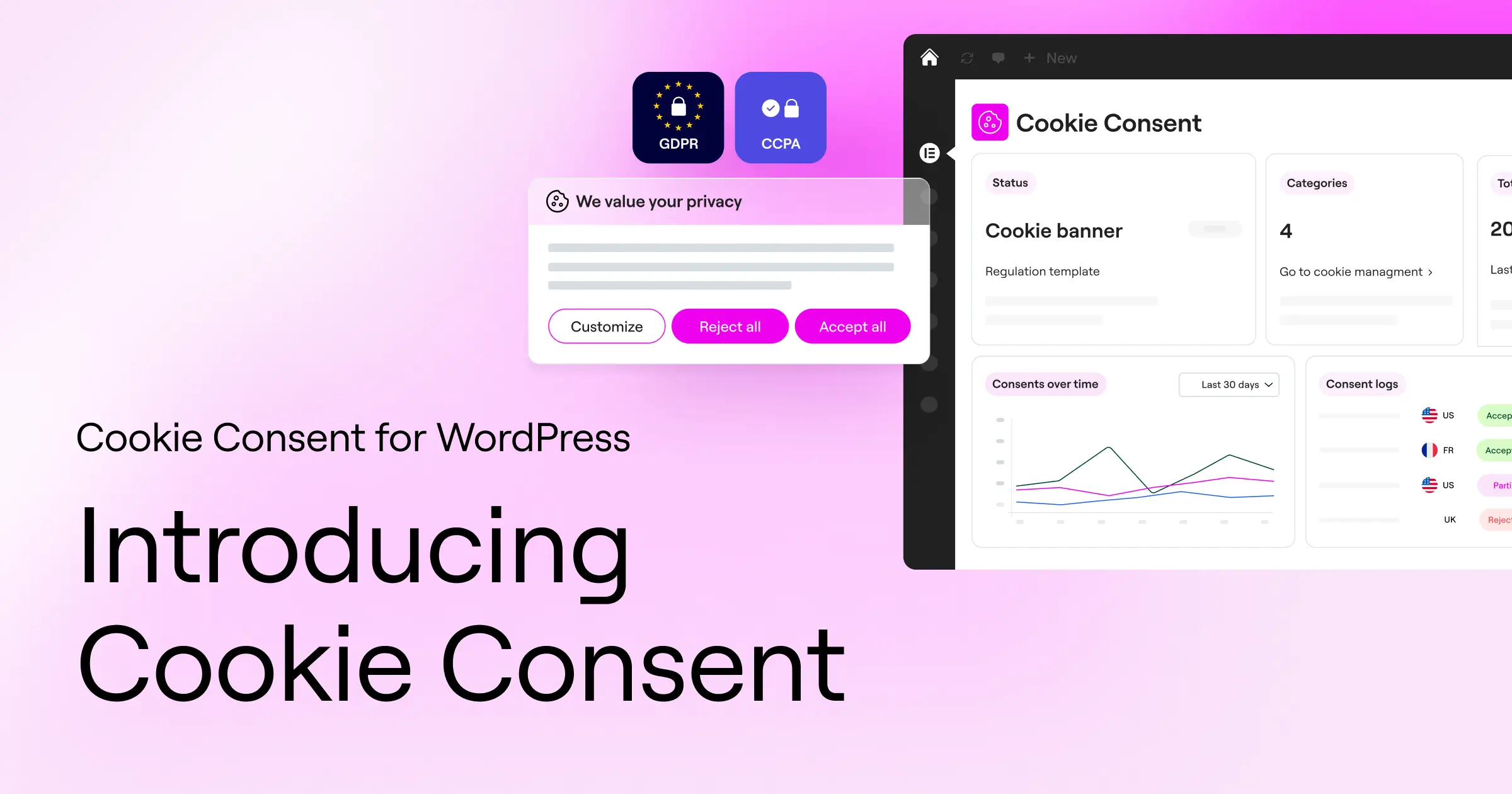
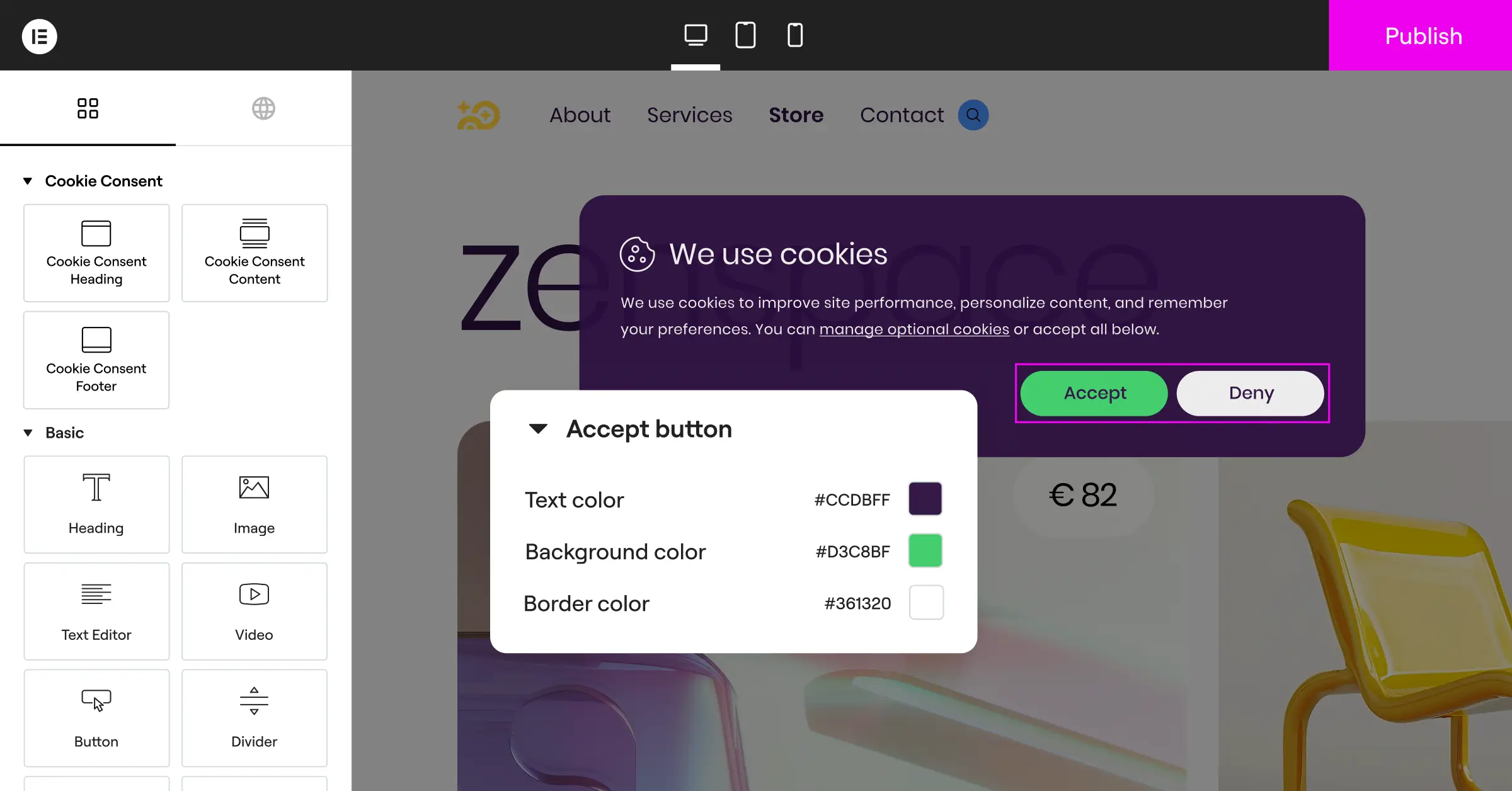
We’re starting our list with Cookie Consent, which is Elementor‘s native cookie consent capability built specifically for WordPress sites. This built-in feature lets you manage GDPR and CCPA compliance directly from your WordPress dashboard, removing the need for external dashboards or separate platforms entirely. You can set up consent banners, scan and categorize cookies, manage scripts, and keep consent logs all in one place.
Because it’s built directly into the Elementor ecosystem, it offers standout design flexibility and ease of use. It’s designed for site owners who want a straightforward, built-in solution that keeps compliance simple and site speed fast. There’s no copying and pasting of code snippets or connecting external APIs to get things running.
Key Features of Cookie Consent
- Dashboard integration lets you manage every setting directly inside WordPress.
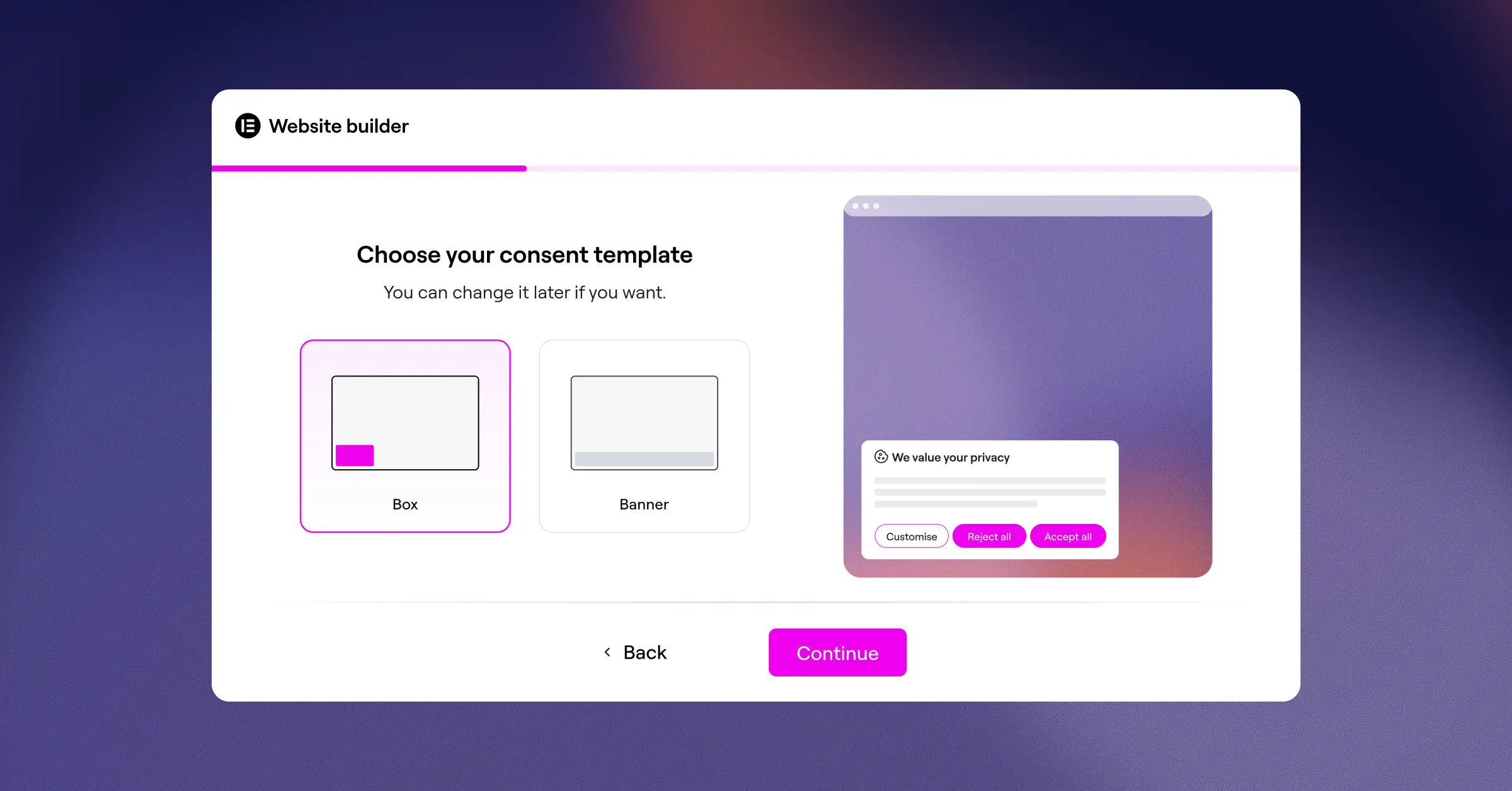
- Three-step setup gets your banner live and active in under five minutes.
- Design customizer matches your banner styling to your exact brand look.
- Multilingual banners present the right language to the right visitor automatically.
- Automatic cookie scanning detects and categorizes scripts running on your site.
- Consent logs maintain clear records to support your audit trails.
What Makes Cookie Consent Stand Out?
The primary benefit of this capability is its deep integration. You don’t have to learn a new interface or jump between different websites to adjust your consent rules. It includes built-in templates and supports Google Consent Mode v2, which is essential for sites using Google analytics. Cookie Consent is included as part of the broader Elementor One toolkit, offering great value for users who want a unified dashboard experience. There’s also a free tier available, so you can get started without any upfront cost.
The combination of geo-targeting, a built-in policy generator, multilingual banners, and cloud-based templates means you get a complete compliance setup without leaving WordPress. And because it runs natively, you’re not adding extra external requests that could slow down your pages. It also supports Global Privacy Control (GPC), so visitors who signal their privacy preferences through their browser are respected automatically.
Things to Keep in Mind
This capability is tightly focused on the WordPress ecosystem, so it’s not intended for non-WordPress platforms. If you need a cross-platform compliance manager for static HTML sites, you’d want to explore other options on this list.
Verdict
For WordPress users who value a clean dashboard and want to avoid third-party subscriptions, Cookie Consent is an excellent choice. It makes compliance straightforward and keeps your website design cohesive. Learn more at Elementor Cookie Consent.
2. Cookiebot
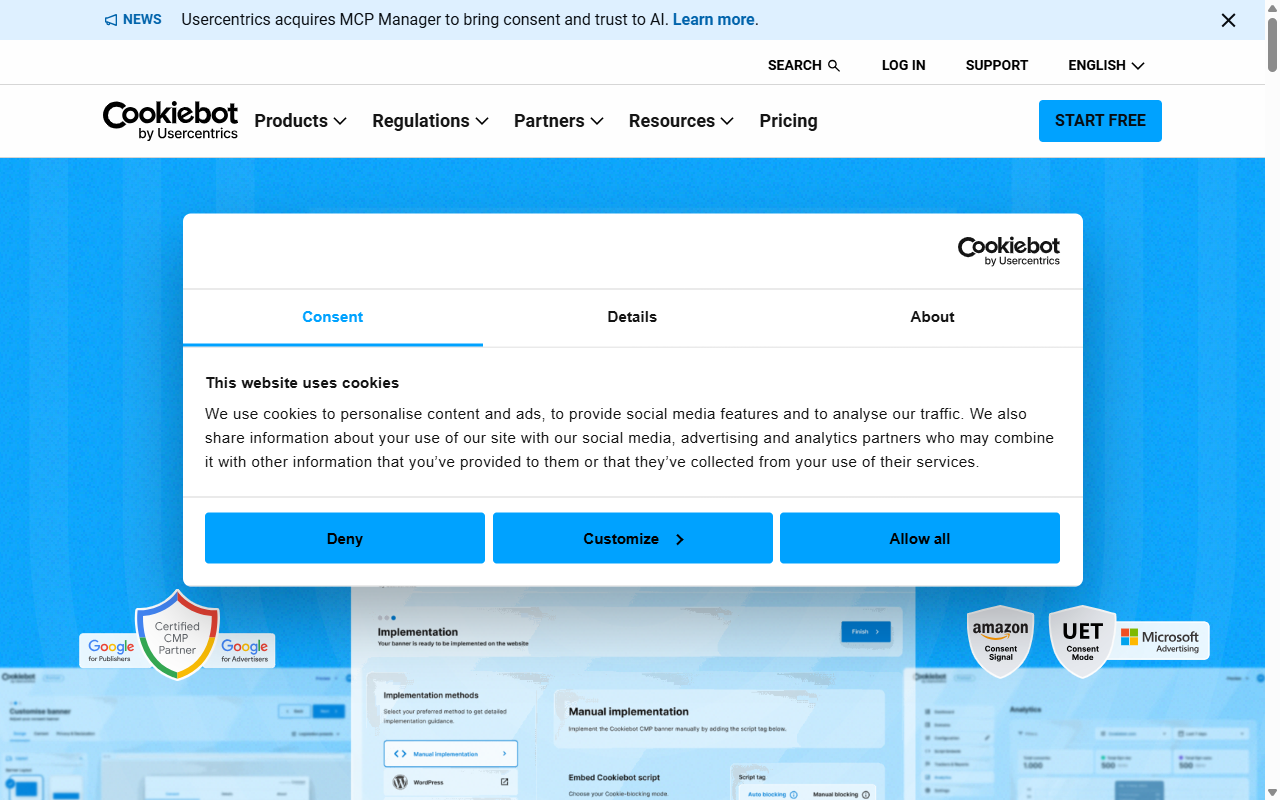
Cookiebot is a widely recognized compliance tool that operates as a cloud-based service. It’s designed to scan your website for cookies and track active scripts automatically. Because it’s a cloud service, you manage your settings from an external dashboard, with data served to your WordPress site via an integration.
It provides detailed reports on the trackers found on your site and sorts them into clear categories for your visitors. Cookiebot is well-regarded for its extensive database of known cookies, which makes automated classification quite accurate.
Key Features of Cookiebot
- Automated monthly scanning keeps your cookie list updated regularly.
- Cloud-based configuration lets you manage multiple websites from one account.
- Consent banner widgets embed on any platform.
- Detailed cookie declarations display lists of active trackers on your privacy page.
Pros of Cookiebot
Its automated cookie database is highly accurate and handles classification with minimal user input. The cloud dashboard is convenient if you’re managing a portfolio of sites across different content management systems.
Cons of Cookiebot
The entry-level plan is limited to smaller websites with fewer than 100 pages. Once you cross that threshold, you’ll need a monthly subscription. Managing settings outside of WordPress can also add an extra step to your workflow.
Verdict
A solid, accurate choice for multi-platform site managers who don’t mind using an external cloud dashboard to handle their compliance settings.
3. CookieYes
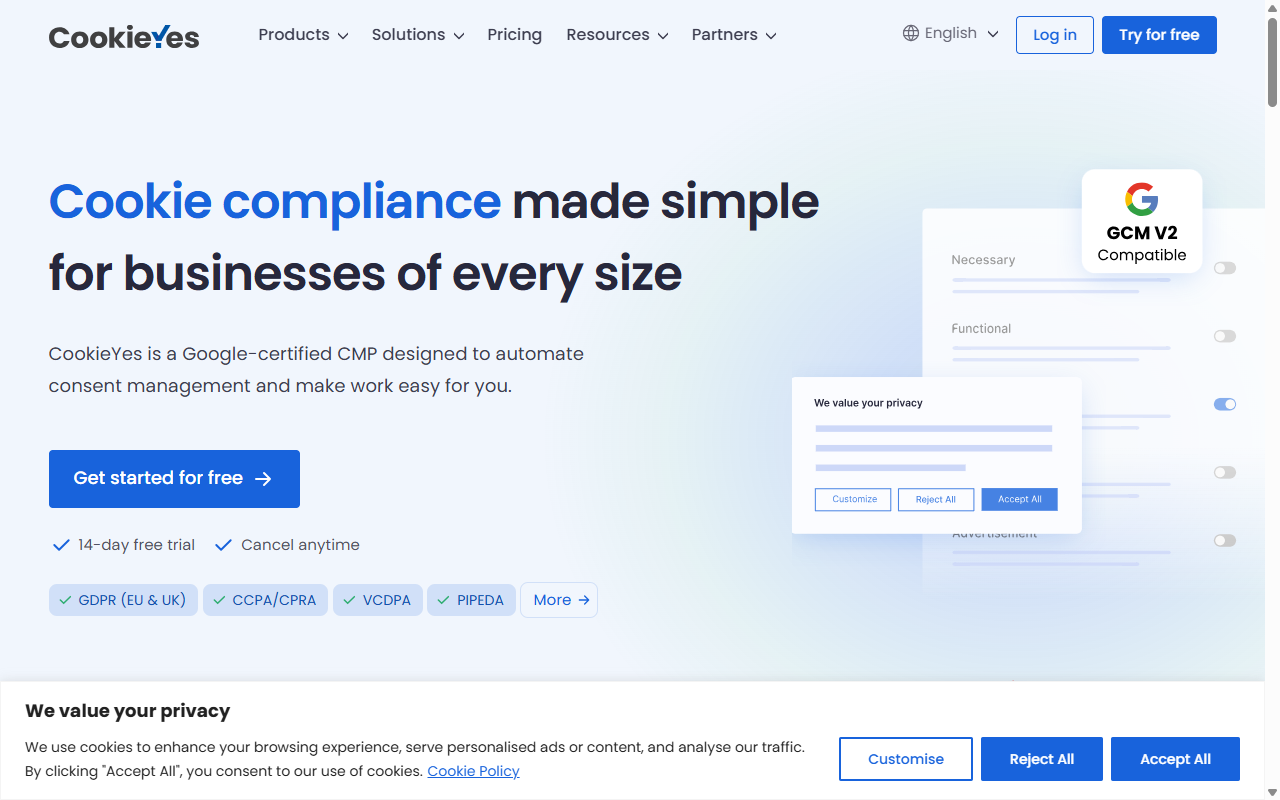
CookieYes is another popular cloud-based compliance tool that connects to WordPress using a lightweight connector. It’s built to serve websites of all sizes and offers a highly customizable banner creator. The service handles consent logging on its own servers, which helps keep your hosting database lean.
The setup process is straightforward, and the tool supports major privacy regulations worldwide, including GDPR, CCPA, and RGPD. It also features geo-targeting, so you can display different cookie notices based on the visitor’s physical location.
Key Features of CookieYes
- Global geo-targeting displays specific banners to EU or California visitors.
- Cloud consent storage keeps logs secure without using your server database.
- Custom CSS support lets you refine banner styling to match your brand.
- Auto-translation changes banner text to match the visitor’s local language.
Pros of CookieYes
Consent logs stored in the cloud help keep your local WordPress database clean and fast. It’s a practical option if you’d rather not have compliance data sitting on your own server.
Cons of CookieYes
Some advanced customization and geo-targeting features are locked behind higher payment tiers. You still manage your primary settings on an external platform.
Verdict
A strong choice for growing sites that need flexible consent management with cloud-based log storage.
4. Complianz
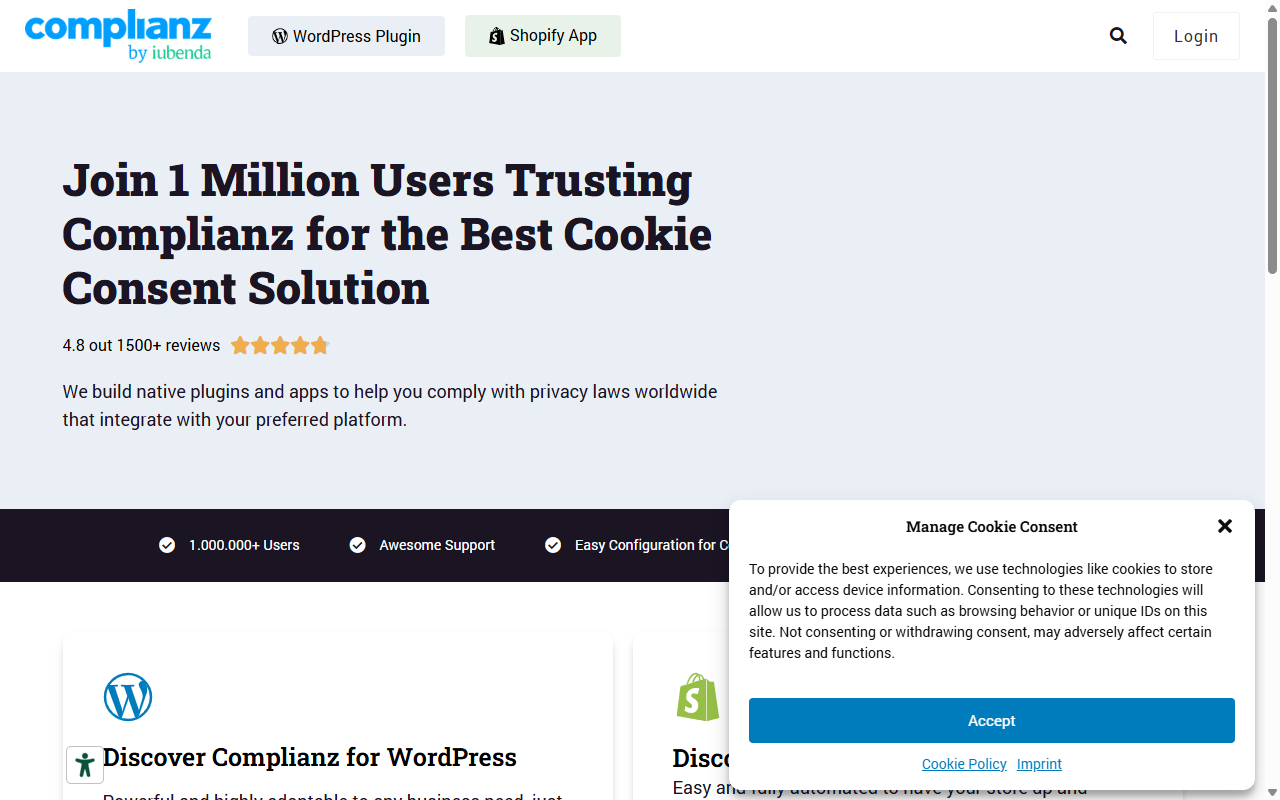
Complianz is a privacy suite built specifically for WordPress. Unlike cloud-first tools, it runs directly on your server. It includes a complete setup wizard that guides you through a series of questions about your business, the data you collect, and the legal frameworks you need to comply with.
This wizard-driven approach generates a customized cookie policy and banner without requiring deep legal knowledge. It integrates with many popular WordPress tools and services right out of the box.
Key Features of Complianz
- Wizard-based configuration walks you through complex legal questions step by step.
- Local cookie scanning runs directly from your web server.
- Integration support detects and blocks popular analytics and social media scripts.
- Document generator creates custom cookie policy and disclaimer pages.
Pros of Complianz
Direct integration with other WordPress tools makes script blocking highly reliable. It’s a self-contained setup that runs entirely on your own server, which some site owners strongly prefer.
Cons of Complianz
The setup wizard is thorough, but it can feel lengthy if you’re looking for a simple banner. Running scans locally can also temporarily use your hosting resources.
Verdict
Ideal for WordPress site owners who want a self-hosted, step-by-step setup that handles document creation alongside cookie consent.
5. iubenda
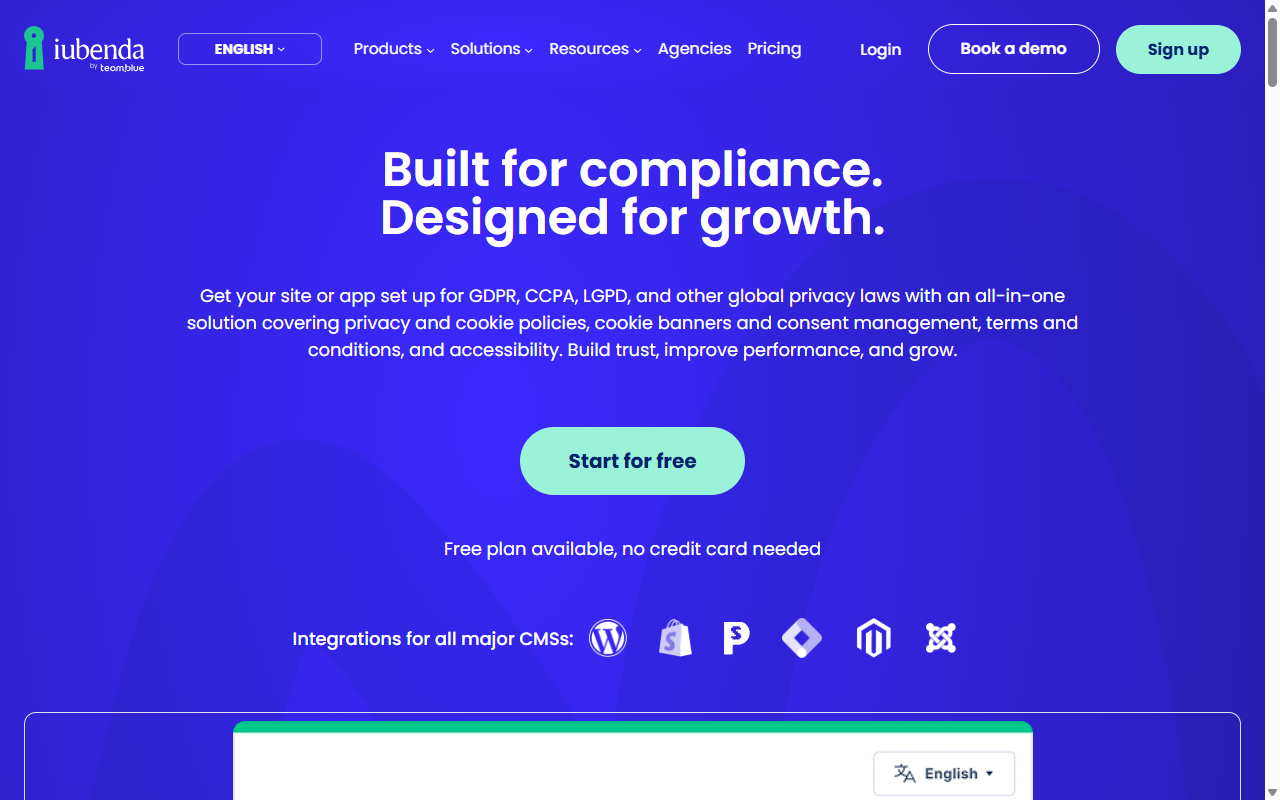
iubenda is a complete compliance suite designed for websites, mobile apps, and e-commerce stores. It goes beyond cookie consent to offer privacy policy generators, terms and conditions documentation, and internal consent management databases. Its cloud-based system keeps your policies updated automatically as laws change.
The WordPress integration connects your site to the iubenda cloud, letting you display detailed banners and manage script blocking through their centralized system.
Key Features of iubenda
- Complete compliance suite covers policies, terms, and consent banners in one place.
- Automatic legal updates modify your documents as regulations change.
- Consent database API stores detailed proof of consent.
- Customizable styling adapts to complex site layouts.
Pros of iubenda
It’s a thorough compliance solution for businesses that need to manage legally binding documents alongside cookie consent banners. The automatic updates provide solid peace of mind.
Cons of iubenda
It may be more feature-rich than what a simple blog or portfolio site actually requires, and the pricing tiers reflect that broader scope.
Verdict
A great fit for online stores and businesses that need a broader compliance solution covering legal documents and consent tracking together.
6. Termly
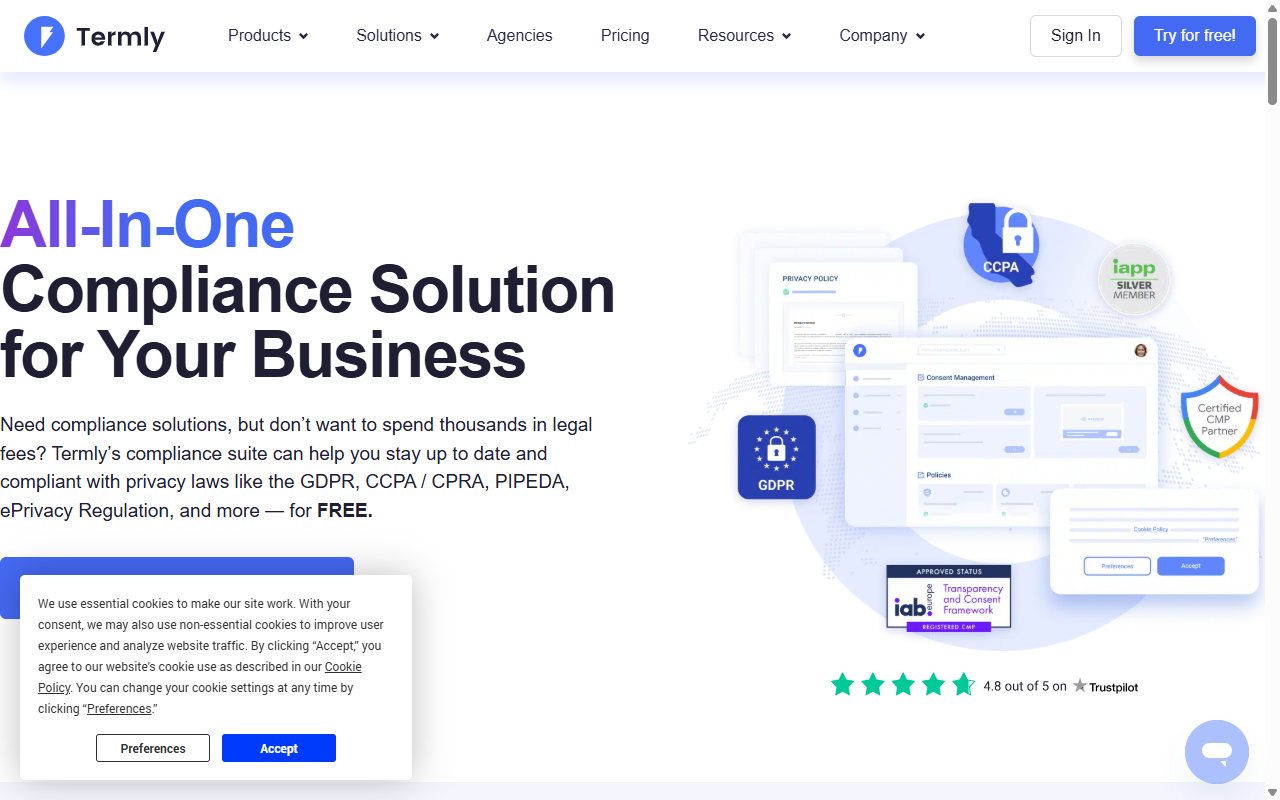
Termly is a cloud compliance platform focused on helping small businesses meet modern legal requirements. It features a simplified policy generator and a cookie consent manager. The tool scans your site, builds a customized cookie policy, and delivers a clean consent banner to your WordPress visitors.
It’s designed to be approachable, making it a favorite for startups and small agencies who need to get compliant quickly without spending hours on configuration.
Key Features of Termly
- Compliance generators create privacy policies, terms, and refund guidelines.
- Automatic cookie blocking holds scripts until the visitor gives consent.
- Simple style editor changes colors and fonts to match your design.
- Regular compliance scans update your active cookie lists automatically.
Pros of Termly
The interface is clean and easy to navigate. It simplifies legal jargon, making it much easier to understand which settings you actually need to enable.
Cons of Termly
The entry-level plan has page-view limits, and you’re required to keep the Termly branding on your banner unless you upgrade to a paid plan. Some advanced developer settings are limited on lower tiers.
Verdict
A user-friendly cloud tool that works well for small business owners who want an all-in-one compliance builder without a steep learning curve.
7. OneTrust
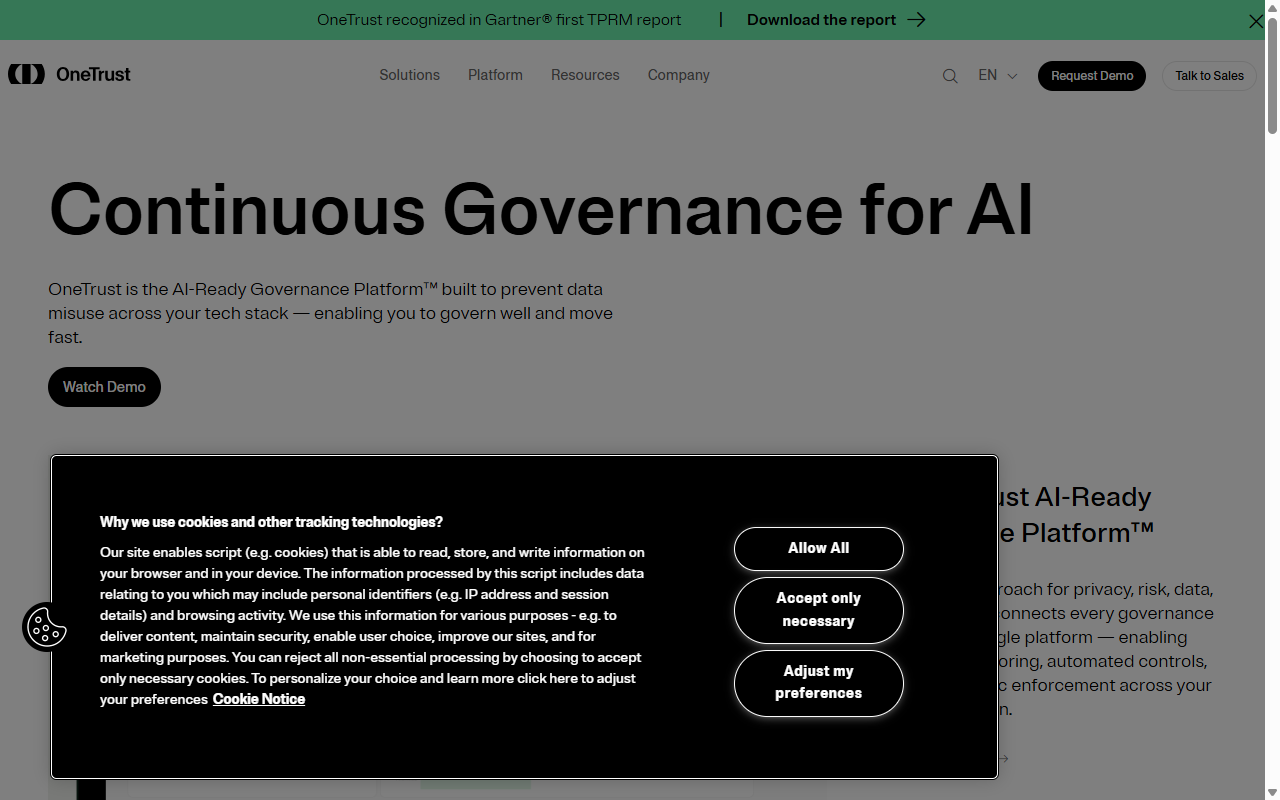
OneTrust is an enterprise-grade privacy and data governance platform. It’s built for large organizations, global brands, and enterprise-level e-commerce sites that need strict data mapping, vendor risk assessments, and compliance management across large numbers of web properties.
Their cookie consent tool is feature-rich, providing detailed analytics, extensive geo-targeting rules, and deep integration with enterprise marketing platforms.
Key Features of OneTrust
- Enterprise-grade consent logs provide secure, highly auditable records.
- Advanced geo-targeting applies specific legal frameworks per user location.
- Deep integration tools connect with major marketing automation systems.
- Detailed dashboard reports track user opt-in rates and banner performance.
Pros of OneTrust
The level of detail and compliance depth is substantial. It’s built to scale across millions of visitors and multiple global domains without breaking a sweat.
Cons of OneTrust
It’s a complex platform that typically requires a dedicated administrator or developer to configure properly. The cost structure is geared toward enterprise budgets, making it impractical for smaller sites.
Verdict
The go-to choice for enterprise corporations and large e-commerce platforms that need thorough control over their global compliance data.
8. Osano
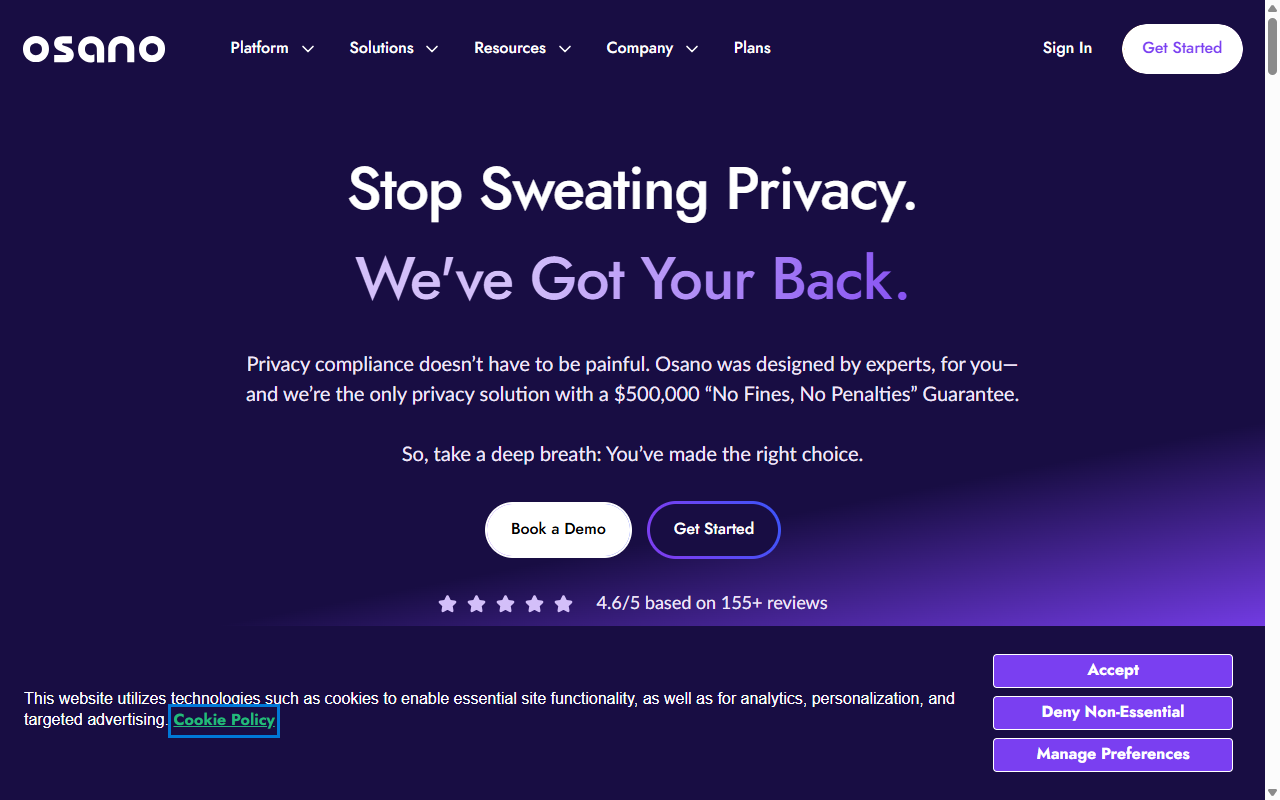
Osano is a cloud-based data privacy platform that focuses on simplicity and compliance confidence. They monitor privacy laws globally and update their scripts automatically to keep your site compliant. Their paid plans also come with a financial pledge to help protect users from certain compliance fines.
The tool uses a lightweight wrapper to block and manage scripts based on user preferences, keeping your site fast and secure.
Key Features of Osano
- Compliance pledge provides financial protection against fines for eligible plans.
- Automatic script blocking manages known tracking pixels without manual setup.
- Global representative network supports compliance management across different regions.
- Cloud-managed updates deploy legal changes without requiring code updates on your site.
Pros of Osano
The platform is straightforward to use and offers solid reliability. The compliance guarantee reflects their confidence in their automatic script-blocking approach.
Cons of Osano
Premium features and the compliance pledge are limited to higher-tier plans, which can represent a meaningful cost for smaller sites.
Verdict
An excellent option for mid-sized businesses that want peace of mind, automated updates, and legal security guarantees built into their consent tool.
9. GDPR Cookie Consent (by WebToffee)
GDPR Cookie Consent by WebToffee is a dedicated WordPress-focused tool that runs directly on your site. It’s designed to help you create a customizable cookie banner quickly and easily. The interface lets you configure categories, customize layouts, and manage script lists from your WordPress dashboard.
It supports both opt-in and opt-out consent models, making it useful for both European GDPR and Californian CCPA compliance requirements.
Key Features of GDPR Cookie Consent
- Flexible banner layouts include headers, footers, and popup options.
- Script category control lets visitors toggle specific cookie types on or off.
- Shortcode options display cookie lists anywhere on your site.
- Local consent logging saves records inside your WordPress database.
Pros of GDPR Cookie Consent
It offers a clean, familiar interface that integrates naturally with standard WordPress installations. The settings are easy to understand and adjust, even for less technical users.
Cons of GDPR Cookie Consent
Storing extensive consent logs locally can cause your WordPress database to grow quickly on high-traffic sites. Some automated features require manual setup steps to get running.
Verdict
A reliable, self-contained option for site owners who want straightforward, localized control over their consent banners inside WordPress.
10. Real Cookie Banner
Real Cookie Banner is a specialized WordPress tool designed with technical accuracy in mind. It acts as a complete manager for your cookies and script services, with a guided checklist that walks you through setting up compliance correctly from the start.
It includes a wide variety of service templates for popular tools like Google Analytics, Facebook Pixel, and YouTube embeds, so you can configure automated blocking rules without having to hunt down tracking scripts manually.
Key Features of Real Cookie Banner
- Guided compliance checklist walks you through the entire configuration step by step.
- Service templates simplify script blocking for popular tracking tools.
- Content blockers stop video embeds and maps from loading before consent is given.
- In-depth visual customizer shows real-time changes to your banner design.
Pros of Real Cookie Banner
The built-in service templates save you from manually locating and pasting individual tracking scripts. The content blocker is particularly effective at stopping external media from loading without consent.
Cons of Real Cookie Banner
The setup can be quite technical given the level of detail involved. Users who want a quick, click-and-forget experience may find the advanced settings a bit much at first.
Verdict
A great choice for developers and technically confident users who want precise control over script execution and media blocking in WordPress.
WordPress Cookie Tools Comparison Table
To help you compare these options at a glance, here’s a table highlighting the most important factors for WordPress site owners.
| Tool Name | WordPress Native | GCM v2 Support | Geo-Targeting | Setup Speed | Primary Dashboard |
|---|---|---|---|---|---|
| Cookie Consent | Yes | Yes | Yes | Under 5 Mins | WordPress |
| Cookiebot | No | Yes | Yes | Medium | Cloud Platform |
| CookieYes | No | Yes | Yes | Medium | Cloud Platform |
| Complianz | Yes | Yes | Yes (Paid) | Slow (Wizard) | WordPress |
| iubenda | No | Yes | Yes | Medium | Cloud Platform |
| Termly | No | Yes | Yes | Fast | Cloud Platform |
| OneTrust | No | Yes | Yes | Slow | Enterprise Cloud |
| Osano | No | Yes | Yes | Medium | Cloud Platform |
| GDPR Cookie Consent | Yes | Yes | Yes (Paid) | Medium | WordPress |
| Real Cookie Banner | Yes | Yes | Yes | Medium | WordPress |
How to Choose the Right Consent Tool
Finding the right fit is really about balancing design flexibility, implementation speed, and ease of ongoing management. Here are three key factors to weigh before making your final call:
- Dashboard fatigue – If you’re already tired of logging into multiple external sites just to change basic banner text, a native WordPress solution like Cookie Consent that works right where you already are will save you real time and frustration.
- Design control – Make sure the tool lets you customize the banner style without breaking your site’s look. Your consent banner is often the very first thing visitors see, so it should feel like it belongs there.
- Regulatory needs – If you serve a global audience, prioritizing tools with geo-targeting lets you show banners only to visitors who legally require them, avoiding unnecessary friction for everyone else.
Choosing the right compliance tool simplifies your daily routine. It’s about getting a clear, accurate, and automated consent banner running so you can focus on what you actually love about running your site.
Step-by-Step Compliance Checklist
Getting your site compliant doesn’t have to feel complicated. Follow these steps to make sure your consent management is set up correctly and running smoothly:
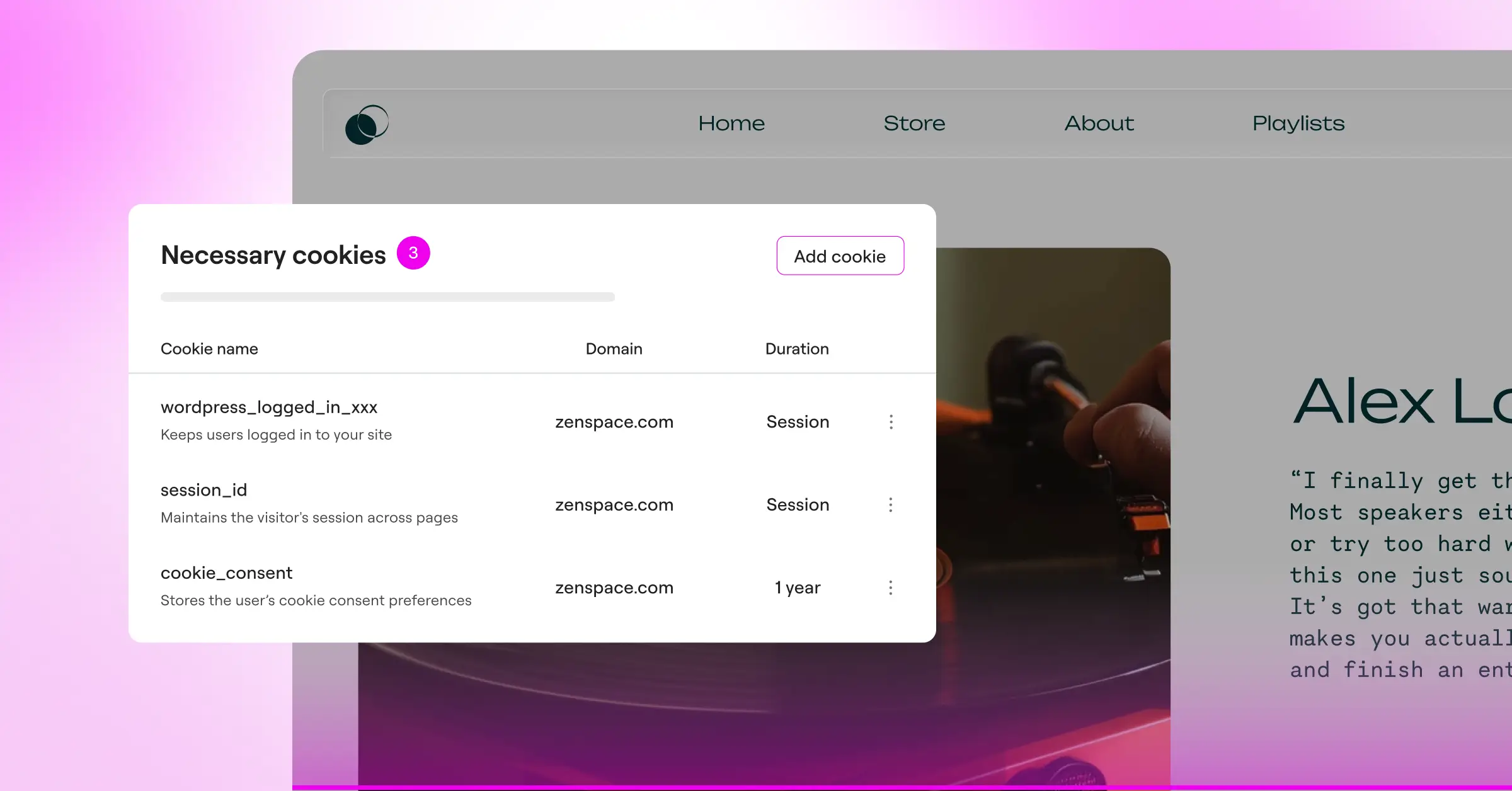
- Scan your site – Run an initial scan to find and catalog all the active cookies and scripts running in the background.
- Categorize cookies – Separate your scripts into clear categories like strictly necessary, analytics, and marketing.
- Configure Google Consent Mode v2 – Make sure this is active if you rely on Google analytics or ads tools to measure performance.
- Customize banner text – Write clear, friendly copy that explains why you’re using cookies in an honest, transparent way.
- Activate geo-targeting – Set up targeting rules so banners appear only to visitors under relevant jurisdictions.
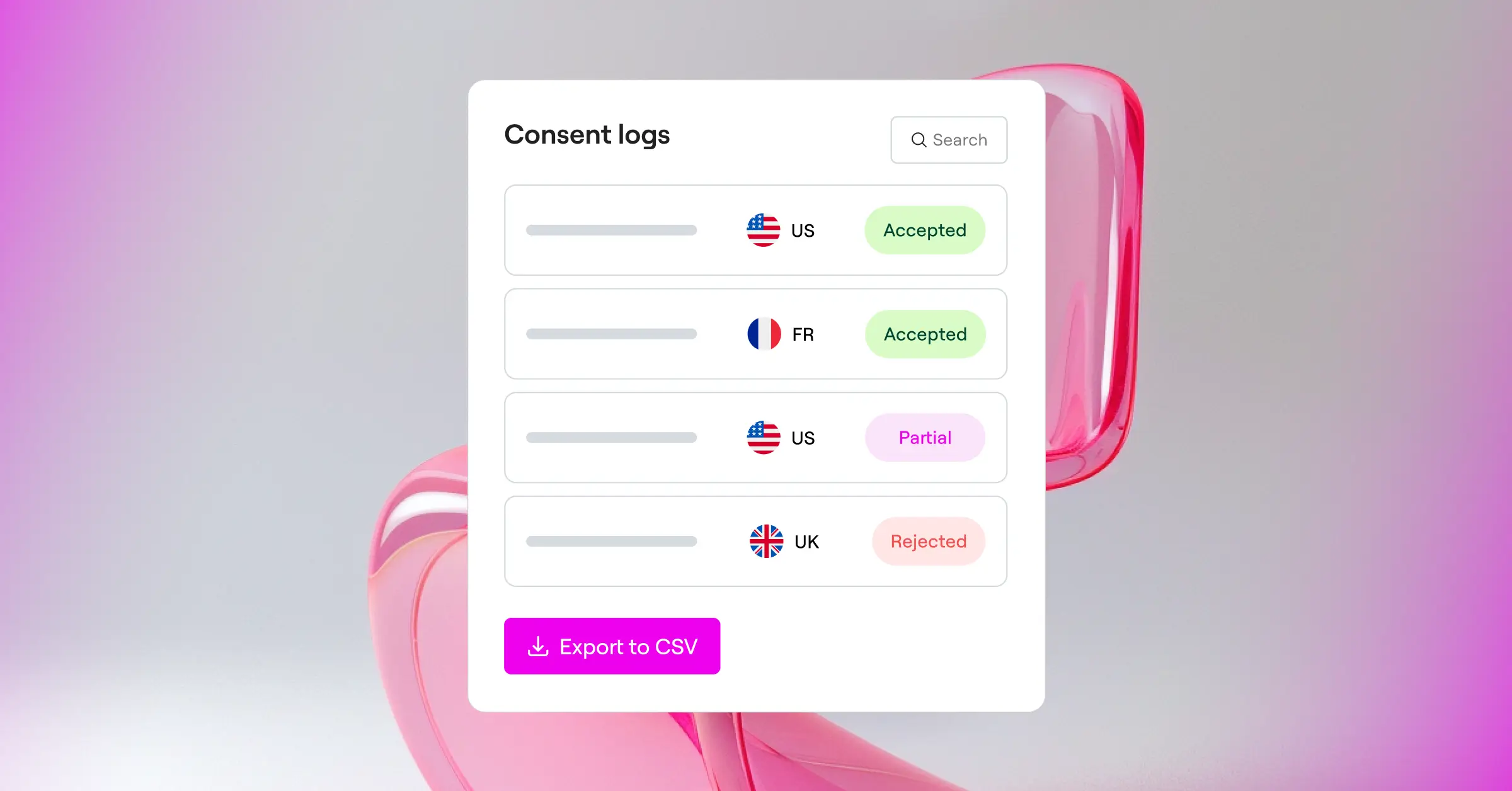
- Review consent logs – Confirm your tool saves records of user choices so you always have proof of compliance if you’re ever audited.
Testing Your Implementation
Once you’ve configured your chosen cookie consent tool, it’s worth taking a few minutes to verify everything is working as expected. Don’t worry, this part’s easier than it sounds:
- Open an incognito window – Load your website in private browsing mode to see the consent banner exactly as a new visitor would.
- Inspect active cookies – Open your browser’s developer tools, check the application or storage tab, and confirm that non-essential scripts don’t load before consent is given.
- Test rejection paths – Reject the cookies on your banner and verify that marketing pixels and analytics trackers stay completely blocked.
Regularly testing your banner keeps your compliance active and builds genuine trust with your audience. It’s a quick habit that can save you from much bigger headaches down the line.
Frequently Asked Questions
What is Google Consent Mode v2 and do I need it?
Google Consent Mode v2 is a system that communicates your visitors’ consent choices directly to Google platforms. If your site serves traffic within the European Economic Area (EEA) and you use Google Analytics or Google Ads, you need to implement Google Consent Mode v2. It keeps your data tracking aligned with user choices while maintaining basic measurement even when cookies are declined.
Can I use a free cookie consent tool on my WordPress site?
Yes, many tools offer entry-level plans that work well for basic websites. Cookie Consent, for example, offers a free tier that handles standard compliance needs without any upfront cost. If your website grows larger, has hundreds of pages, or requires complex geo-targeting rules, you may want to explore premium options or broader compliance packages.
Do cookie banners slow down my website load speed?
Some external, heavy cloud banners can add extra requests that slightly impact load performance. Choosing a native WordPress capability like Cookie Consent keeps scripts running locally and minimizes external code calls, which helps keep your page load times fast and efficient.
What is the difference between GDPR and CCPA cookie compliance?
GDPR is a European regulation that requires prior consent (opt-in), meaning you can’t load tracking cookies until the user agrees. CCPA is a Californian regulation focused on the right to opt-out, meaning you can load cookies but must provide a clear way for visitors to stop you from selling or sharing their data, often through a “Do Not Sell My Info” link.
How often should my website scan for cookies?
It’s good practice to scan your site at least once a month. This ensures that any new scripts, tracking pixels, or tools you’ve added are properly identified and categorized. Automated scanners handle this in the background so you don’t have to remember to do it manually.
What are consent logs and why are they necessary?
Consent logs are recorded entries that show when and how a visitor made their consent choices. They don’t store personal identifying details, but they capture a secure, timestamped record of each choice. They’re necessary because privacy regulations like GDPR require website owners to prove that consent was actually given if they’re ever audited.
Can I customize my cookie banner to match my brand?
Yes, most modern consent tools let you customize colors, fonts, layouts, and button styles. Native tools make this particularly simple because they integrate with your active theme settings, helping you design a banner that looks clean, professional, and consistent with your branding.
What is Global Privacy Control (GPC)?
Global Privacy Control is a browser setting that lets users signal their privacy preferences automatically. If a visitor has GPC enabled, their browser communicates to your site that they don’t want to be tracked. Compliant consent tools recognize this signal and respect the user’s preference without requiring them to interact with a banner at all.